Best Yoga Mats: How to Build a Range That Covers Every Slot
The best yoga mats are not one product but a small set of slots on a shelf. Buyers sort themselves into a handful of jobs — everyday studio practice, travel, floor and Pilates work, artwork-led design, and price — and a brand wins the category by covering those jobs deliberately rather than by pushing one hero mat at all of them.
Why "best" is a slot, not a single build
Every roundup, marketplace filter and shop assistant does the same thing: it splits the category into "best for X" buckets and puts one product in each. That is why two mats with completely different specifications can both be correct answers. Your job as a brand is not to find the single best construction; it is to decide which buckets you intend to own, then specify something for each. A wide share of the range mistakes we see start right here — a brand falls for one build, and then tries to sell it into every bucket at once.
The five slots below are the ones that recur, with the catalogue build that fills each. All of them are the same manufacturing conversation with different answers, which is what makes a coherent range possible in the first place.
The five slots and what fills them
Everyday studio: matte natural rubber
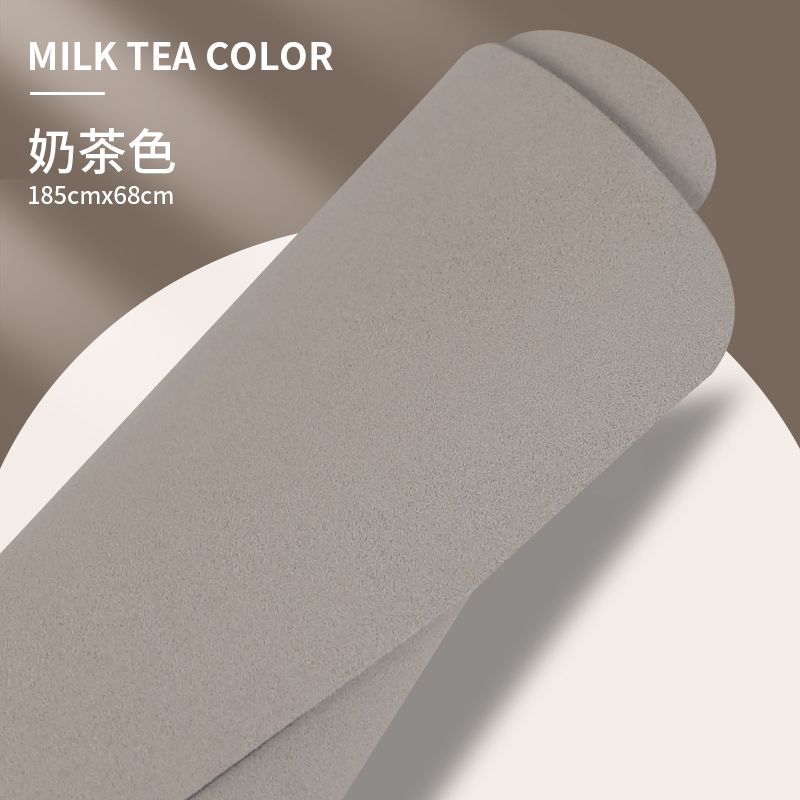
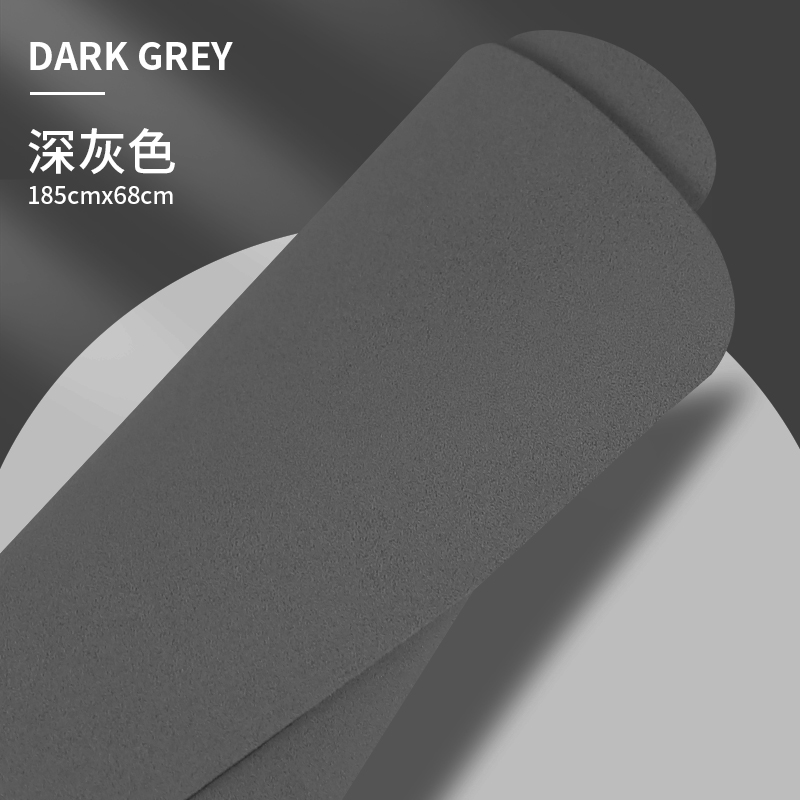
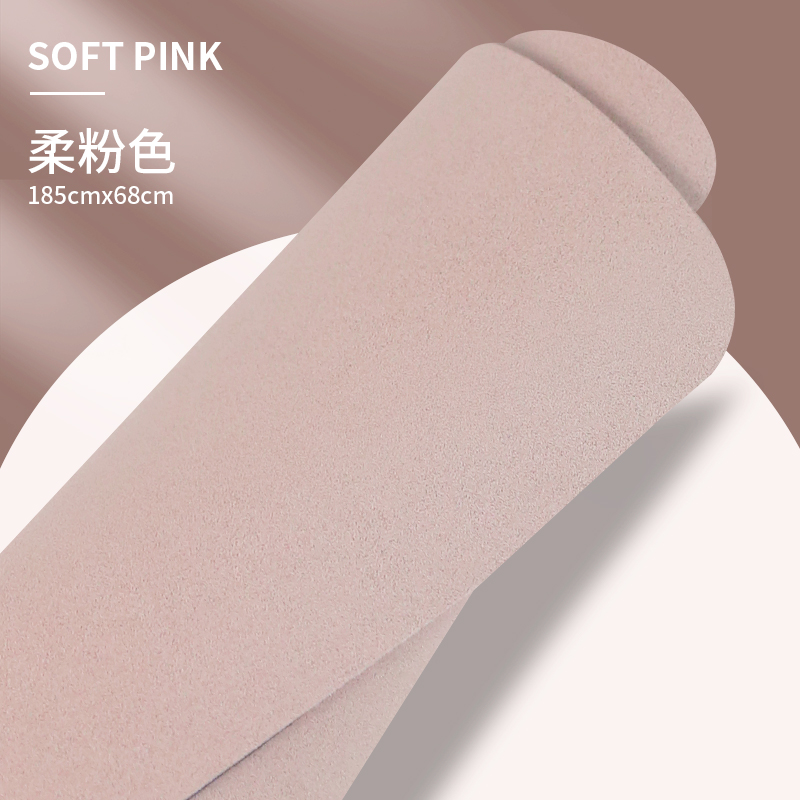
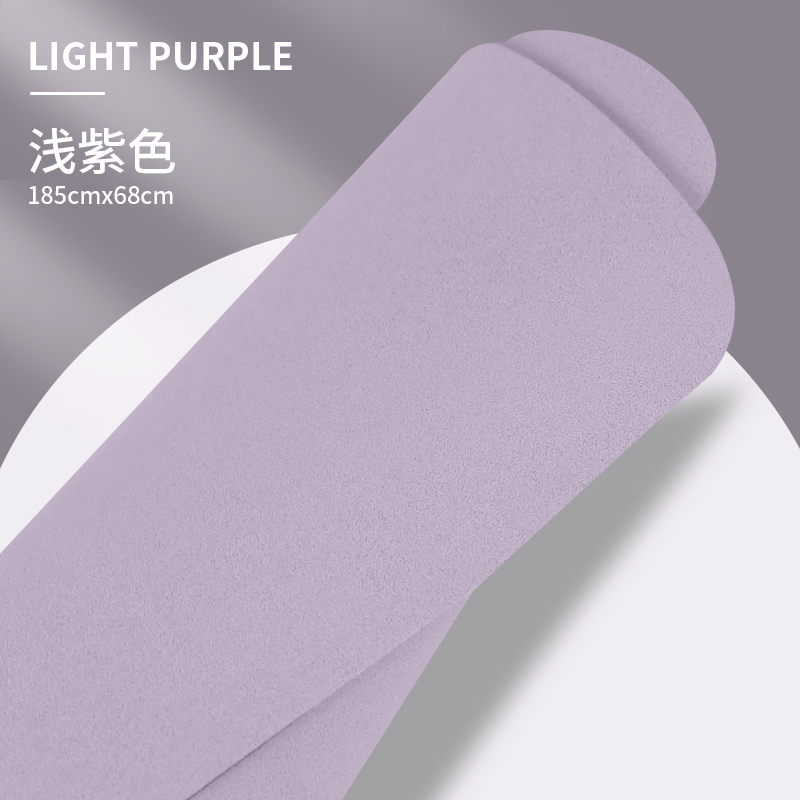
This is the workhorse and usually the first thing to specify, because everything else in the range is judged against it. The build is Frosted PU + Rubber at 185*68*0.45cm with laser printed alignment lines rather than an ink layer — the matte natural rubber mat. Full practice length, strong grip once hands are damp, and a surface with no coating to wear through. It is heavy, and that is the whole reason the next slot exists.
Travel and studio-hopping: the foldable build
Same material family, different geometry. The foldable matte rubber mat keeps the 185*68 practice footprint but drops to 0.15cm so it folds flat into a bag instead of rolling into a tube. Buyers give up cushioning and accept fold creases; what they get is a mat that travels without a strap. Do not treat this as a cheaper version of the studio mat — it is a different job, and customers who buy it as a main mat come back disappointed.
Pilates, rehab and floor work: cork over rubber
The ColorBlock cork and rubber mat is a PU Rubber/Cork build at 97*57*0.45cm — a floor-work footprint rather than a full mat length. Cork reads as natural on sight, gets grippier as hands get damp, and suits kneeling and seated work where nobody needs 185cm of length. It is the easiest slot to overlook and one of the easiest to sell, because studios buying for classes buy it in quantity.
Design-led: latex printed natural rubber
When the range needs colour and full-surface artwork, the base stays natural rubber and the branding moves to latex printing, as on the watercolour printed rubber mat, a PU + Rubber build at 185*68*0.45cm. Laser marking cannot create colour; it removes material to reveal a line. If your seasonal designs are the reason people pick you off the shelf, this is the slot that carries them.
Value: PVC
The PVC mat at 183*61*0.6cm is durable, dimensionally stable, thick, and takes any print method. It is the honest answer for a value retail slot, and it is not an eco product — if that matters to your positioning, read our guide to eco-friendly mat materials before you write the copy.
The five builds side by side
| Slot | Build | Size (cm) | Branding that suits it | Wins on | Gives up |
|---|---|---|---|---|---|
| Everyday studio | Frosted PU + Rubber | 185*68*0.45 | Laser lines | Grip, durability, no ink layer | Weight |
| Travel | Frosted PU + Rubber, foldable | 185*68*0.15 | Laser lines | Packs flat, full length | Cushioning |
| Pilates and floor work | PU Rubber/Cork | 97*57*0.45 | Laser; light ink only | Natural look, damp grip | Not a full-length mat |
| Design-led | PU + Rubber, latex printed | 185*68*0.45 | Latex printed artwork | Full colour range | Print surface to protect |
| Value | PVC | 183*61*0.6 | Any print method | Cost, thickness, stability | No environmental story |
Conditional verdicts: how to sequence the range
If you are launching with one SKU, take the matte natural rubber build at 185*68*0.45cm. It is the slot with the most demand behind it, it photographs well, and every later addition reads as a variation on it rather than as a second attempt at the same thing.
If you are building the brand on designs — collaborations, seasonal drops, artwork people buy for its own sake — lead with the latex printed rubber build instead and add the matte version second. Your customers are choosing you for the surface, so put your production quality where they will look first.
If you sell mainly into studios, rehab or Pilates programmes, the cork and rubber ColorBlock at 97*57*0.45cm belongs in the range before the travel mat. Class buyers order in multiples and re-order on a schedule, which does more for your capacity planning than a seasonal travel line ever will.
If you are buying at the value end, do not stretch PVC across the whole range. It is the wrong material for the studio and design slots, and a value sheet sold as a premium mat is the one mistake in this category that costs you the retail account rather than just the margin. Take the PVC build for the price slot, sell it on thickness and durability, and let the rubber builds carry the rest.
What to settle with a manufacturing partner before you commit
A range only works if one factory can create all of it, because the moment two suppliers are involved your colours stop matching and your delivery dates stop lining up. These are the details worth settling before the first sample.
- Can you produce every build in the range, and will the same colour reference hold across rubber, cork and PVC?
- Which print methods do you offer on each base, and what happens to each one after months of sweat?
- What test reports can you supply against the standards my market requires, and how recent are they?
- What is your production capacity per build, and what changes during peak season?
- How does the sample process work, and can I approve on a physical mat rather than a screen?
Printing Yoga runs these services as factory-direct OEM and ODM work, so the answers come from the people operating the line rather than from a trading desk. That matters most on a multi-slot range, where the products have to look like a family even though they are made from three different materials, and settling the questions above in writing is what ensures they still do when the third build comes off the line. It also helps to ask early: the experience of matching one artwork across rubber, cork and a woven bag is where most launch timetables quietly slip.
Frequently asked questions
What actually makes one mat better than another?
Nothing in the abstract. Better only means anything once you name the job: cushioning and grip for daily practice, pack size for travel, footprint and knee comfort for floor work, colour fidelity for artwork, landed cost for a value shelf. Pick the job first and the specification follows almost mechanically — material, thickness, surface finish and line-printing method.
How many products do I need to cover the category?
Three is usually enough to look like a range and two is enough to launch. Start with the everyday build, add whichever of design or floor work matches your customers, and only then fill in travel and value. A shallow range that covers distinct jobs sells better than a deep one where four items compete for the same buyer.
Can one artwork run across every build in the range?
Not identically, and planning for that saves a lot of grief. Laser marking removes material to reveal a line, so it renders as tone rather than colour; latex printing carries full colour; cork takes light coverage well and heavy coverage badly. Design the identity so it survives all three — a mark that works in a single tone, plus a full-colour version for the printed builds.
Does a thicker mat mean a better mat?
Only for the job that needs it. The PVC build at 0.6cm is the thickest thing here and it suits kneeling work and value shelves; the 0.45cm rubber builds are what most practitioners prefer underfoot because stability matters more than padding once you are standing. Thickness is a slot decision, not a quality ranking.
Which build should a new brand sample first?
Sample the one you intend to launch with, on the real base, in your real colour, before you commit to anything else. Approving on a screen is where launches go wrong, and a physical sample also gives your photographer something to shoot while the rest of the range is still being specified. Send the artwork early and build the shipping window into the launch date.