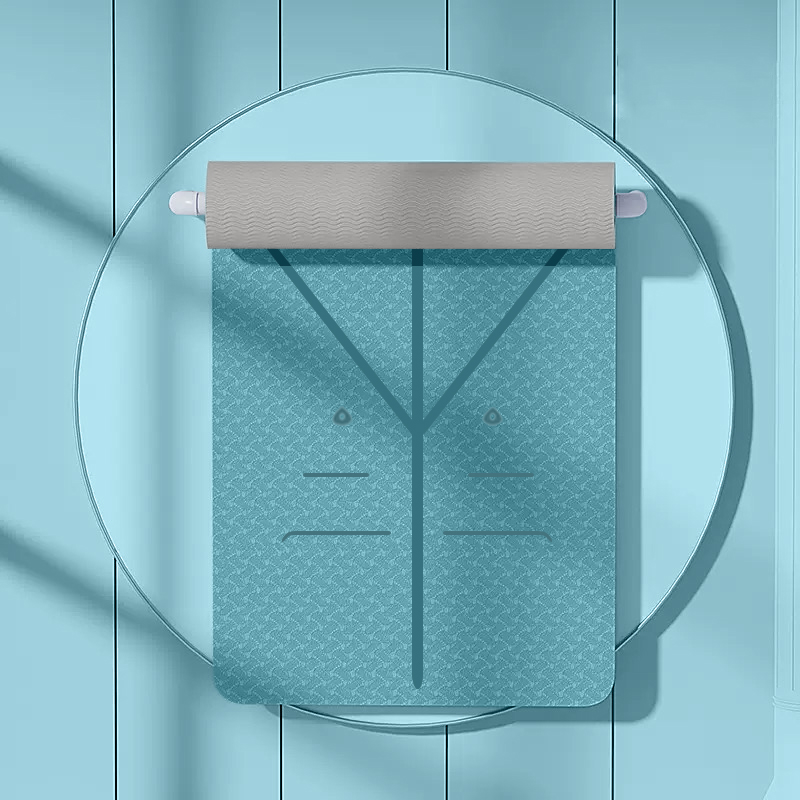
10mm Yoga Mat: Where Extra Thickness Stops Helping (OEM Guide)
There is no 10mm yoga mat in our catalogue, and in most cases you should not be looking for one. Above the familiar 0.6cm band the honest production range is an 8mm TPE deck (183*61*0.8cm and a wide 185*80*0.8cm) and, past that, a 140*61*1.2cm TPE pad that we do not call a yoga mat at all — it is a jump rope mat. Buyers who search "10mm yoga mat" are usually asking one of two different questions: how do I stop my knees hurting, or how do I stop a hard floor punishing high-impact work? Those two questions have different answers, and only one of them ends with a thicker mat.
What "10mm" actually maps to in production
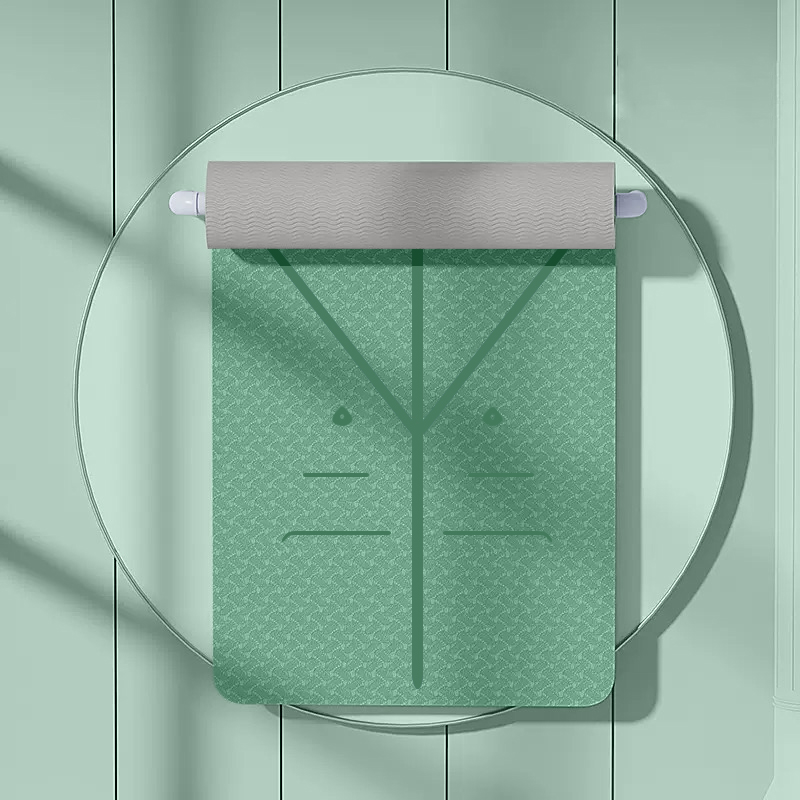
Mat thickness is not a continuous dial. Each band is a separate foaming and pressing setup, so a factory does not simply add two millimetres because a buyer asked for a round number. Printing Yoga runs three bands that matter here: a 185*68*0.45cm frosted PU and rubber deck for technical practice, a 0.6cm TPE deck as the cushioned everyday option, and the 0.8cm TPE decks when a brand wants visible padding on the shelf. The 183*61*0.8cm double colour TPE mat is the closest thing to what a "10mm" search is reaching for, and the 185*80*0.8cm wide version adds width rather than more height — which, as the next section explains, is usually the better trade.
Anything meaningfully thicker changes category. The 140*61*1.2cm jump rope mat exists because skipping, plyometrics and weighted footwork need impact absorption, not because someone wanted a plusher yoga deck. It is deliberately shorter than a yoga mat: at 140cm long it sits under a standing athlete, not under a full-length lying practice. If your product page calls that a yoga mat, your returns desk will hear about it.
The trade-off nobody prints on the label
Every millimetre of foam you add under a practitioner is a millimetre of wobble between their hand and the floor. Soft, tall decks feel wonderful in a shop and fight the user in Warrior III. That is the whole reason technical mats keep getting thinner rather than thicker, and why studios that buy on comfort alone often replace the order within a season. Padding helps joints during kneeling and supine work; it hurts balance during standing work. A mat cannot optimise for both, so the specification question is which part of the class you are protecting.
There is a second, less obvious cost. Thicker decks are bulkier to roll, take more space per carton and therefore change your freight and warehousing maths. A wide 185*80*0.8cm mat is a genuinely different logistics item from a 185*68*0.45cm rubber deck, and if you are planning delivery to end customers rather than to a studio, that difference shows up in every parcel you ship.
Thickness above 6mm compared
| Spec | 0.6cm TPE deck | 0.8cm TPE deck | 1.2cm jump rope pad |
|---|---|---|---|
| Size we produce | 183*61*0.6cm | 183*61*0.8cm and 185*80*0.8cm | 140*61*1.2cm |
| Material | TPE | TPE | TPE |
| Best for | Everyday mixed classes | Knee-sensitive students, gentle and floor-based formats | Skipping, plyometrics, home gym impact zones |
| Standing balance | Predictable | Noticeably softer underfoot | Not intended for balance work |
| Full-body length | Yes | Yes | No — shorter footprint by design |
| Branding | Printed designs, double colour | Printed designs, double colour | Single colour, printed logo |
If you are choosing a height
If you are stocking for general studio and retail sale, the 0.6cm TPE deck is the volume line and the 0.8cm decks are the comfort upsell sitting beside it. Two heights in one material keep your manufacturing setup simple and let a shop assistant explain the difference in one sentence, which is worth more than a third option nobody can justify.
If your customers name knee pain as the reason they are shopping, go to 0.8cm rather than hunting for a mythical 10mm deck, and consider the 185*80*0.8cm width instead of extra height. Width fixes the real complaint — hands and knees drifting off the edge — without costing the stability that extra height takes away.
If you are equipping a home-gym or functional-fitness brand, the 1.2cm pad is the right item and it should be merchandised under fitness accessories, with the yoga range kept separate. Buyers shopping for impact protection have different standards for what "thick enough" means, and mixing the two ranges makes both harder to explain.
If you are sourcing for a vinyasa, ashtanga or hot-yoga programme, skip this whole category. Those classes live in standing sequences and sweat, where a soft deck is a liability; the 185*68*0.45cm frosted PU and rubber mat is the correct answer and no amount of padding will make a tall TPE deck competitive there. This is the one case where we will tell you not to buy the thicker product.
What changes when you order these as custom products
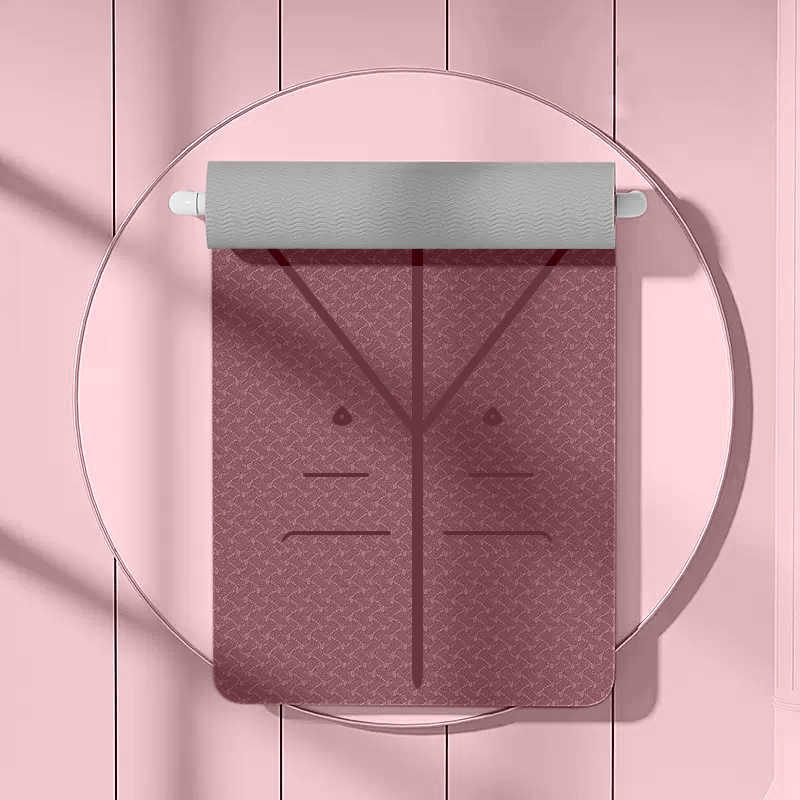
Thickness affects branding more than most buyers expect, so lock these details before production starts. Printed designs sit on the TPE surface layer, which means the colour and artwork work the same way across 0.6cm and 0.8cm decks — what changes is the edge, where a taller deck shows more side wall and a logo placed near the border can end up reading on the curve rather than on the face. Send artwork with a clear safe margin and we will create a proof that shows the mat flat and rolled.
Double-colour construction is available on the TPE decks and single colour on the jump rope pad, so if your range plan depends on a two-tone look, that decision constrains which heights you can offer. Our services cover artwork adaptation, sampling and packaging, and our capacity is set up for repeat programmes rather than one-off curiosities — the practical consequence is that a small trial run to check the feel of a height band is easy to arrange before you commit to bulk. Ask for the physical sample; nobody has ever settled a thickness argument by looking at a photo.
Whatever height you land on, make the choice once and hold it. High-quality consistency across a repeat order matters more to a studio buyer than the exact millimetre, and a supplier who can ensure the same deck arrives next season is worth more than one who offers a slightly softer sample this season.
Frequently asked questions
Is a 10mm mat too thick for standing poses?
In practice, yes. Anything at or above that height moves enough underfoot to make balance work unpleasant, which is why our range stops at 0.8cm for full-length decks. The taller 1.2cm pad we produce is aimed at skipping and impact training, not at asana.
What is the thickest deck you can actually make?
For a full-length mat, 0.8cm in TPE, available at 183*61*0.8cm and in the wider 185*80*0.8cm cut. Above that we produce the 140*61*1.2cm pad, which has a deliberately shorter footprint because its job is impact absorption under a standing athlete.
Will our printed artwork look the same on a thicker deck?
The face prints the same way; the visible side wall is what changes. Keep logos and alignment marks away from the border and ask for a rolled proof — that is where a design placed too close to the edge reveals itself.
Does extra height cost more to ship?
It costs more volume, which is what carriers charge for on bulky goods. A taller roll takes more carton space, so the same pallet holds fewer pieces. If your model is direct delivery to consumers, price that in before you standardise on the tallest option.
Can we try a height band before committing to a bulk programme?
Yes — a small trial run is the normal way to settle this, and it is cheaper than discovering the answer through returns. Tell us the format your customers practise and we will help narrow the shortlist to two heights worth sampling.
Should we offer more than one thickness at launch?
Two is the sensible ceiling for a new range: one everyday deck and one cushioned option. Three heights split your buying, complicate your copy and rarely add sales, because most shoppers cannot describe the difference between adjacent bands without handling them.