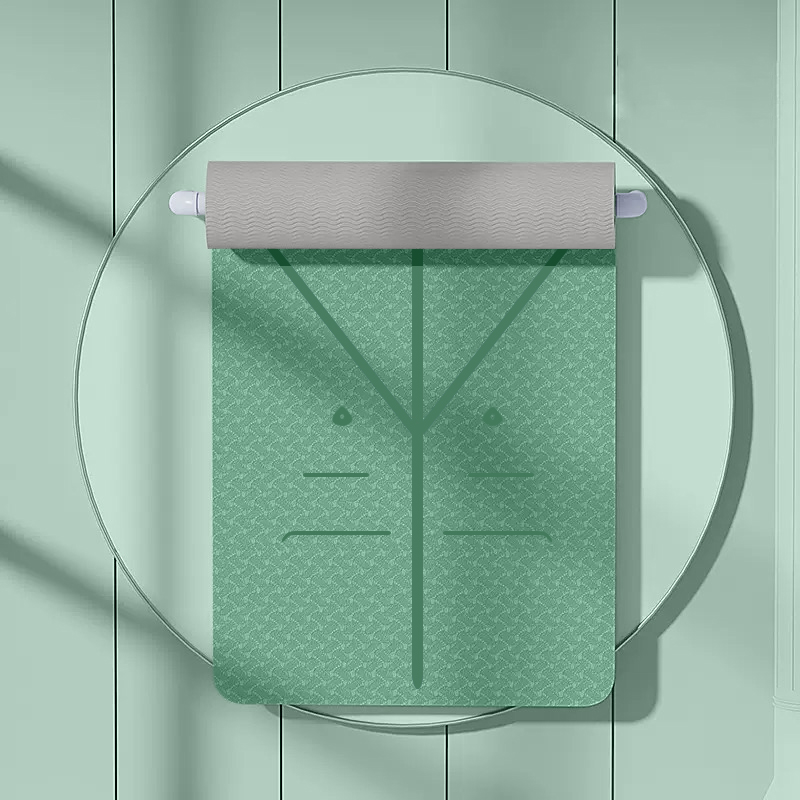
Machine Washable Yoga Mats: What Is Really Washable, and What to Spec Instead
The short answer: a yoga mat is not machine washable, and no reputable factory should let you print that claim on a box. A mat is a bonded foam or rubber slab — a washing machine drum folds it, soaks the core and delaminates the printed face. What is genuinely washable is the layer on top of the mat: a microfibre towel, a removable cover, or a thin travel mat used over a studio mat. So when a buyer searches for a machine washable yoga mat, they are really asking a product-architecture question, and the honest answer is to give them a wipe-clean mat plus a washable top layer. Printing Yoga builds both halves of that answer, and this guide explains how to spec them.
What buyers actually mean by "washable"
Three different needs hide behind the same search term, and separating them is the first job of a range planner. The first buyer sweats heavily and wants the surface clean after every session. The second shares mats — a studio, a gym, a hotel, a school — and needs a hygiene routine that staff can run between classes in minutes. The third simply hates the idea of a mat that cannot be freshened up, and is really buying peace of mind.
Only the second group has a hard operational requirement, and it is the group that places the volume orders. A studio manager does not want a mat that survives a washing machine; they want a surface that can be wiped down, dries before the next class, and does not go grey or sticky after a few hundred cleans. Those are measurable properties you can write into a specification, which is exactly why this topic belongs in your product brief rather than in your marketing copy.
The practical consequence for a brand is that "washable" should never be a single line on a product page. It should be a small family of decisions: what the surface is made of, what the customer is told to use on it, and whether a washable accessory ships with the mat or sells alongside it. Get those three details right and returns fall; get them wrong and you will spend the season answering emails.
Open cell or closed cell: the detail that decides everything
The single technical fact that governs washability is whether the surface is open cell or closed cell. A closed-cell surface — TPE and PVC are the common examples — has sealed bubbles, so sweat sits on top and can be wiped away. An open-cell surface, such as an untreated rubber top or a bonded microfibre face, drinks moisture into the structure. Open cell grips better when wet, which is why hot yoga mats use it, but it also means the mat holds whatever the sweat brought with it.
That is the trade-off, stated plainly: grip when wet and easy cleaning pull in opposite directions. A closed-cell TPE deck such as our TPE - 183*61*0.6cm - Single Color Premium Yoga Mat wipes clean in seconds and dries fast, which is why it is the default for gym and school contracts. It is not the grippiest surface under a dripping palm, and pretending otherwise creates a review problem later.
Cork sits in an interesting middle position. The cork face on our Cork + Rubber - 183*66*0.4cm - Professional Yoga Mat becomes grippier as it picks up moisture, and cork carries a naturally waxy substance that resists odour build-up without any additive being applied during manufacturing. It still is not machine washable — the rubber base underneath would not survive it — but it needs far less intervention than a microfibre face, and the extra width gives a larger practice area for taller students.
Antibacterial claims: what a factory can honestly put on the label
"Antibacterial yoga mat" is a heavily searched phrase and a legally slippery one. There are three distinct things a supplier might mean, and buyers should make sure they know which one they are being sold.
The first is an additive genuinely compounded into the material, which requires test certification and, in several markets, registration before you may make the claim at all. The second is a surface that simply does not host bacteria well because it does not absorb — most closed-cell decks qualify, but the correct wording is "wipe-clean, non-absorbent", not "antibacterial". The third is a naturally odour-resistant material such as cork, where the property is real but comes from the raw material rather than from a treatment.
Our position at Printing Yoga is to describe what the product does rather than to reach for the strongest available adjective. If your market requires a certified antibacterial claim, say so at the enquiry stage: it changes the material, the testing schedule and the delivery timeline, and it is far cheaper to plan for than to retrofit. If it does not, "non-absorbent surface, wipes clean with mild soap and water" sells just as well and never has to be withdrawn.
Four ways to build a washable range
Most brands end up with one of four architectures. The table below compares them on the criteria that decide a studio contract, so you can pick before you brief a factory rather than after.
| Build | Surface behaviour | Cleaning routine | Best for | Main limitation |
|---|---|---|---|---|
| Closed-cell TPE deck | Non-absorbent, sweat sits on top | Wipe down, dries between classes | Gyms, schools, events, hotel capacity | Less grip under wet hands |
| Cork face on rubber base | Grip improves as it absorbs sweat | Damp cloth, air dry, naturally odour resistant | Premium retail and studio ranges | Cannot be soaked or machine washed |
| Microfibre or suede face | Absorbent, needs moisture to grip | Frequent washing of a paired towel | Hot yoga, printed full-colour designs | Holds odour if left damp |
| Wipe-clean mat plus washable top layer | Two layers, each doing one job | Mat wiped, towel or cover machine washed | Shared mats and heavy sweat | Two SKUs to manage and ship |
The fourth row is the honest answer to the original search term, and it is the one we recommend to brands that serve studios. It is also the easiest to merchandise, because the washable half is cheap to make, light to ship and pleasant to give a name to.
If you are choosing a build this season
If you are supplying shared mats — studios, gyms, schools, hotels, corporate wellness rooms — specify a closed-cell TPE deck and pair it with a washable top layer. Staff can wipe the deck between classes without waiting for anything to dry, and the washable layer absorbs the part of the job a cloth cannot do. This is the combination that survives a full timetable.
If you are building a premium retail line where the customer owns the mat and practises at home, cork on a rubber base is the better answer. It resists odour without an additive, it photographs beautifully, and the story behind the material does a lot of the selling for you. Tell the customer plainly it is wiped rather than washed and you will not see it come back.
If you are selling into hot yoga, an absorbent face is the point, not a flaw, and your washable item is the towel rather than the mat. Merchandise them together from the start so the customer never has the experience of a slippery first class. The same logic applies to a round meditation product such as our Suede + Rubber - 68*68*0.3cm - Printed Meditation Cushion, where the suede face takes full-colour designs but expects gentle care rather than a drum.
If you were planning to print "machine washable" on the packaging, do not. This is the one exclusion in this guide and it is absolute. No mat build we manufacture, and none we have seen from any serious factory, survives a domestic washing machine intact; the claim generates returns, review damage and, in some markets, a regulatory complaint. Write "wipe clean" on the mat and reserve "machine washable" for the towel or cover that genuinely is.

Writing washability into the specification
A good brief makes the factory's job unambiguous and gives your own team something to check against on arrival. Four lines are usually enough.
First, state the surface type explicitly — open cell or closed cell — rather than naming only the material, because the same material can be finished either way. Second, state the cleaning agent the mat must tolerate; mild soap and water is the safe standard, and alcohol-based sprays should be named if you intend to allow them, since they attack some printed surfaces. Third, state the drying expectation in practical terms: a studio needs a deck that is usable again by the next class, and that is a real requirement your factory can design to.
Fourth, state what the care card says, and have it produced as part of the same order. Care wording is the cheapest returns-prevention tool available, and it is the one most often left until the packaging artwork is already at the printer. Printing Yoga can create the card alongside the product so the two ship together, and we would rather help you write it early than fix the consequences later.
One more note on trials. Because our single-colour TPE deck carries a minimum order quantity of 1.00, you can put a real sample through your own cleaning routine before committing to a production run. Wash it the way your customers will, on the schedule your customers will, and only then sign off the claim you intend to print. Our full range is on the yoga mat category page, and our OEM and ODM services cover custom sizes, logos and full-surface printing to the same high-quality standards across every build discussed above.
Frequently asked questions
Can I put a yoga mat in the washing machine?
No. The drum folds and creases the slab, water soaks into the core, and the spin cycle stresses the bond between the printed face and the body underneath. Even mats that look fine afterwards often develop soft patches or a warped edge within weeks. Clean the deck by hand with mild soap and water instead, and put the washable requirement onto a towel or a removable cover.
Is there any mat that really is washable?
Thin travel decks and fabric-faced top layers come closest, because there is little core to soak and they dry quickly. Even so, most manufacturers specify hand washing and flat drying rather than a machine. The genuinely launderable items in a practice kit are the towel, the cover and the carry bag — build those into your range and you have answered the customer's actual need without overstating what the deck can take.
What does "antibacterial" mean on a yoga mat listing?
It can mean a certified additive, a non-absorbent surface, or a naturally odour-resistant material such as cork, and those are three very different products. Ask any supplier which of the three they mean and whether test documentation exists. If it does not, the safer and equally persuasive wording is "non-absorbent, wipes clean".
How do studios keep shared mats hygienic between classes?
They use a closed-cell deck that can be wiped and used again immediately, a diluted mild cleaner rather than neat alcohol, and a stock rotation that lets anything damp dry fully before it goes back out. Many also issue students a personal top layer. The routine matters more than the chemical, and a surface chosen with this in mind makes the routine quick enough that staff actually follow it.
Does frequent cleaning damage a printed design?
Mild soap and water will not, on any of the builds described here. Solvents, bleach, scouring pads and hot water will, and the damage usually shows first at the edges of the artwork. If your range leans on printed graphics, specify the care wording at the same time as the artwork so the two agree with each other.
Can we order a wipe-clean deck and a washable cover in one production run?
Yes, and it is the arrangement we most often recommend for studio-facing brands. Producing both together keeps the branding consistent, shortens delivery against ordering them separately, and lets us confirm that the two parts fit before anything ships. Send us the sizes you want and we will quote the pair.