Memory Foam Yoga Mat: What OEM Buyers Actually Get
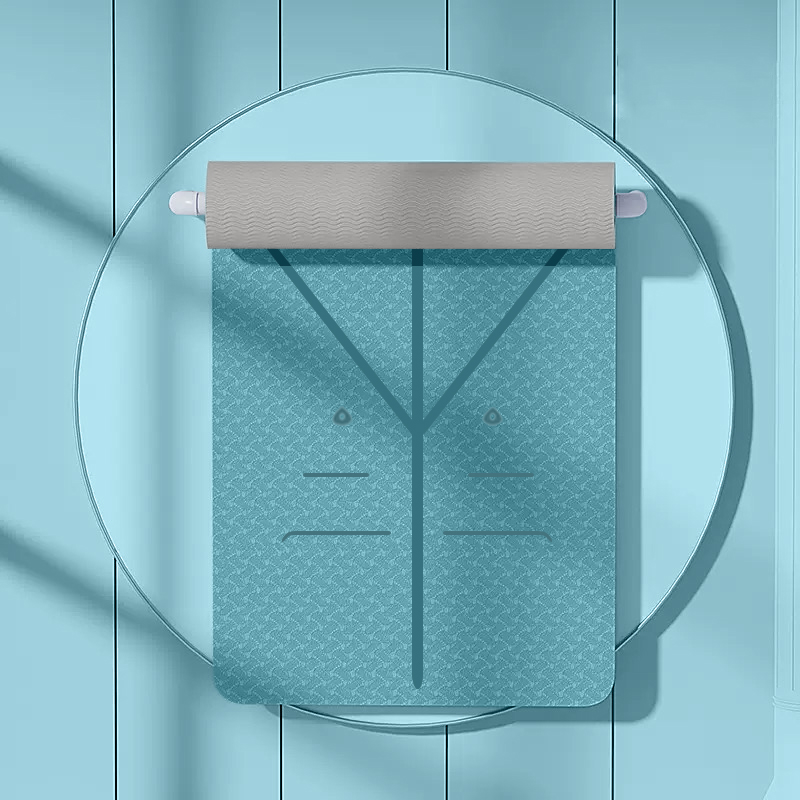
Almost nothing sold as a memory foam yoga mat is made from viscoelastic memory foam. What shoppers are describing is a high-loft closed-cell deck — normally TPE, sometimes NBR — thick enough that a knee or an elbow sinks in slowly instead of hitting the floor. If you are sourcing rather than shopping, the two specs a factory can quote, make and hold to tolerance are deck thickness in millimetres and deck material, so those are the details worth writing into your tech pack. Our thickest standard deck is a TPE mat at 185*80*0.8cm, and the softest thing we make for knees is a 140*61*1.2cm impact pad.
Why "memory foam" is a shopping word, not a manufacturing word
True viscoelastic foam is open-cell. That is exactly what you do not want under a sweating body: it drinks moisture, it cannot be wiped down to studio hygiene standards, and it shears apart when a foot twists during a standing sequence. Closed-cell TPE behaves the way buyers hope memory foam will behave — slow, deep compression at 8mm and above — while staying sealed, wipeable and printable. When a retail listing says memory foam, read it as "thick foam deck" and go straight to the thickness line.
This matters commercially because the search term and the product spec do not match. Buyers type "most comfortable yoga mat" or "small yoga mat for knees", then judge what arrives by how it feels under the patella. A brand that answers that experience with a clear thickness ladder converts; a brand that answers it with the words "memory foam" gets returns. Our own ladder runs from a 0.3cm suede cushion to a 1.2cm impact pad, and every step of it can carry your designs.
If you are picking by use case, not by marketing copy
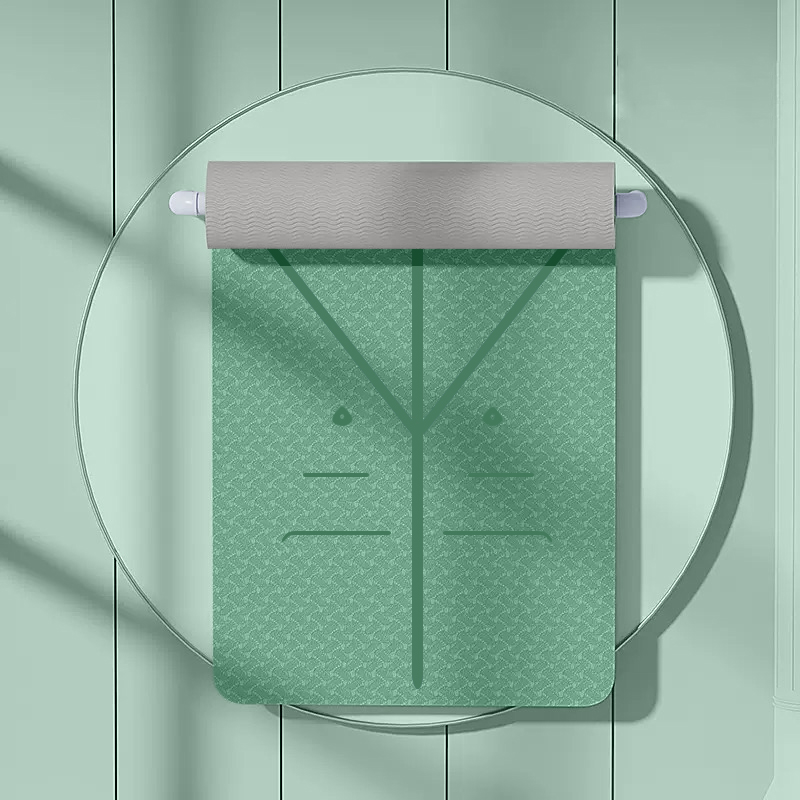
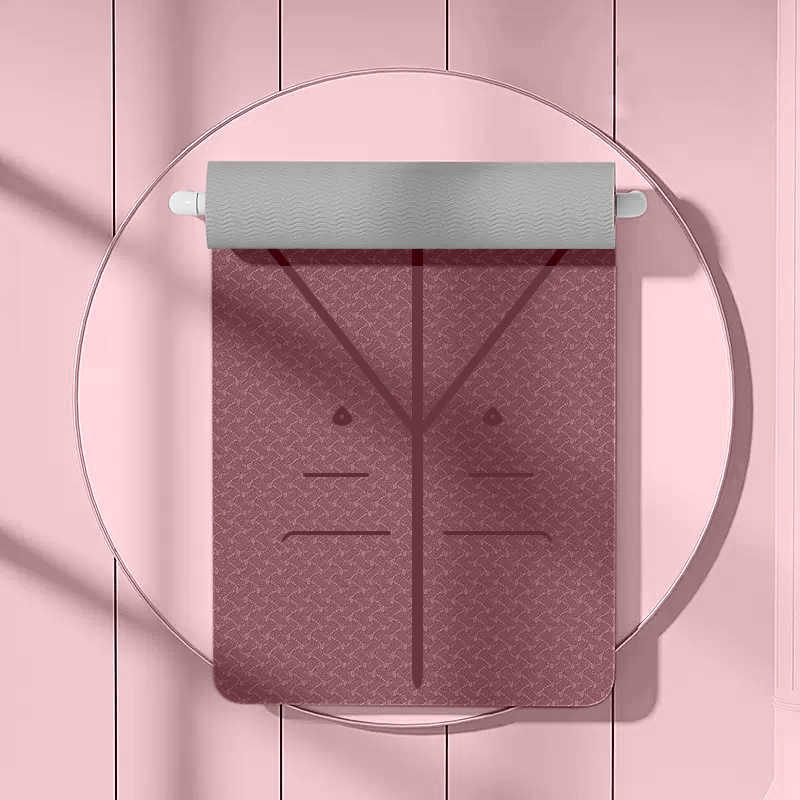
If you sell mainly to home practitioners who mention knee, wrist or coccyx discomfort, spec the TPE deck at 185*80*0.8cm. At 8mm and 80cm wide it is the most forgiving full-size mat we make, it weighs 2.7kg, it ships in 5 double-colour combinations, and it still carries laser alignment lines so a beginner can place hands and feet without an instructor.
If your buyers want a small pad they can drop on top of a studio mat, the answer is not a thicker mat at all — it is the 140*61*1.2cm TPE pad. At 12mm it is the deepest cushion in the range and at 1.0kg it is light enough to carry loose in a gym bag, which is what people searching for a knee-sized mat actually want.
If your line is built around seated work, restorative classes or meditation, the 68*68*0.3cm suede-and-rubber round cushion is the better fit, and it is our most decorative product: 19 printed designs already exist, so you can create a collection without commissioning artwork from scratch.
If you are sourcing for hot yoga studios or teacher training, do not put a memory-foam-style deck in that line at all. Deep foam moves under a static standing balance, and a 12mm pad makes a single-leg posture feel unstable rather than kind. Those rooms want the 185*68*0.45cm rubber deck instead — 4.5mm, 2.9kg, grippier when wet, 11 colours — with the thick foam kept as an add-on pad rather than the main floor.
If you already have a 4.5mm rubber hero mat in the catalogue, treat the thick TPE deck as a second, cheaper entry price rather than a replacement, so the two products help each other instead of competing for the same shopper.
Thickness ladder: how each deck actually feels
| Deck spec | Material | Feel under a knee | Best for | Trade-off | Surface decoration |
|---|---|---|---|---|---|
| 68*68*0.3cm round cushion | Suede + Rubber | Thin but soft-faced; a seat, not a shock absorber | Meditation, seated and restorative practice | No cushioning for kneeling drills | Full-surface printing; 19 designs in stock |
| 185*68*0.45cm mat | PU + Rubber | Firm, direct floor feedback | Studios, hot rooms, standing and balance work | Least forgiving on bare knees | Laser engraving and laser alignment lines |
| 185*80*0.8cm mat | TPE | Deep, slow compression — the "memory foam" feel buyers mean | Home practice, wide-frame users, gentle classes | Slight sink under single-leg balances | Double-colour bodies plus alignment lines |
| 140*61*1.2cm pad | TPE | Deepest cushion in the range; absorbs impact | Knee pad, jump and impact work, floor conditioning | Shorter than a full mat by design | Single-colour bodies, 5 colourways |
Manufacturing details to pin down before you order
Thickness tolerance is the first line to agree, because a foam deck sold on comfort lives or dies on it: a mat quoted at 8mm that arrives at the low end of tolerance loses exactly the property the shopper bought. Ask how tolerance is measured, at how many points across the deck, and what happens during a production run if a batch drifts. Our own quality inspection covers each batch before delivery so that variance is caught in the factory, not in your warehouse.
Second, settle decoration before you settle price. Thick TPE takes double-colour bodies and laser alignment lines well; deep surface printing behaves differently on foam than on rubber, so send your designs early and let production tell you which method holds up. Third, agree capacity and lead time in the same conversation — comfort-led products sell seasonally, and a supplier that can make high-quality decks but cannot scale a repeat order is not a supplier you can plan around. Our OEM and ODM services cover artwork adaptation, sampling and repeat production from one factory, which removes a handover that usually costs weeks.
Finally, write down how the mat will be cleaned. Buyers who choose a soft deck are also the buyers most likely to practise barefoot at home every day, and a care instruction that keeps the surface intact protects your review score. Real-world experience across our mat range says a sealed closed-cell face plus a clear wipe-down instruction beats any claim about foam chemistry printed on the label.
Frequently asked questions
Is there such a thing as a real memory foam yoga mat?
Not in any durable form. Open-cell viscoelastic foam soaks up sweat and tears under twisting load, so serious manufacturing lines do not use it as a mat deck. The products that satisfy the search are thick closed-cell decks: ours tops out at 185*80*0.8cm in TPE, with a 140*61*1.2cm pad when even more give is wanted.
What is the most comfortable yoga mat for knees?
For full-size use, the 8mm TPE deck; for kneeling drills specifically, the 1.2cm pad placed over whatever mat the practitioner already owns. Going thicker on a full mat eventually costs stability, which is why we stop the full-size ladder at 0.8cm and handle the rest with a dedicated pad.
Do I need a small yoga mat for knees, or just a thicker mat?
Buy the small pad if the pain shows up only in kneeling and low-lunge work — it is cheaper, it is 1.0kg, and it travels. Buy the thicker full mat if discomfort shows up everywhere, including in supine and seated sequences.
Will a thick mat hurt balance poses?
A little, and predictably. At 8mm the sink is noticeable in single-leg postures; at 12mm it is enough that we position that product as an impact pad rather than a yoga mat. If balance work is central to the class you are equipping, the 4.5mm rubber deck is the right floor.
Can you print custom designs on thick TPE decks?
Yes — double-colour bodies and laser alignment lines are standard on the 185*80*0.8cm deck, and the round suede cushion takes full-surface artwork. Send the files you have and production will tell you which method holds on each material.
Ready to spec one? Compare the 185*80*0.8cm TPE deck, the 140*61*1.2cm impact pad, the 68*68*0.3cm printed cushion and the 185*68*0.45cm rubber mat side by side, then send us the thickness and finish you want to make yours.