Beyond Leggings: Building a Yoga Apparel Capsule Collection
If you already have leggings in your range and are deciding what to add next, the shortest useful answer is three pieces: a support bra, a half-zip top and a pair of quick-dry pants. They cover the studio-to-street wardrobe buyers actually ask for, they all run on the same polyester-spandex supply base, and they let a young label create a coherent collection without opening a wide set of unrelated material lines. This guide walks through what to specify on each piece, using the real blends Printing Yoga runs in production.
Why a capsule beats a catalogue
New brands lose money in two places: sampling pieces nobody reorders, and splitting a small order across so many fabrics that no single blend reaches an efficient run. A capsule fixes both. When the bra, the top and the pants share a polyester-spandex family, one fabric approval carries across the range, colour matching is far easier, and your factory can plan capacity around a single dye lot instead of several small ones. It also makes your product photography and size charts consistent, which matters more than most founders expect during the first selling season.
The pieces below are not a marketing bundle. Each one solves a different wearing problem, and each one has different construction details that decide whether it survives a year of practice.
The three pieces side by side
| Piece | Main fabric (as produced) | Secondary fabric | Where it earns its place | What to check on the sample |
|---|---|---|---|---|
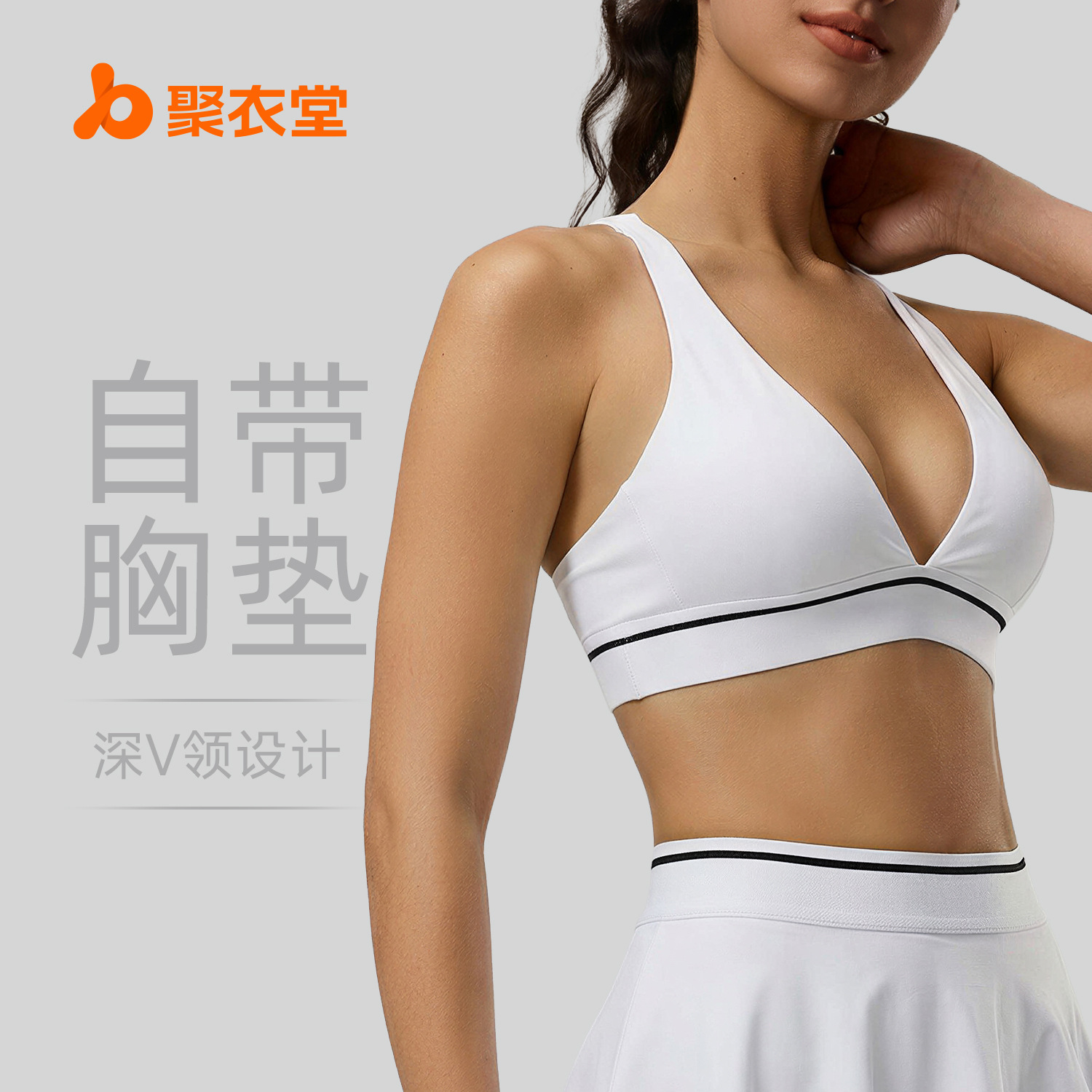
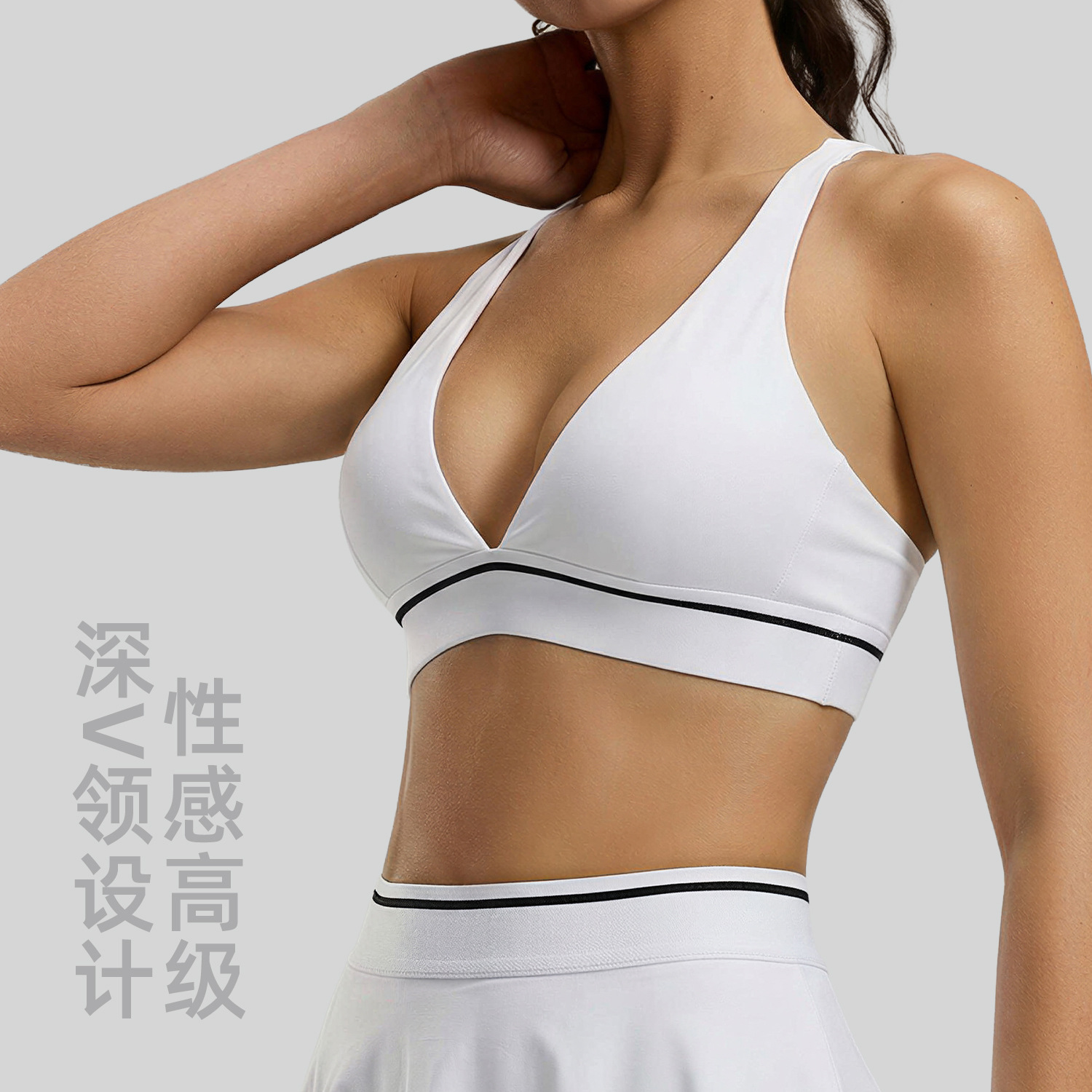
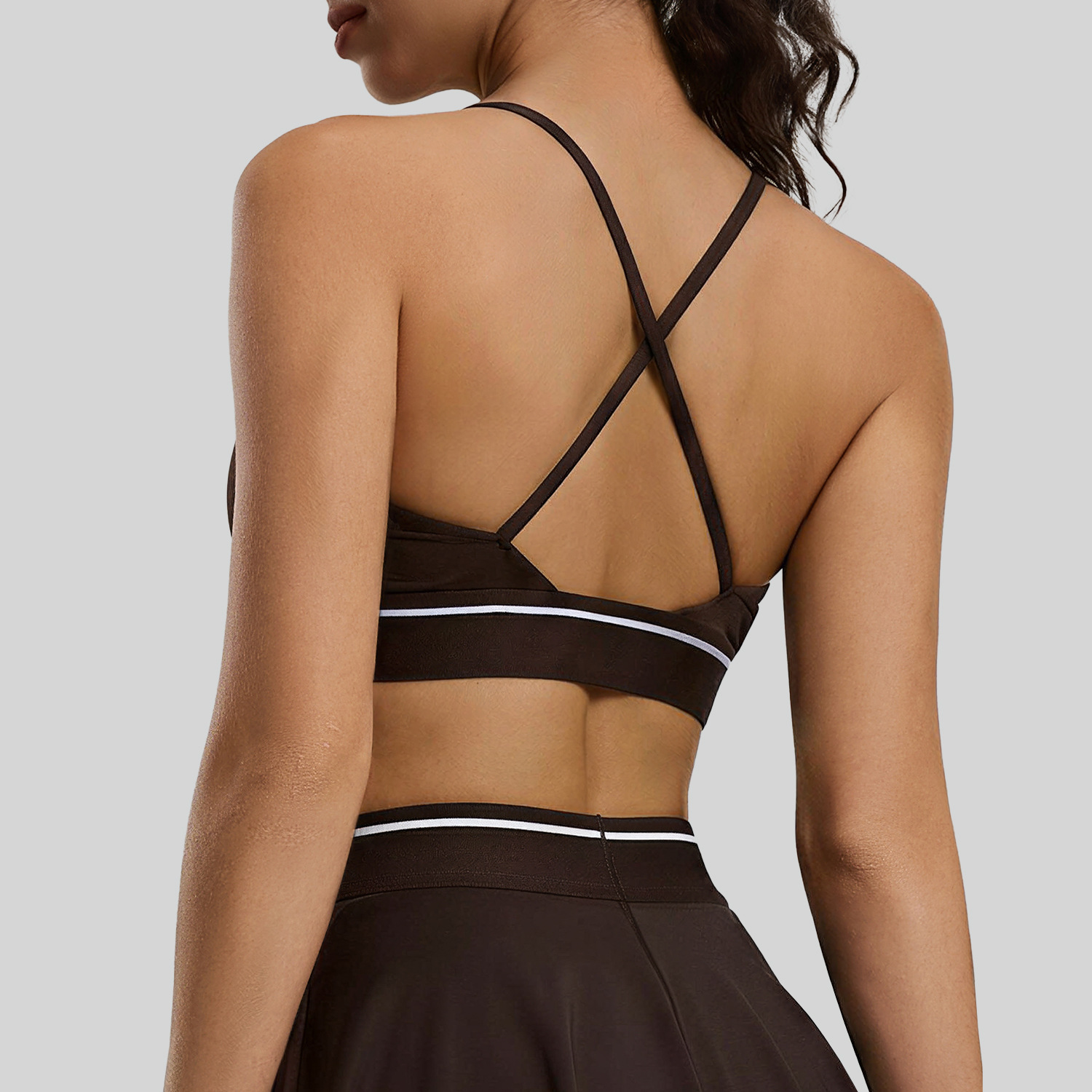
| V-neck sports bra | 82.5% polyester fiber, 17.5% spandex | Mesh at 94% polyester fiber, 6% spandex | Medium-support layer worn alone in a warm studio | Band recovery after stretching, strap edge finish, mesh placement over the sweat line |
| Half-zip short-sleeve top | 88% polyester fiber, 12% spandex | Mesh net at 89% polyester fiber, 11% spandex | Layer for cooler rooms, outdoor sessions and travel to class | Zip pull comfort at the chin, mesh panel breathability, seam flatness under a bag strap |
| Quick-dry pants | Outer layer 94% polyester fiber, 6% spandex | Inner layer 90% polyester fiber, 10% spandex | Training and street wear where drying speed matters more than compression | Two-layer alignment at the waistband, opacity in a deep squat, drying behaviour after a soak test |
Conditional verdicts: which piece to open first
If you sell mainly into hot or heated studios, start with the bra and the pants. The higher spandex share in the bra shell keeps the band working when it is wet, and the two-layer pants construction moves moisture off the skin instead of holding it. The half-zip is a second-season addition for those accounts.
If you are building a premium retail range with a strong logo story, start with the half-zip. Its front placket, zip garage and mesh panels create more surface for branding and design detail than a plain tee, so it carries a premium price without extra fabric cost.
If your customers train outdoors or commute to class, the half-zip plus quick-dry pants pairing is the better opening offer, because both pieces read as street wear and neither depends on studio conditions.
If you only need low-cost giveaway garments for an event, this capsule is the wrong tool and we will say so. Elastic-rich technical blends, mesh panelling and two-layer pants all add manufacturing steps you do not need for a one-off promo item; a simple single-jersey tee programme will serve you better and cost less.
Reading a fabric blend before you approve it
Every specification here is written the way a mill writes it, and it pays to read the details literally. The bra shell at 82.5% polyester fiber and 17.5% spandex is deliberately more elastic than the half-zip body at 88% polyester fiber and 12% spandex, because a bra has to recover its shape after every session while a top only has to move with you. The pants use two different blends on purpose: an outer layer at 94% polyester fiber and 6% spandex for shape and abrasion, an inner layer at 90% polyester fiber and 10% spandex for stretch against the skin.
When you review a lab dip or a first sample, ask for the blend of every layer, not just the face fabric. A supplier who can hand you those numbers for the shell, the mesh and the lining is running to documented standards; one who quotes a single blend for a multi-layer garment usually has not tested the layers separately.
You can see the three reference garments here: the V-neck sports bra, the half-zip short-sleeve top and the quick-dry pants. Each product page lists its own construction, and our team can adapt colour, print and fit details to your own designs.
What changes between a sample and a production run
Sampling proves the pattern. Production proves the process. Between the two, three things move: fabric consistency across a wider dye lot, stitching consistency across a larger sewing line, and packaging. Ask your manufacturing partner what happens to the fit block when a size range is graded up, how mesh panels are cut to avoid distortion, and what inspection level applies before delivery. The answers tell you whether you are buying a garment or a service.
Printing Yoga runs custom colour, print and logo work on all three pieces, and the same OEM and ODM services extend across the wider yoga range. If you want to see how a matching mat programme is specified, the Printing Yoga blog covers material and print decisions in the same level of detail.
Frequently asked questions
Looking for activewear manufacturers for a new brand, premium quality — any recommendations?
Judge a candidate on three things rather than on their showroom. First, can they hand you the exact blend of every layer in a garment, as shown in the table above? Second, will they sample your own tech pack rather than pushing a stock body? Third, do they publish an honest minimum order? Our listed bra programme, for example, states an MOQ of 300 pcs, which tells a founder immediately whether the fit is right for a first season. Vague answers to any of those three usually mean the workshop is a trading desk, not a factory.
Can I start with only one piece instead of the full capsule?
Yes, and most brands should. Pick the single garment your customers already ask for, prove the fit and the colour, then add the second item once you know your size curve. Because all three sit in the same polyester-spandex family, adding the next one later does not force a new fabric approval.
Do I need different suppliers for bras, tops and pants?
Not if the supplier is set up for elastic knits. Bras require band and strap tooling, half-zips involve zip and placket work, and two-layer trousers depend on careful waistband alignment, but all three sit inside one skill set. Splitting them across workshops mainly creates colour mismatch, because each site dyes to its own reference.
How do I keep colours matched across the collection?
Approve one physical standard per shade and have every garment in it dyed against that reference, ideally in the same window. Mesh and face fabric take dye differently, so always request the lab dip on both, and check them under the same light you use for your photography.
What should I ask about capacity and delivery before I place a first order?
Ask what monthly output the line holds for your garment type, how that output is shared with other clients in your season, and what the plan is if a reorder lands during a peak week. A partner who answers with real figures will help you schedule launches; one who answers with only a promise will surprise you later.