
5mm Yoga Mat: Why Material Matters More Than the Millimetre (OEM Guide)
A 5mm yoga mat is the middle of the thickness range, and for most studios and brands it is the right default — but "5mm" on a label tells a buyer far less than the material underneath it. In production, the mid band is really three decks: a 183*61*0.4cm TPE mat, a 185*68*0.45cm frosted PU and rubber mat, and a 183*61*0.6cm double colour TPE mat. Two of them sit within a millimetre of 5mm, yet they feel nothing alike, because a dense rubber deck at 4.5mm supports a wrist differently from a soft TPE foam at 6mm. Choose the material first and the millimetre second.
Why the millimetre is the wrong place to start
Buyers search "5mm yoga mat" because it sounds like a safe compromise: thick enough to help knees, thin enough to balance on. That instinct is sound, but thickness only describes height, not how much the surface gives when a practitioner presses into it. A dense deck compresses a little and pushes back; a soft foam compresses more and feels deeper than its number. So two mats with the same printed thickness can deliver a completely different experience on the floor.
This matters most when you create a range. If your product details only list millimetres, customers will compare numbers and pick the thicker one, then return it when it feels unstable in standing poses. Describing the feel — firm and grounded, or cushioned and forgiving — will help them make the right call before they order.
The three mid-band decks compared
| Deck | Material | Size | How it feels | Best for |
|---|---|---|---|---|
| Foldable single colour TPE mat | TPE | 183*61*0.4cm | Light and flexible; folds flat rather than rolling | Travel lines, gift sets, packs where shipping volume counts |
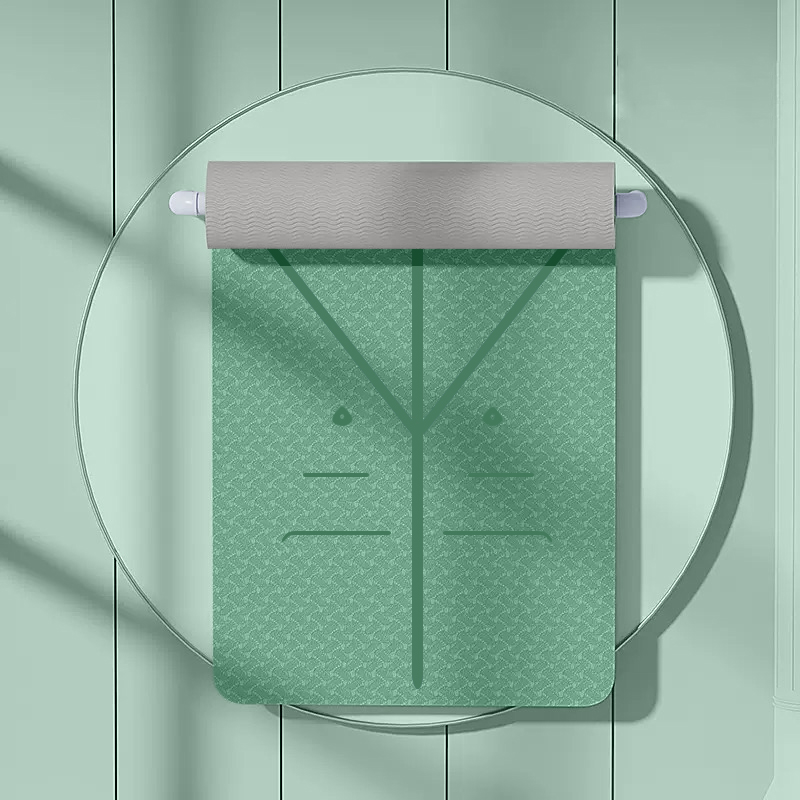
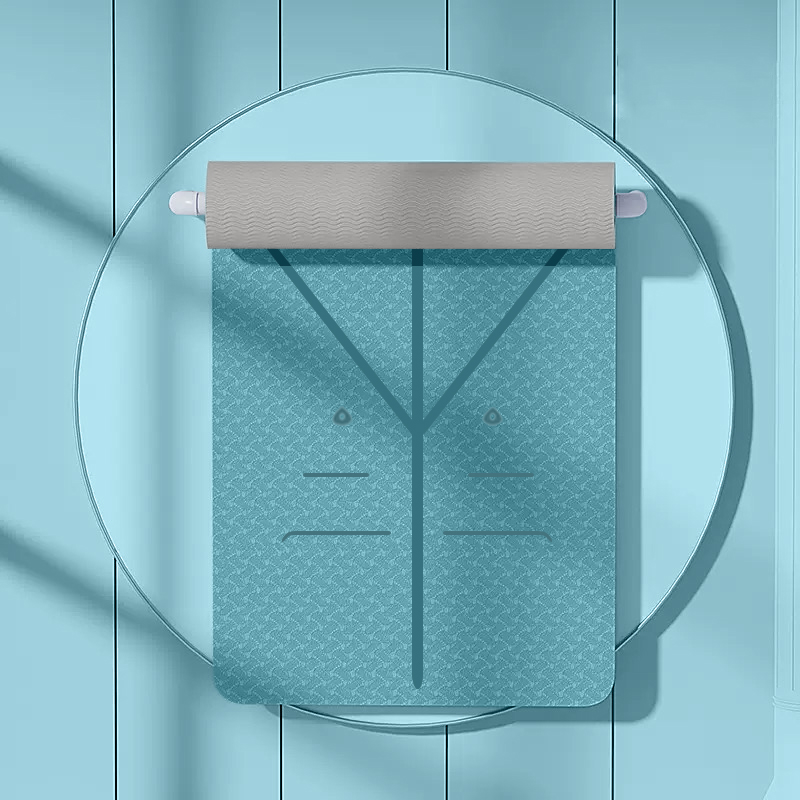
| Matte natural rubber professional mat | Frosted PU + Rubber | 185*68*0.45cm | Firm, grounded, with laser printed alignment lines | Studios, flow and balance-heavy practice, premium retail |
| Double colour premium TPE mat | TPE | 183*61*0.6cm | Soft and cushioned; the most padding in the mid band | Beginner kits, home workouts, knee-sensitive customers |
Notice that the rubber deck is also the widest of the three at 68cm against 61cm. That extra width is part of why it reads as a professional mat: it gives more room without adding any wobble underneath.
If you are choosing a mid-band thickness
- If you sell to studios or experienced practitioners, start with the 4.5mm rubber deck. Its firmness keeps hands and feet steady during long holds, and the alignment lines add value a teacher will actually use.
- If your customers are mostly beginners practising at home, the 6mm TPE deck is the kinder choice. It forgives a hard floor and tender knees, and the double colour construction gives your designs two faces to work with.
- If your product has to travel or ship in volume, the 4mm foldable TPE mat is the one to offer, because it folds into a compact pack instead of a long roll.
- If you want one mat to cover every customer, pick the 6mm TPE deck as the base and add the rubber deck as a step-up option rather than guessing a single perfect number.
- This mid band is not the right choice if your buyers need impact protection for jumping, plyometrics or weighted work — a yoga-height deck of any material will not do that job, and a dedicated fitness pad will serve them better.
What changes when you order a 5mm-class mat as a custom product
For OEM manufacturing, material choice decides more than feel. TPE decks are a cost-efficient base for printed designs and short trial runs, and both TPE mats listed here start from an MOQ of 1, which lets a new brand test colours before committing capacity to a larger batch. The natural rubber deck is the premium route: its matte PU top holds laser printed lines and logos cleanly, and it suits brands whose standards and price point justify a heavier, grippier product.
During sampling, ask to handle each deck side by side rather than reading a spec sheet. Press a palm into the surface, stand on one leg, and kneel. Ten minutes of that will tell you more than any thickness figure, and it will help ensure the mat you sell matches the experience your marketing describes. Our services cover the artwork, colour and printing details, so the only decision left for you is which deck fits your customer.
Frequently asked questions
Is a 5mm yoga mat thick enough for sensitive knees?
Usually, yes, if the material is soft. A 6mm TPE deck feels noticeably more cushioned under a kneeling pose than a firm 4.5mm rubber deck. If knee comfort is the main complaint you hear, lean toward TPE rather than simply asking for more millimetres.
Why does a thinner rubber mat feel more stable than a thicker foam one?
Because firmness, not height, controls how much the surface moves under a hand or foot. Dense rubber compresses less, so balance poses feel steadier on it even though the deck is slightly lower.
Should we stock 4mm, 5mm and 6mm, or just one?
Most new ranges do better with two clearly different options than three similar ones. A cushioned 6mm TPE mat and a firm 4.5mm rubber mat give customers a real choice; a third deck in between tends to confuse more than it sells.
Can we print our own designs on a mid-thickness mat?
Yes. Both TPE and rubber decks in this band can carry custom artwork and logos, and the rubber deck already ships with laser printed alignment lines that can sit alongside your branding. See our guides on printed and branded mats for how print methods compare.
Which mid-band mat is easiest to ship?
The foldable 4mm TPE mat. It folds flat instead of rolling, which keeps cartons smaller and helps with delivery costs on marketplace and subscription orders.