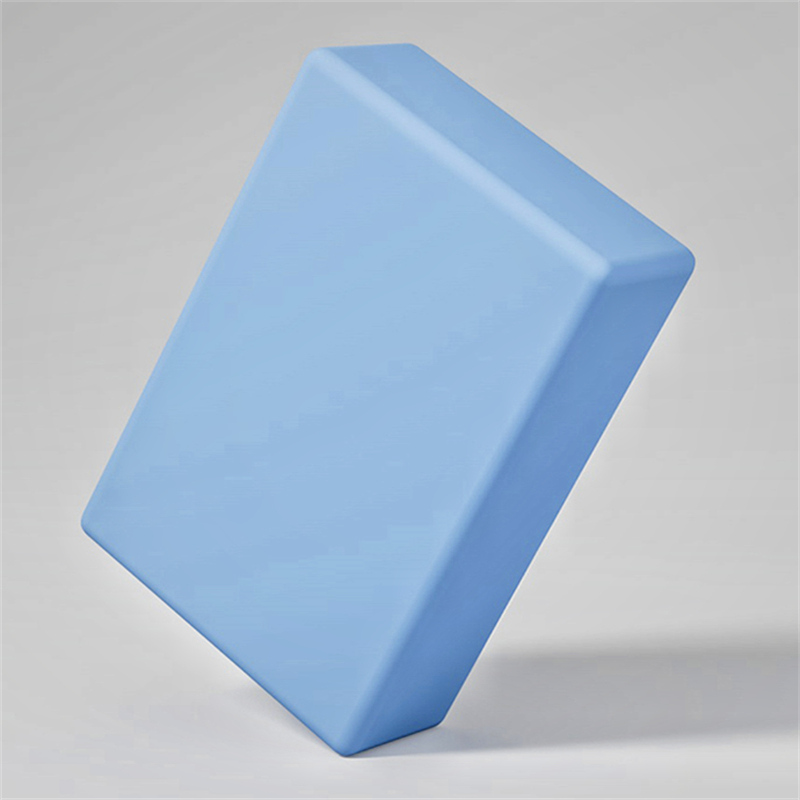
Bulk yoga blocks come down to one decision you make before colours, logos or cartons: which block body you are buying. Printing Yoga tools three of them — EVA foam, POE wood-grain foam and pressed cork — all on the same 23*15*7.5cm footprint, so a wholesale programme can switch material without redrawing artwork or re-sizing packaging. The single-colour EVA brick is the light one at 200g, the POE wood-grain brick sits at 420g, and the cork brick lands at 750g. That weight spread is the whole story: it drives freight, shelf feel and the landed cost your buyer sees.
Below is how we quote block programmes as a manufacturer, what changes between foam and cork, and where a bulk order goes wrong. Every figure here is a live specification from our own block range, not a category average.
What a bulk yoga block quote actually contains
A block looks like the simplest item in a yoga range, which is exactly why quotes are hard to compare. Two suppliers can send the same unit price and mean completely different products. When you ask us to quote bulk yoga blocks, the details we lock before pricing are:
- Block body and density. EVA, POE or cork. This decides weight, edge firmness and how the surface takes branding.
- Footprint. Our tooled size is 23*15*7.5cm across all three materials, the standard brick geometry studios teach on.
- Colourway. Stock colours ship fastest; a custom Pantone match is a tooling-and-batch conversation, not a line item.
- Branding method. Debossed or printed logo on foam, a tonal mark on cork.
- Packing and carton standards. Polybag, belly band, retail sleeve or bare-carton bulk for studios.
- Delivery window and capacity. We confirm line capacity against your ship date before quoting, so the delivery date is a commitment rather than an estimate.
Anything a supplier will not put in writing at this stage — density, weight per piece, colour tolerance — is the thing that will differ in mass production. Ask for weight per piece in particular. It is the fastest single proxy for density, and density is what your customers feel when they put body weight on the block.
Foam vs cork: the three block bodies we run
Yoga foam blocks and cork blocks are not competing on quality; they answer different briefs. Foam gives you colour freedom, low weight and the friendliest price across a wide catalogue. Cork gives you a natural material story, a denser feel underhand and a surface that does not scuff into a chalky white. The table compares the actual specifications of the four blocks we produce.
| Block | Material | Size | Weight per piece | Stock colours | Best for |
|---|---|---|---|---|---|
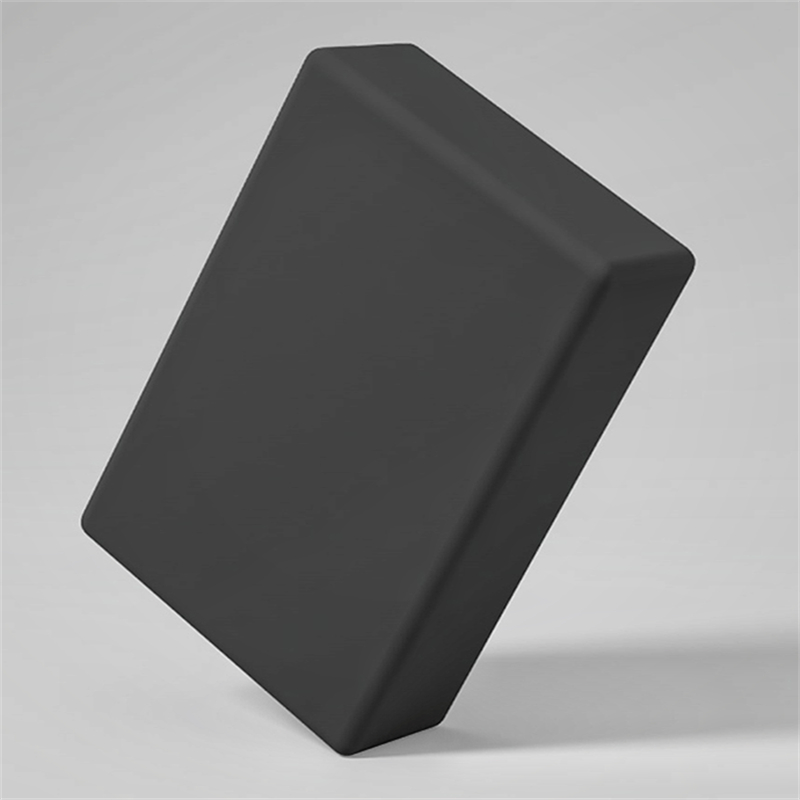
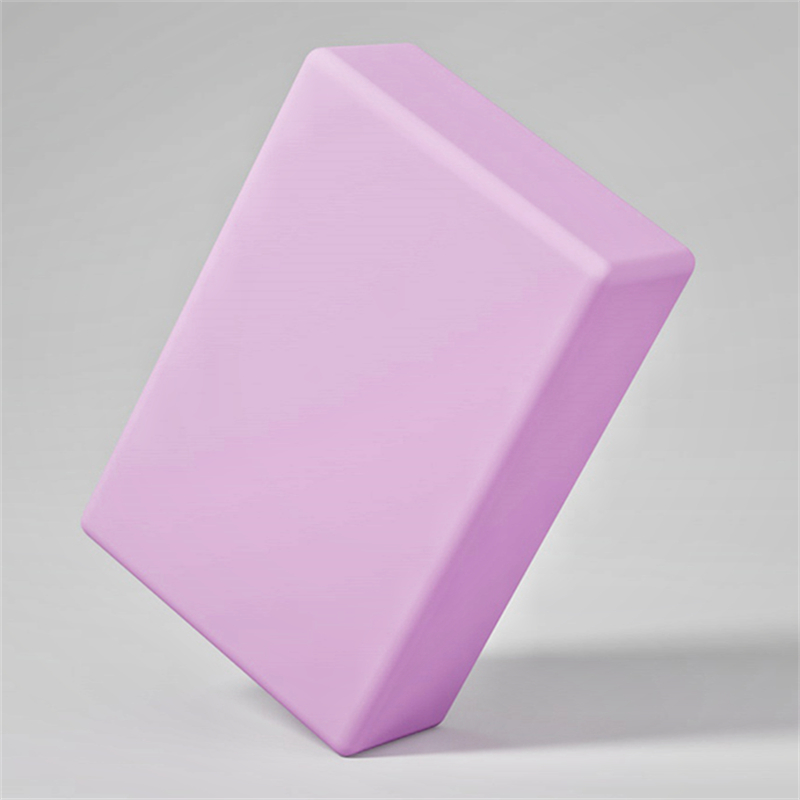
| Single-colour EVA brick | EVA foam | 23*15*7.5cm | 200g | Black, Light Purple, Matcha Green, Pure Blue, Soft Pink | Volume studio and retail programmes where freight per unit matters most |
| Double-colour EVA brick | EVA foam | 23*15*7.5cm | 200g | Brown+Brown, Honeydew Orange+Grapefruit Red, Jade Blue+Mist Blue | Brands that want a visual signature without paying for print |
| Wood-grain POE brick | POE foam | 23*15*7.5cm | 420g | Gray, Natural Wood Color, Pink | A natural look at a foam price and a foam weight |
| Cork brick | Pressed cork | 23*15*7.5cm | 750g | Natural Wood Color | Premium and eco-positioned ranges, restorative and studio use |
Read the weight column as a cost column. A cork brick is the same size as the EVA brick but carries more than three times its mass, so a full container of cork blocks moves far fewer pieces than the same container of foam. If your programme lives or dies on landed cost per unit, that arithmetic usually settles the material question before any aesthetic argument does.
If you are choosing between them: conditional verdicts
These are the rules we give buyers during a sourcing call, in the order they usually matter.
- If you are stocking a studio or a class pack, order the single-colour EVA brick at 200g. Blocks in class use get dropped, stacked and carried in bulk; the light body keeps handling easy and replacement cost low, and the five stock colours let you colour-code levels without a print run.
- If you are building a premium or eco-positioned range, order the cork brick. At 750g it reads as substantial the moment a customer lifts it, the material story is genuine rather than a printed wood finish, and it pairs visually with our cork and rubber mat for a bundled set.
- If you want the natural look but not the freight bill, order the wood-grain POE brick at 420g. It sits between the two: a natural finish, a foam body, and a middle weight that keeps carton maths reasonable.
- If you need a block carrying a fine, high-contrast, multi-colour logo, do not order the cork brick. Cork grain is uneven by nature and it holds a clean tonal mark far better than fine multi-colour artwork. That brief belongs on a smooth foam surface, or it belongs on a printed mat instead of a block.
Branding a block without wrecking the surface
Blocks offer less usable surface than mats, so restraint wins. On EVA and POE we deboss or print a single-colour mark on one face; on cork we keep the mark tonal so the grain still shows through. We do not recommend covering a whole face with artwork on any block body — the pressure of daily practice concentrates on faces and edges, and a full-coverage print is the first thing to show wear. If your designs need more room to breathe, put them on a mat and let the block carry the wordmark. The same discipline applies to our printed rubber mats, where the artwork area is large enough to hold detail.
Bundling blocks into a props programme
Most buyers who ask us about blocks are really building a kit. Blocks bundle naturally with mats, rollers and cushions, and bundling is where a props range earns its margin: one carton, one branding pass, one landed cost. We build the whole prop side of the catalogue in-house, which is what lets us hold a bundle on a single production schedule instead of chasing three vendors. If you want the kit to feel designed rather than assembled, hold one element constant — usually colour — and let material vary across the pieces.
A practical starting point for a studio kit: two EVA blocks for the class pack, one mat per member, and a cushion for restorative sessions such as our printed meditation cushion. That set covers most class formats without creating stock you cannot move.
FAQ
What is the difference between a yoga block and a yoga brick?
Nothing, in trade terms. Our range is listed as bricks because that is the factory word for the moulded rectangular prop; buyers in the US and UK usually say block. Both describe the same 23*15*7.5cm item.
Are foam or cork blocks better for a wholesale order?
Foam wins on price, colour range and freight; cork wins on feel, material story and premium shelf presence. If your buyer sorts by price, quote the EVA body at 200g. If your buyer sorts by story, quote cork at 750g.
What is the minimum order quantity for custom yoga blocks?
It depends on colour and branding, so we quote it per programme rather than publishing one figure. Stock colours with a debossed logo start lowest; a custom colour match sits higher because it needs its own batch. Send your target quantity and ship date, and we will confirm the MOQ and the schedule together.
Can you match my existing block colour?
Usually, yes. Send a physical sample or a Pantone reference and we will run a trial before production. Foam bodies take a custom match more predictably than cork, whose natural tone varies between batches — on cork we set a tolerance range instead of promising an exact hue.
Do you ship blocks and mats in the same order?
Yes, and that is the main reason buyers consolidate here. Blocks, mats, rollers and cushions come off our own lines, so one purchase order covers the set, one QC pass checks it against your standards, and one shipment carries it. That removes the usual mismatch where props from different suppliers arrive in slightly different shades.
How do I check block quality before committing to volume?
Ask for a pre-production sample in your exact colour and branding, then test it the way a member would: stand on it, drop it on a hard floor, press a thumb into a face and watch how fast the dent recovers. Recovery speed tells you more about density than any datasheet, and it is the one test we encourage every buyer to run.
Getting a quote
To create a block programme we need four things: target quantity, block body, colourway and your branding artwork. From there we confirm capacity and delivery, and our services cover sampling through to shipping documents. Browse the range on printingyoga.com and send the specification — we will come back with a quote that lists weight, size and colour per line so you can compare it against anything else on your desk. Every block we quote is a high-quality item we tool and mould ourselves, which is the only way we can stand behind these figures. If your experience with previous suppliers has been vague datasheets and moving ship dates, that is the gap this quote format is built to close.