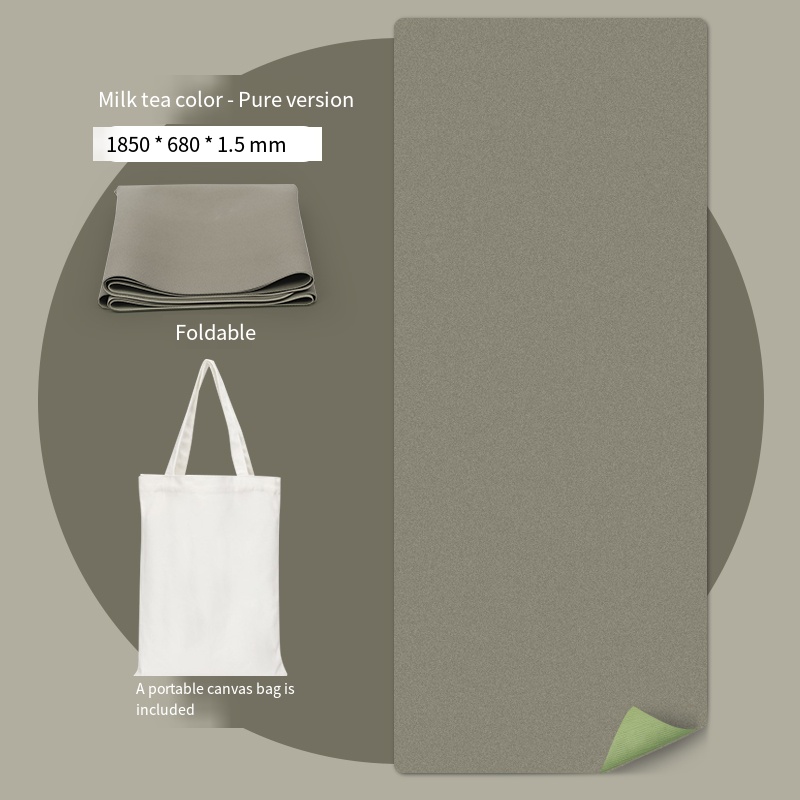
A yoga mat bag fits your mat only when three numbers line up: the mat's width, its thickness and its weight. A carry bag cut for a 61 cm sleeve will not swallow a 68 cm mat, and a sleeve sized for a 0.15cm folding mat will never close around a 0.6cm studio mat. If you are sourcing mats for a brand that also sells or gifts a carry bag, decide the mat spec first — the bag is the dependent variable, not the other way round. This guide uses real production specs from Printing Yoga's own mat range so you can spec bundles without guesswork.
The three specs that decide bag fit
Width sets the length of the rolled tube. Our professional rubber mats are 68 cm wide; the PVC studio mat is 61 cm wide. A bag sleeve has to clear the wider of the two if you want one bag SKU across a wide product range.
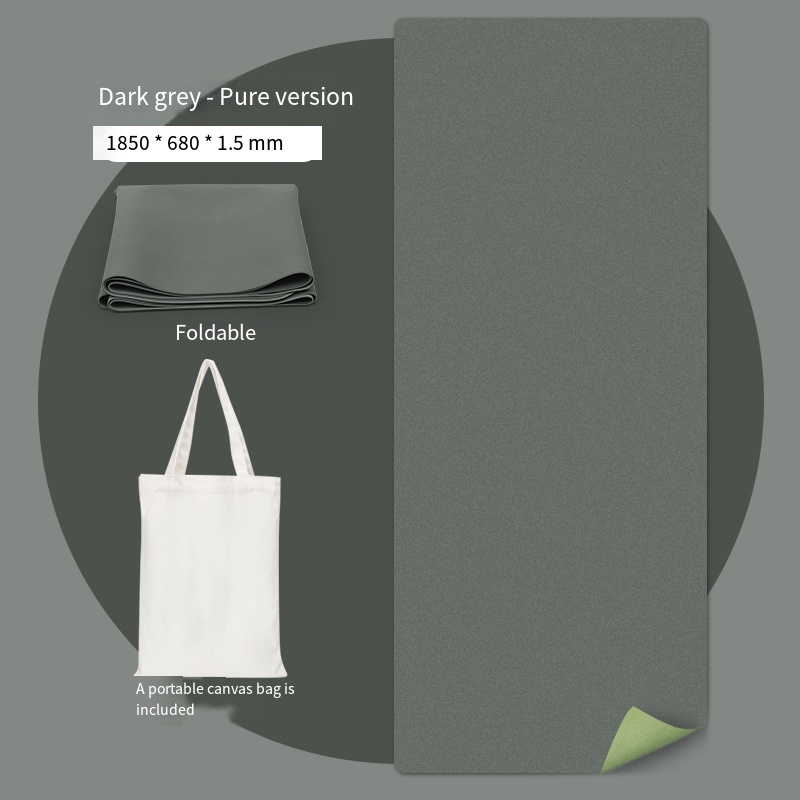
Thickness sets the rolled diameter. At 0.15cm the folding model rolls — or folds — to a fraction of the bulk of a 0.6cm PVC mat, which is why the same tote will not serve both.
Weight decides whether the bundle is carried daily or left in the studio. The folding mat weighs 1.25 kg, the 0.45cm matte rubber mat 2.9 kg and the 0.6cm PVC mat 3.0 kg. Shoulder straps, stitching standards and the fabric weight of the bag all follow from that number.
Real mat specs from our production range
| Model | Size (cm) | Weight | Roll bulk | Carry-bag verdict |
|---|---|---|---|---|
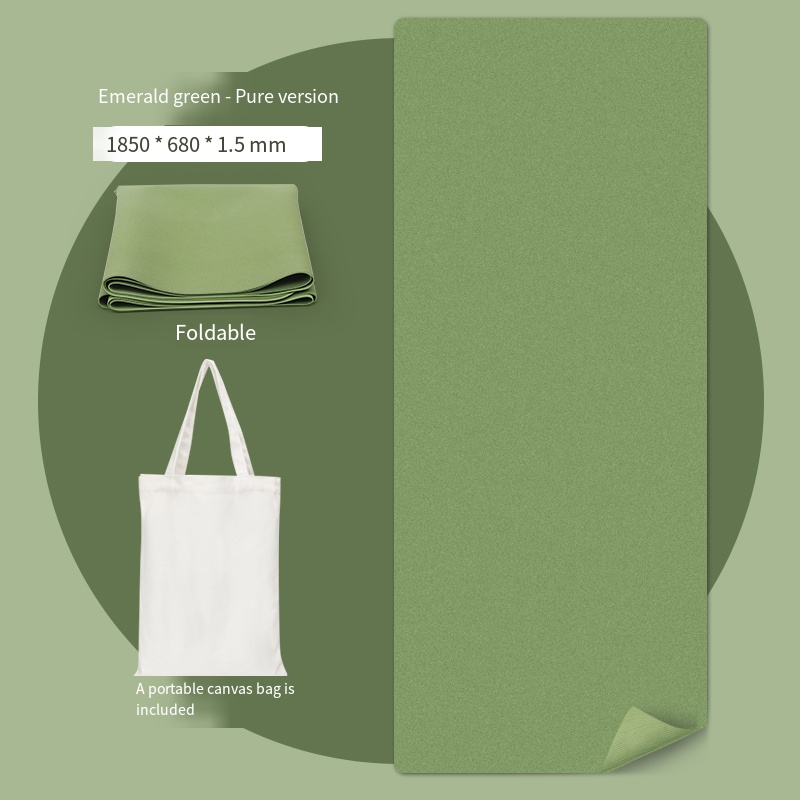
| Foldable matte rubber | 185*68*0.15cm | 1.25 kg | Lowest — folds flat | Ships with a canvas tote; also fits a normal backpack or weekend bag |
| Matte natural rubber | 185*68*0.45cm | 2.9 kg | Medium-high | Needs a full-size sleeve cut for a 68 cm mat |
| PVC studio mat | 183*61*0.6cm | 3.0 kg | Highest — thickest section | Narrower but fattest roll: needs a wide-diameter sleeve, not a long one |
| ColorBlock rubber/cork pilates mat | 97*57*0.45cm | — | Short roll | Fits compact totes; no full-length mat bag required |
If you … conditional verdicts
If you sell to commuters — students who walk, cycle or take transit to class — specify the 185*68*0.15cm folding model. At 1.25 kg it is the only mat in this list that a customer will carry every day without complaint, and the canvas tote it ships with removes the need to source a separate bag SKU during your first production run.
If you are outfitting a studio, ignore bag fit entirely. Mats that live on a rack all year should be chosen on grip and cushioning, which puts the 0.45cm matte rubber mat or the 0.6cm PVC mat ahead; the extra weight never leaves the building, and the thicker section protects joints during long floor sequences.
If you already have a bag design in production and its sleeve was cut for a 61 cm mat, do not add the 185*68*0.45cm rubber mat to that bundle. It is both wider and thicker than the PVC mat the bag was drawn around, and no amount of tolerance in the pattern will fix a width gap that large. Re-cut the bag or change the mat — there is no third option.
If you are building a travel or retreat kit, pair the folding mat with the 97*57*0.45cm pilates mat rather than two full-length mats. The short mat rolls to a compact package, and the pair covers both floor work and standing practice without doubling the shipping capacity you need per carton.
What this means for your bulk order
Mat specs drive four downstream decisions, and getting them in the right order will help you avoid a re-tool halfway through sampling:
- Artwork placement. Laser-printed alignment lines are positioned against the finished mat size, so the 68 cm and 61 cm widths carry different line geometry. Confirm the size before you sign off designs.
- Carton and freight. A 1.25 kg mat and a 3.0 kg mat change the volumetric maths for a full container. Ask for carton details early so your delivery quote is not rebuilt after the first sample round.
- Bag sourcing. Only the folding model in our range comes with a tote. Any other bag is a separate sourcing line with its own lead time — plan it in parallel, not after the mats are approved.
- Retail presentation. Thin travel mats photograph and merchandise differently from thick studio mats; a wide assortment usually needs two shots, not one.
Printing Yoga manufactures all four of the products above in-house, which is why we can publish exact sizes and weights instead of ranges. If you want to create a branded set — mat body, colourway and print method chosen together — our OEM services cover single-colour, latex-printed and laser-engraved finishes across the same mat bodies, and we offer sampling before you commit to a full run. Buyers with OEM experience will recognise the pattern: lock the mat, then let the bag, carton and artwork follow.
FAQ
Will a standard yoga mat bag fit a 68 cm wide mat?
Often not. Many off-the-shelf bags are drawn around a 61 cm mat, the width of our PVC studio model. Our rubber mats are 68 cm wide, so the sleeve has to be cut longer. Measure the bag's internal sleeve, not its external label, before you assume compatibility.
Which mat should I pick for travel, and do I still need a mat bag?
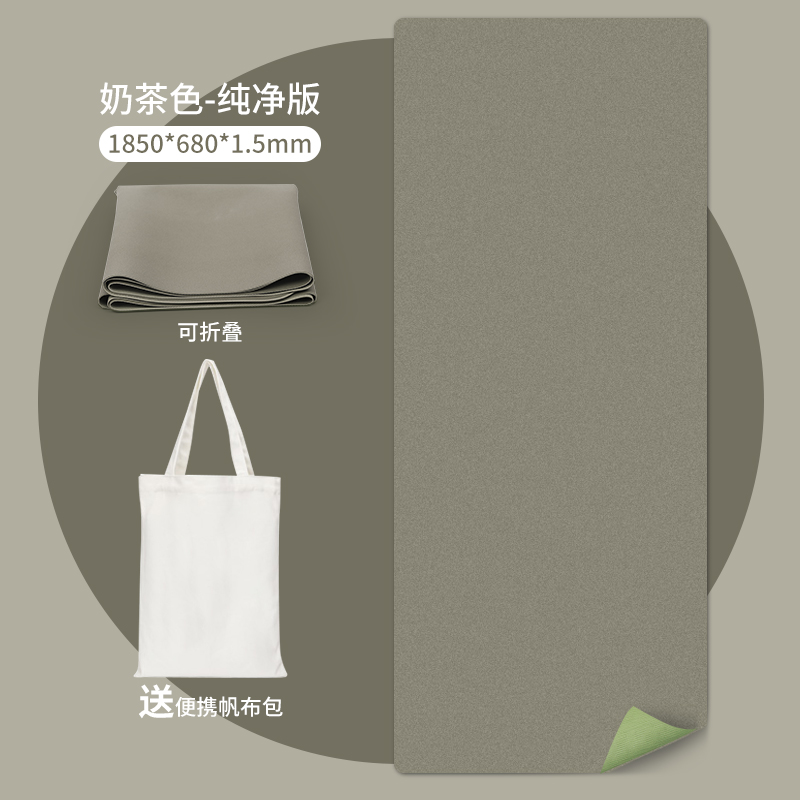
The 185*68*0.15cm foldable matte rubber mat is the travel choice at 1.25 kg, and it ships with a canvas tote, so a separate mat bag is optional rather than required. It folds instead of rolling, which is what lets it go into an ordinary backpack.
Does thickness or width matter more for bag fit?
Thickness. Width only changes the length of the rolled tube, which most sleeves tolerate by a few centimetres. Thickness changes the diameter, and a 0.6cm mat rolls to a noticeably fatter cylinder than a 0.45cm mat of the same width — that is where bundles usually fail.
Can you create custom carry bags to match our mat designs?
Only the foldable model in our current range ships with a bag as standard. If your programme needs bags for the other products, treat them as a separate sourcing line with their own quality standards, and confirm availability before you lock a launch date. We would rather flag that up front than let a bag hold up a high-quality mat order.
How much does mat weight affect my shipping cost?
Enough to matter at volume. The spread across our range runs from 1.25 kg for the folding mat to 3.0 kg for the PVC studio mat — more than double. On a full container that difference decides how many units you can load, so bring the weight number into your landed-cost model at the quoting stage, not after.
Do the alignment lines change between sizes?
Yes. Laser-printed alignment lines are laid out against the finished mat, so the 185*68 rubber body and the 183*61 PVC body carry different geometry. We ensure the line set matches the size you order; if you switch size mid-project, the artwork has to be re-approved.