
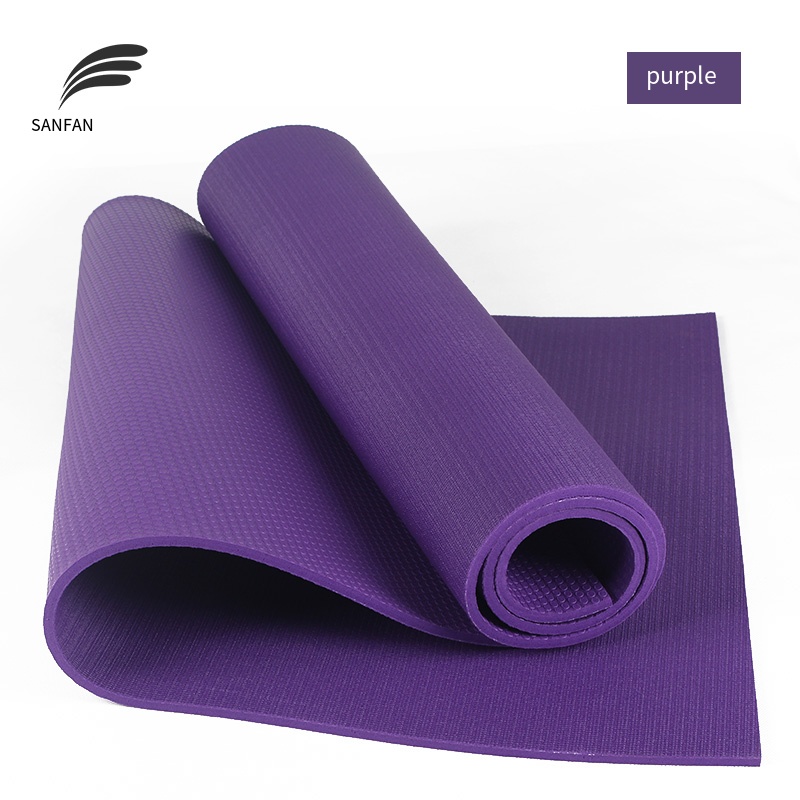
A thick exercise mat, in sourcing terms, starts at the 6 mm tier: the PVC deck at 183*61*0.6cm is the cushioning option, the matte natural rubber deck at 185*68*0.45cm is the firmer 0.45cm option, and the compact ColorBlock cork/PU rubber pad at 97*57*0.45cm is built for Pilates floor stations where space is short. If you are stocking for mat Pilates, core and rehab formats, go thick; if your timetable is standing-heavy yoga, do not. Printing Yoga makes all three as factory-direct OEM products, so deck height is a spec you set, not a catalogue limit.
What deck height actually buys you
Height on a spec sheet is a trade between joint cushioning and ground feel. A taller deck spreads pressure under knees, spine, hips and elbows during floor work, which is exactly what mat Pilates, core conditioning and rehab classes ask for. A lower deck keeps the foot closer to the floor, so standing balance stays honest. Neither one is universally better — they answer different class formats, and buyers who simply order the tallest option often end up with stock their instructors quietly stop using.
Two details decide comfort alongside height. The first is surface material: our PVC deck (spuCode S1A42) is a single-colour premium build with laser printed alignment lines, the frosted PU + rubber deck (S1A27) trades a little cushioning for grip and a matte hand feel, and the cork-faced PU rubber pad (S1A55) gives a natural surface that warms up under the hand. The second is firmness — a soft tall deck and a dense tall deck behave nothing alike, which is why we send physical samples before any bulk run rather than asking you to buy from a number on a page.
If you are choosing a height: four conditional verdicts
- If you run mat Pilates, core or rehab sessions, specify the 6 mm PVC deck at 183*61*0.6cm. Kneeling, supine and side-lying work is where cushioning pays for itself, and the laser printed alignment lines help newer clients place hands and feet without the instructor walking over.
- If your timetable is standing-heavy vinyasa or power yoga, take the 185*68*0.45cm matte rubber deck instead. It is longer and wider than the PVC option, and the lower profile keeps balance poses stable — a taller deck under a standing sequence feels vague underfoot.
- If floor space is the constraint — reformer studios, hotel gyms, physio rooms, pop-up events — the 97*57*0.45cm ColorBlock cork pad is the honest answer. It is sized for floor and equipment-side work, stores in a fraction of the space of a full mat, and the colour blocking lets you code stations by class type.
- If you are sourcing for hot, sweat-heavy classes, do not buy on height at all. That is the exclusion case: grip surface and towel pairing decide whether hands slide, and no amount of cushioning fixes a slick deck. Our matte rubber deck is the better starting point there, and we would rather tell you that than sell you the thicker line.
Spec comparison
| Model | Material | Size | Deck height | Surface / print | Best for |
|---|---|---|---|---|---|
| PVC premium deck (S1A42) | PVC | 183*61cm | 0.6cm | Single colour, laser printed alignment lines | Mat Pilates, core, rehab, beginner floor work |
| Matte natural rubber deck (S1A27) | Frosted PU + rubber | 185*68cm | 0.45cm | Matte grip, laser printed alignment lines | Standing yoga, sweat-heavy classes, studio hire |
| ColorBlock cork pad (S1A55) | PU rubber / cork | 97*57cm | 0.45cm | Cork face, colour-block panels | Reformer-side stations, small rooms, travel kits |
What changes when you order these as custom products
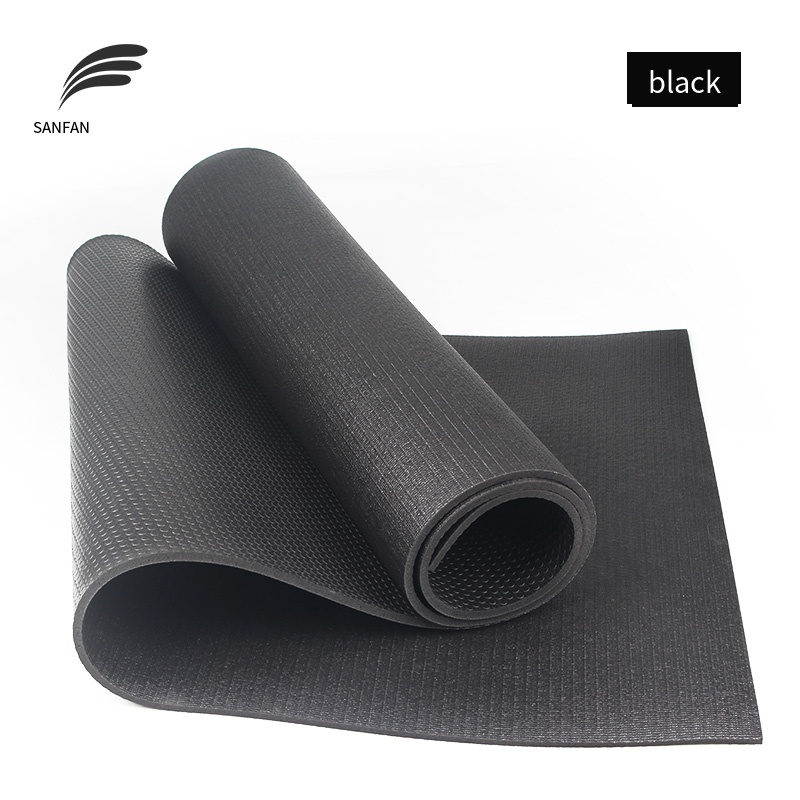
Stock buying stops at the size chart. Custom manufacturing is where a studio range starts to look like a brand: we create decks in your colours, apply your logo, and can run alignment lines as laser printed geometry rather than ink, so the guides do not lift after a season of cleaning. On the cork and rubber faces we offer printed artwork as well, and the same designs can carry across a wide range of products — decks, pads and accessories — so a launch reads as one family instead of three unrelated buys.
Our OEM and ODM services cover the whole path from your brief to delivery: artwork setup, physical sampling, colour matching, production and inspection against the standards your market expects. During sampling we deliberately over-communicate the details that decide reorders — surface finish, edge quality, how the print sits on a textured face — because those are the items retail customers notice first. Ask us for current capacity and lead times when you enquire; both move with the season, and a quoted date we can actually hold is worth more than an optimistic one. Full specifications for every deck sit on the product pages at printingyoga.com, and our team will help you narrow a shortlist before you commit to samples.
Questions buyers ask
How thick should an exercise mat be for Pilates?
For mat Pilates the 6 mm tier is the practical floor — the 183*61*0.6cm PVC deck cushions kneeling, supine and side-lying work without turning spongy. Studios that also teach standing formats usually keep a second, lower deck in rotation rather than forcing one height to cover everything.
Is a thick exercise mat also good for yoga?
Partly. Floor-based restorative and yin sessions benefit from the extra cushioning, but standing balance suffers on a tall deck because the foot sits further from the ground. If your classes are mostly standing, the 185*68*0.45cm option is the safer stock decision.
Natural rubber or PVC — how do I choose for a custom order?
Choose by class type and by what your buyers ask about. Frosted PU + rubber gives a matte, grippier face and a natural-material story that many retail customers now expect; PVC gives more cushioning per unit cost and takes single-colour branding cleanly. We send both as samples so the decision is made by hand, not by description.
Can we run a small trial order before committing to bulk?
Yes — trial quantities are normal for new brands and new class formats, and we would rather you validate a range before scaling it. Tell us the models and colours you want to test and we will quote the trial and the follow-on production together, so you can see the cost curve before you decide.
Do laser engraved alignment lines work on a thick PVC deck?
They do. The PVC premium model ships with laser printed alignment lines as standard, and the same process runs on the matte natural rubber model. Because the geometry is burned into the surface rather than printed on top, it survives repeated cleaning better than an inked guide — the usual failure mode we get asked to fix on competitor stock.
Which deck should a new studio buy first?
Start with the format you teach most. A Pilates-led timetable starts with the cushioned PVC deck; a yoga-led timetable starts with the matte rubber one; a mixed room with limited storage often starts with the compact cork pad and adds full-size decks later. Our experience is that studios regret buying one height for everything far more often than they regret buying two.