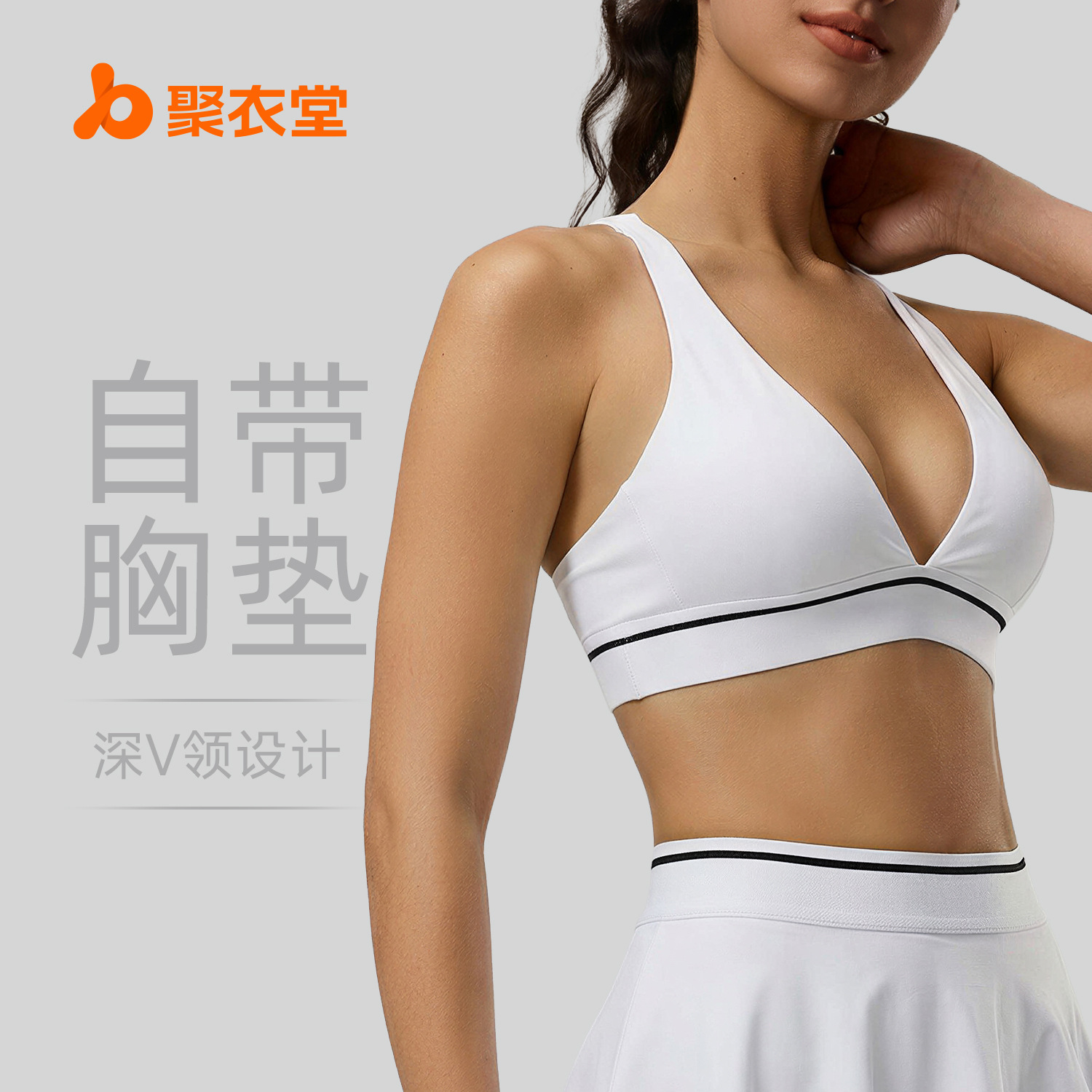
A custom yoga sports bra is a fabric-and-grading decision long before it is a design decision. The build that Printing Yoga runs in production today is a good starting point to copy: the Oreo Peach V-neck Bra pairs an outer layer of 82.5% polyester fiber, 17.5% spandex with a mesh fabric of 94% polyester fiber, 6% spandex, graded XS to XXL and offered in four colorways. If your tech pack starts from a proven bra block like that, sampling becomes a conversation about fit, support and print placement instead of an experiment in inventing a fabric. This guide covers what OEM buyers should specify — support level, mesh placement, size set, colorways and print method — and which details to lock before manufacturing starts.
Support level is the first line of the tech pack
Every other decision follows from how much support the bra has to deliver. A light-support piece for slow flow and restorative classes can be a single-layer compression shell with a wide underband and no removable pads. A medium-support piece — the one most yoga brands actually sell — needs a firmer band, a bonded or elasticated hem and a shaped front panel that holds through inversions. High-impact running bras are a different animal with encapsulated cups and adjustable hardware, and they belong in a separate development track. Say which of the three you want in the first message you send a factory; it changes the pattern, the elastics and the sampling calendar more than the colour ever will.
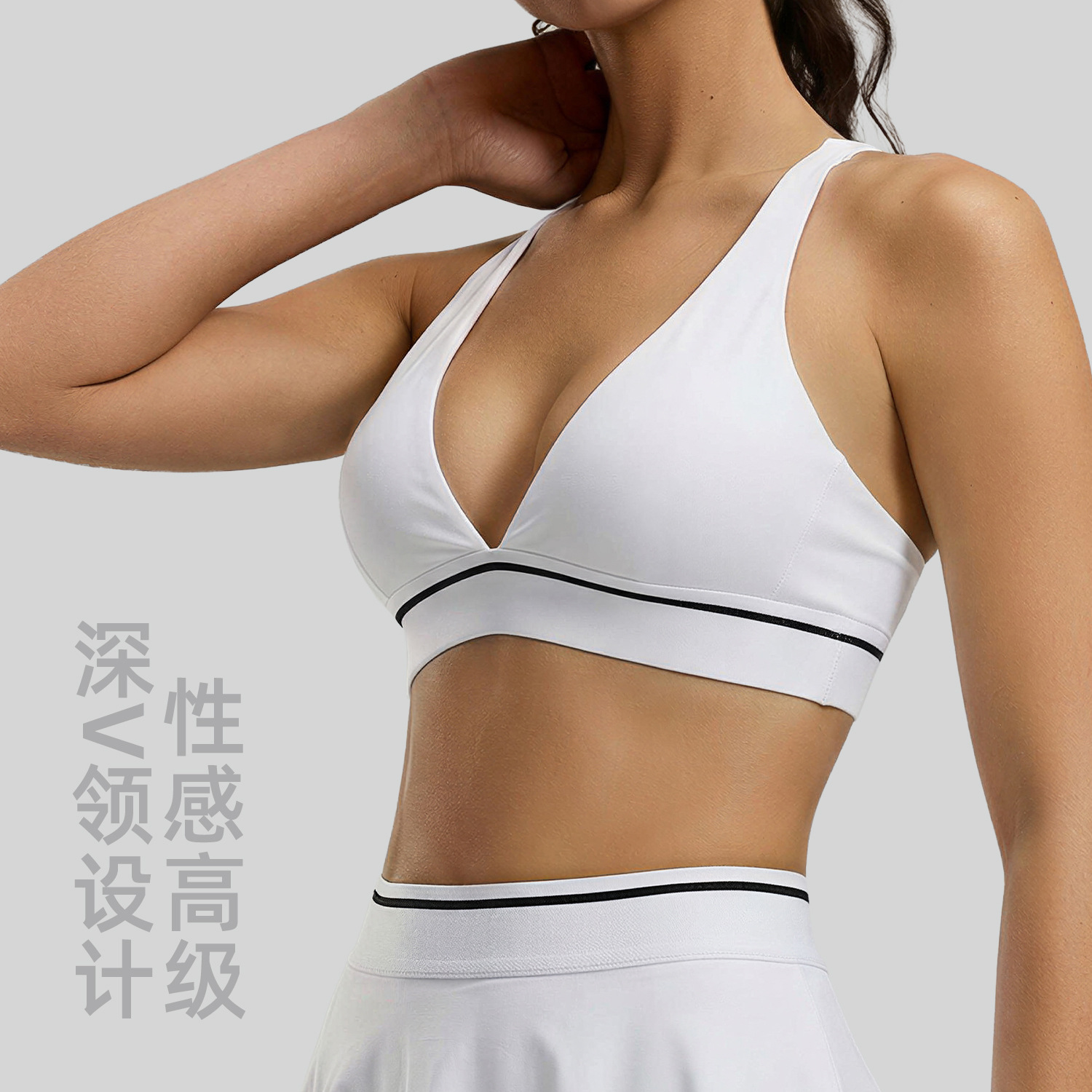
The V-neck build above sits in the middle band on purpose. Compression comes from the high-elasticity shell, breathability comes from a mesh insert, and the neckline is cut low enough to layer under a shirt without the bra edge showing. That combination is what most studio and boutique brands are asking for when they say they want a "everyday yoga bra".
The mesh is a different fabric from the shell, and that is the point
Two numbers explain most of how a bra behaves. The shell at 82.5% polyester fiber, 17.5% spandex carries a high elastane share, so it compresses, holds shape and springs back after being stretched over the head. The mesh at 94% polyester fiber, 6% spandex has far less elastane, so it stays open, moves air and does not fight the shell for recovery. Swap those roles by accident — mesh with too much spandex, shell with too little — and the bra either gapes at the neckline or clamps down and traps heat.
If you are building for hot rooms, put the mesh across the upper back and the lower centre front, where sweat sits and where nothing structural is happening. If you are building for cool studios or outdoor practice, keep the mesh smaller and let the shell do the work. If you want a fully seamless knit bra with no mesh panel at all, that is a different machine and a different supplier conversation — we would rather tell you that up front than discover it during sampling.
Three real fabric builds, and what each one tells a buyer
| Product in production | Composition | What the composition tells you | Best for |
|---|---|---|---|
| Oreo Peach V-neck Bra | Shell 82.5% polyester fiber, 17.5% spandex; mesh 94% polyester fiber, 6% spandex | High elastane shell for compression, low elastane mesh for airflow | Medium-support studio bras, layered sets |
| Peach Quick-Dry Pants - Model 01 | Outer 94% polyester fiber, 6% spandex; inner 90% polyester fiber, 10% spandex | Two bonded faces with different stretch — the inner face manages moisture | Matching bottoms for a bra-led set |
| Polyamide letter-printed long-sleeved shirt | 78% nylon, 22% spandex | Nylon hand feel, very high stretch, softer surface than polyester | Premium tops and cover layers over a bra |
Read the table as a menu of fabric families rather than a menu of finished products. A brand that wants a softer, more premium hand can ask for the nylon-spandex family on the bra shell too; a brand chasing a sharper colour payoff on printed designs is usually better served by the polyester families, because disperse dyes bond to polyester and not to nylon.
Grade the size set you will actually sell
The bra runs XS to XXL — six sizes — while the pants and the shirt run S to XXL. That gap is deliberate: bras need the extra small end far more than bottoms do, and buyers who skip XS end up losing exactly the petite, athletic customers who practise most often. Decide your range before the first sample, because the grade rule set is written once and every later size is derived from it. Adding a size after a production run is a new grading exercise, not a tweak.
If you are launching into one market only, a five-size run keeps your inventory tight and your reorder cycle simple. If you sell across several regions, ask for the wide range and a size chart in both centimetres and inches, so your customer service team is not converting numbers by hand. If your brand promises extended sizing above XXL, tell us during quoting — that changes pattern development and fabric consumption, and we will not pretend otherwise after the fact.
Colorways, artwork and where a print can live on a bra
The bra is offered in four colorways and the two garments beside it in three each. That is a normal shape for a first production run: a black anchor, a light neutral and one or two seasonal shades. Custom colours are available, but each additional colour is its own dye lot and its own minimum, so most brands are better off putting their budget into artwork than into an extra shade of grey.
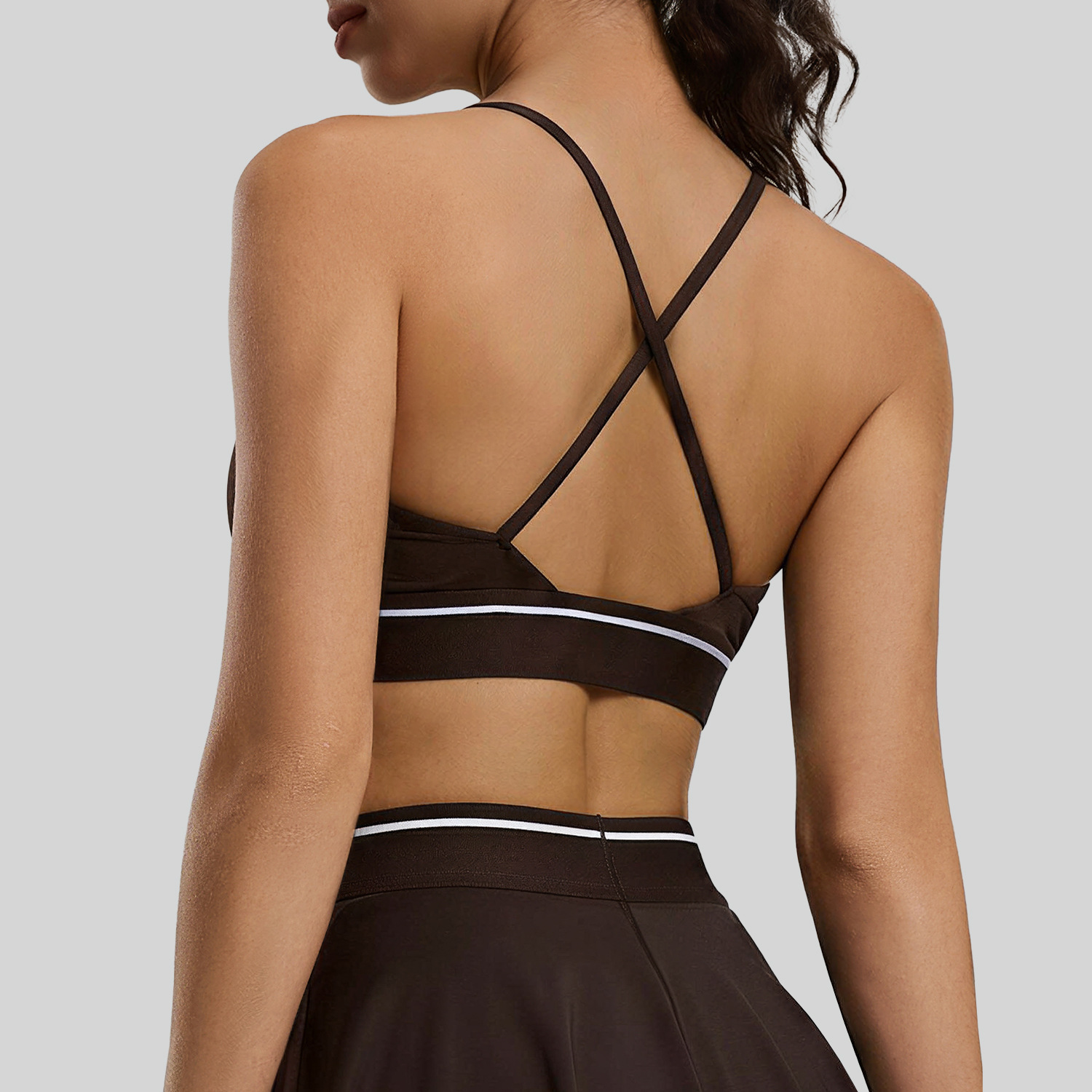
On a stretch bra, artwork placement matters more than artwork resolution. Keep detailed designs away from the underband and the strap crossover, where the fabric elongates most; put them on the centre front, the upper back or the mesh edge. Sublimation printing on polyester keeps the hand feel of the fabric and will not crack, because the dye becomes part of the fibre rather than sitting on top of it. Heavier surface prints look bolder but need to be placed with the stretch direction in mind. Our team can help you adapt existing brand designs to those constraints before tooling, which is far cheaper than discovering the problem on a finished sample.
What to send us, and what happens next
The fastest projects arrive with four things: a tech pack or at least a labelled sketch, a reference garment you like, the size range you intend to sell, and your target market. From there we quote, make a fit sample, and iterate. Most brands need two rounds — one for fit, one for print and trim details. Build that into your launch calendar and treat the delivery date as the sample-approval date plus production time, not as the day you first emailed a factory.
Two questions are worth asking any supplier before you commit. First, what testing standards do they run and can they show you the reports for the exact fabric you are buying, not a similar one. Second, what is their real capacity in your category — a factory with deep experience in leggings may have very little in moulded bra cups. Printing Yoga makes yoga products across mats, cushions and apparel, and the services we offer around apparel are built on the same polyester-spandex and nylon-spandex platforms shown above; asking a supplier to name its platforms is a quick way to ensure you are hearing about real manufacturing rather than a catalogue.
Frequently asked questions
Looking for a manufacturer/supplier for yoga activewear — how do I tell if one is any good before I commit?
Ask for a fit sample in your own size set and pay for it. A sample costs less than a failed production run and it answers the only question that matters: does this supplier hit your fit and finish. While you wait, ask which exact compositions they run in production — a real answer sounds like "82.5% polyester fiber, 17.5% spandex shell with a 94% polyester fiber, 6% spandex mesh", not "high quality stretch material".
My wife is preparing to launch a premium activewear brand and the first tech packs are almost ready. What do you need from us?
Send the tech pack, one reference garment, your intended size range and your target retail positioning. If the pack is incomplete, send it anyway — gaps are easier to close in a quote conversation than in a second sample round. Premium positioning usually points to the nylon-spandex family for hand feel, so flag that early.
I practise power hot yoga a few times a week. What should the bra be made of?
A high-elastane compression shell with a low-elastane mesh insert, which is exactly the split described above. Cotton blends feel lovely for the first ten minutes and then hold water for the rest of the class. Keep the mesh where sweat pools and keep pale colours off the underband if your customers practise in hot rooms.
Can we start with a small trial order before a full production run?
Yes — trial quantities exist so a young label can test sell-through without tying up cash in stock. The trade-off is unit cost, since setup work is spread over fewer pieces. Tell us the quantity you have in mind and we will quote it honestly instead of quoting a dream volume you would have to grow into.
Will the print crack where the garment stretches most?
Not with sublimation on polyester, because the colour lives inside the fibre. Surface prints can crack if they are placed across a high-elongation zone such as an underband, so we move that artwork or change the method during sampling rather than shipping something that will fail on a customer.