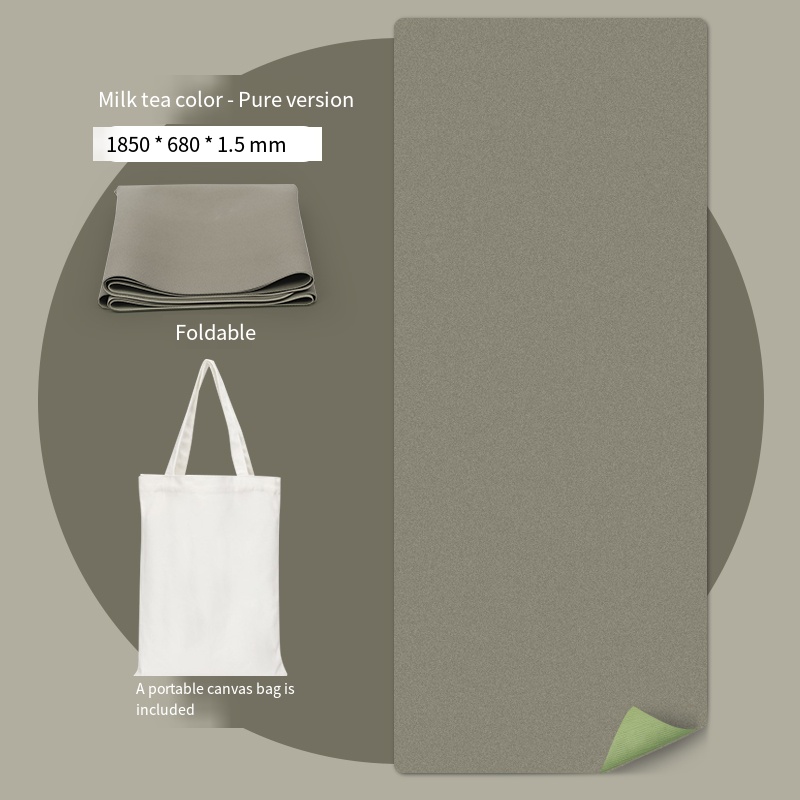
A folding exercise mat is a mat designed to be stored flat in folded panels instead of rolled into a tube, so it slides under a bed, into a locker or inside a suitcase. In our own range that job is done by the Foldable Matte Nature Rubber mat, frosted PU over natural rubber at 185*68*0.15cm with laser printed alignment lines. A folding deck buys storage and travel; it does not buy cushioning. If you need padding for knees and spines on a hard floor, the honest answer is a rolled deck such as our PVC mat at 183*61*0.6cm, and the rest of this guide shows brands and wholesale buyers exactly where that line sits.
What folding actually changes in a mat
Search demand for a folding exercise mat comes from two very different shoppers. One is the apartment trainer with no storage wall. The other is the traveller who refuses to carry a rolled tube through an airport. Both want the same physical property: a deck thin and supple enough to lie flat again after being folded, with no ridge down the middle. That property is decided in manufacturing, not in marketing copy.
The first constraint is height. A thin deck folds and recovers; a tall foam deck does not really fold, it hinges. Products sold as tri-fold gym mats are foam blocks joined by fabric hinges inside a vinyl shell — a different factory, a different bill of materials, and a wide gap in freight cost. Our folding mat solves the problem the other way: at 185*68*0.15cm the natural rubber sheet is thin enough to fold like fabric, and the frosted PU face carries its marking without cracking along the crease.
The second constraint is the surface. A folded mat spends its life pressed face to face inside a bag, so the top layer has to survive abrasion against itself. Frosted PU handles that; a soft open-cell foam surface will not. This is the detail that decides whether your returns desk hears about worn patches in the first season.
The third constraint is what the fold does to your designs. Alignment guidance on our folding deck is laser printed, so the mark is part of the surface rather than a layer sitting on top of it. That is a deliberate choice for products that get creased: a heavy ink film is the layer most likely to show a line where the mat is folded. If you want full-colour artwork on a packable mat, we will steer you towards latex printing on a rolled deck instead, and we would rather say so during quoting than after your first container lands.
If you are choosing between a fold and a roll
- If you are building a travel or commuter SKU — a mat that must live in a backpack or a hotel wardrobe — the folding rubber deck at 185*68*0.15cm is the right product, and full body length is what makes it credible against thin foam competitors.
- If you are selling to home users on hard floors and the reviews you fear are about sore knees, do not sell a folding mat as the answer. Stock a rolled deck: the PVC mat at 183*61*0.6cm gives real cushioning, and its laser printed alignment lines still help beginners place hands and feet.
- If you are supplying studios, physio rooms or Pilates reformer programmes, the useful compact product is not a folding mat at all but a short pad. The cork and PU rubber pad at 97*57*0.45cm stores in a stack, grips through sweat and covers the working area for floor and reformer work.
- If you are choosing for a wholesale programme where freight decides the margin, measure the folded carton before you decide anything else. Folding decks cube far better than rolls, which changes cartons per pallet and therefore your landed cost — often more than the unit price does.
Spec comparison
| Product | Dimensions | Material | Storage format | Best for | Custom marking |
|---|---|---|---|---|---|
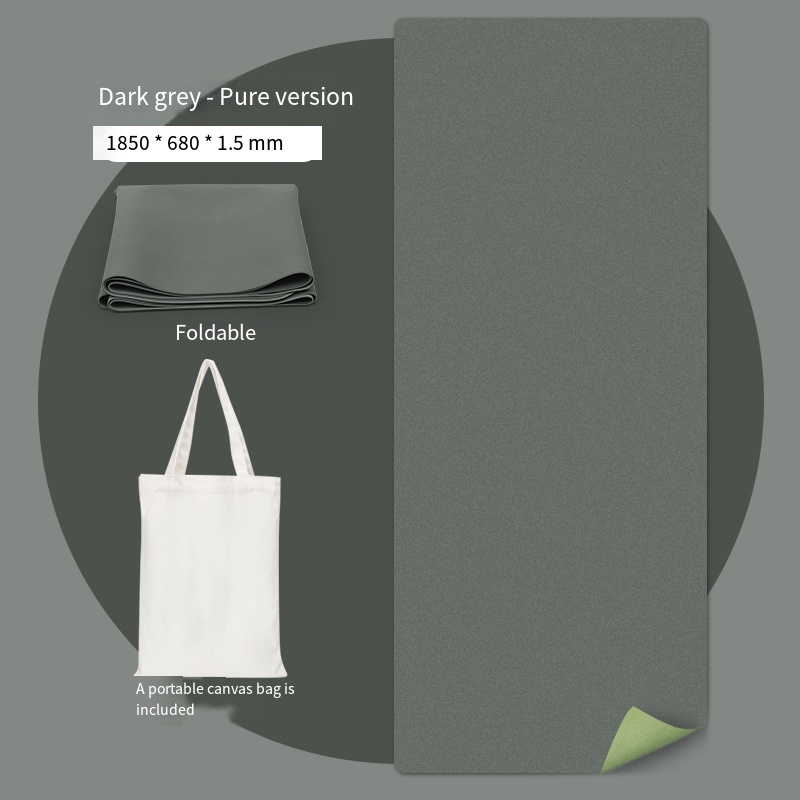
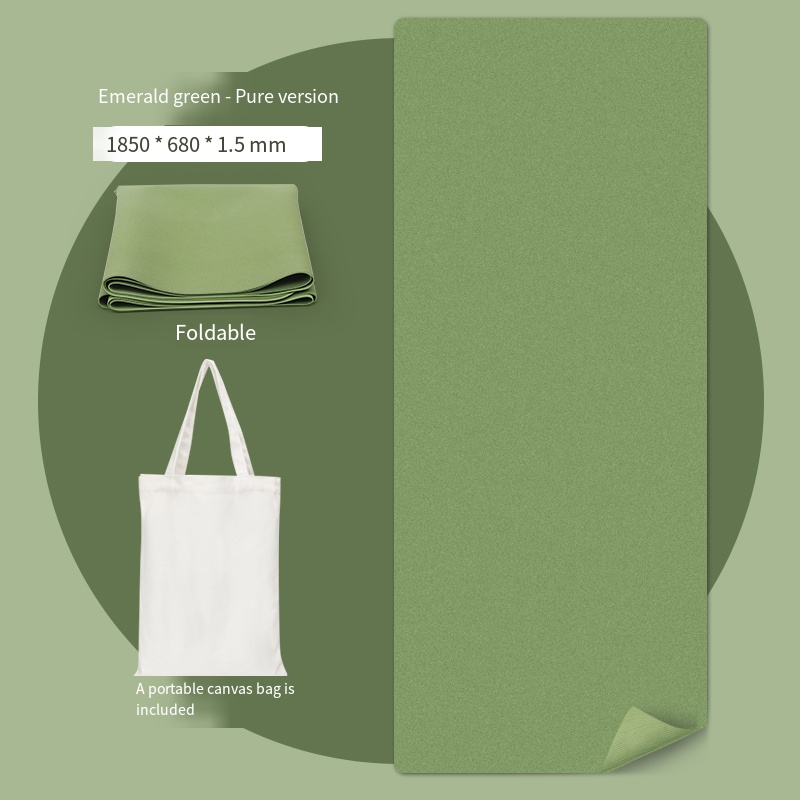
| Foldable Matte Nature Rubber mat | 185*68*0.15cm | Frosted PU + rubber | Folds flat, packs into a bag | Travel, commuting, small-apartment storage | Laser printed alignment lines; single colour bodies in Dark Gray, Emerald Green, MilkTea Color |
| PVC premium mat | 183*61*0.6cm | PVC | Rolled | Home floor work where cushioning matters | Laser printed alignment lines; Black, Burgundy, Purple |
| ColorBlock cork and rubber pad | 97*57*0.45cm | PU rubber / cork | Stacks flat, short footprint | Pilates, reformer work, studio and clinic use | Cork face, Black colourway, custom colour blocking on request |
Read the table as three answers to three different questions, not as good, better, best. The folding mat wins on packability and loses on padding. The PVC deck wins on padding and loses the moment someone has to carry it. The cork pad wins where the movement stays in one square of floor and the room needs mats that stack.
What to lock before production starts
Most problems with folding products are specification problems, and they are cheap to prevent. Before we open a print file, these details belong in writing:
- Fold pattern and packed size. Half, thirds or a roll-and-fold hybrid changes the bag you will need and the shelf space your retail partners must offer. Fix the packed dimensions first, then design the carry bag.
- Print method against the crease. Laser printing for guidance marks and logos on folding decks; latex or sublimation printing when the artwork is the product and the deck will be rolled.
- Colourways and how many you truly need. A wide colour range looks good in a line sheet and quietly eats working capital. Our stock bodies already offer several options; extra colours are possible, and each one becomes its own production run.
- Marking on the mat versus marking on the bag. If your brand mark must be visible in a studio, put it where the fold does not sit. We will mark up your artwork with the safe zone before sampling.
- Test standards and documentation. Tell us at quoting time which market you sell into and which certificates your retail customers demand, so testing runs alongside production rather than after it.
- Delivery plan. Sea freight, carton count, and whether the first tranche needs air freight for a launch date. Folding products change the maths here more than most buyers expect.
Questions buyers ask
Is a folding exercise mat as comfortable as a thick one?
No, and any supplier who tells you otherwise is selling you a future returns problem. At 185*68*0.15cm the packable rubber deck is a grip-and-portability product. For padding under knees and hips, the rolled PVC body at 183*61*0.6cm is the honest recommendation, and it is the one we point retail buyers towards when their customers train on tile or concrete.
Will the fold lines stay visible after a few weeks?
A thin natural rubber sheet relaxes flat after a short time on the floor, which is why we build the packable version in rubber rather than foam. Marks that persist usually come from a heavy print film on the surface, not from the deck itself. Keeping the marking laser printed is how we ensure a crease does not turn into a permanent white line.
Can we put our own logo and designs on it?
Yes. We are a factory, and every mat here is built as an OEM or ODM product: your brand mark, your colourway, your packaging. For folding bodies we recommend laser marking; for full-surface artwork we will move you to a rolled deck so the image is not fighting the crease. Send whatever you have — a sketch is enough to start, and our team will create the production-ready file.
Can we run a small trial order before committing to bulk?
Yes, and we prefer it. A trial run lets your team feel the deck, photograph it and test the packed size in the bag you plan to sell, before capacity is booked for a full production run. Ask us for a trial quantity and we will quote the sample stage and the bulk stage together, so the step up holds no surprises.
Which material should we choose for a packable mat?
Natural rubber with a frosted PU face for anything that folds. PVC for a cushioned rolled body at a friendly price. Cork over PU rubber when sweat is the enemy, as in the short 97*57*0.45cm pad used for Pilates. Material choice follows the use case; it is not a quality ladder.
How do we start, and how long does it take?
Send us the product you want, the market you sell into and your target launch window. We will come back with a specification sheet, sampling steps and a delivery schedule for your programme. Our services cover the whole path from artwork to packed cartons, so you deal with one factory and one team rather than with a chain of agents.
Browse the packable body and the rest of the custom mat range at Printing Yoga, or tell us the shelf slot you are trying to fill and our experience with both formats will help you decide honestly whether a fold or a roll is the product that will sell.