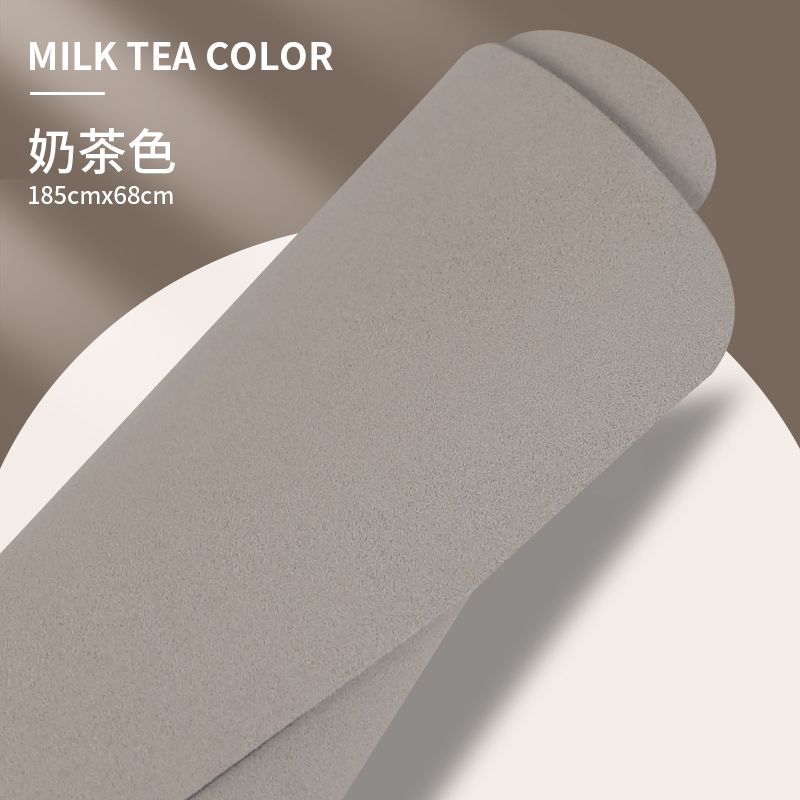
The short answer: a yoga mat and strap set is sourced as two separate supply chains that happen to ship in one box — the mat is a moulded rubber or PU product, the strap is a woven webbing product with hardware. Decide first which strap you mean: a carry strap that slings a rolled mat over the shoulder, or a stretching strap with a buckle used during practice. Printing Yoga manufactures the mat side of the set and prints your designs on it; the strap is specified alongside it, and any supplier who offers both should tell you plainly which part they make in-house.
Two different products share one search term
Buyers type "yoga mat and strap" or simply "yoga mat strap" for two quite different sets, and quotes go wrong when nobody asks which one is meant. A carry strap is a loop of webbing that cinches around a rolled mat so it can be carried; it never touches the practice. A stretching strap is a longer flat band with a metal or plastic buckle that a student pulls against to reach a bind. One is packaging and convenience, the other is a training prop with its own safety standards.
The mistake is expensive in both directions. Order carry straps when your customers wanted stretching straps and you have a warehouse of accessories nobody uses; order stretching straps sized like carry straps and they are too short to be useful. Write the intended use into the first line of your enquiry and the rest of the details fall into place.
Who makes what: the part that decides your delivery date
Mats and straps come from different factories more often than not. A mat plant works with rubber sheet, PU surface and printing or laser equipment; webbing, buckles and D-rings belong to a hardware and textile trim supply chain. A supplier can still offer the complete set as a service — but you need to know whether the strap is made in-house or bought in, because a bought-in component is the part of your order most likely to slip.
Ask directly, and ask about capacity on both halves. A factory with wide mat capacity and a single small trim partner will ship your mats on time and hold the whole set waiting for straps. Suppliers who answer this question in detail are usually the ones with the experience to keep a bundled launch on schedule.
Carry strap, stretching strap, or full kit
| What you are comparing | Mat carry strap | Stretching strap | Mat and strap kit |
|---|---|---|---|
| What it does | Cinches a rolled mat for carrying | Extends reach in seated and bound poses | Retail-ready bundle, usually mat plus one strap |
| Typical build | Cotton or nylon webbing, adjustable loops, no hardware | Longer woven band with a metal or plastic buckle | Mat plus strap plus printed sleeve or box |
| Branding options | Woven or printed logo on the webbing | Printed logo on the band, branded buckle at higher volumes | Mat surface print carries the identity; packaging carries the rest |
| What to specify | Webbing width, total length, loop style | Band length, buckle type, load expectations | Which mat model anchors the set, and the packed size |
| Who buys it | Studios and events giving away branded carry solutions | Teacher training programmes and physio-leaning studios | Retailers and beginner-kit sellers |
If you… choose… (before you send artwork)
If you are building a beginner kit for retail, choose a kit anchored on a standard thickness mat and add a simple carry strap. Beginners judge the set by how the mat feels underfoot, so put the budget into a high-quality mat surface and keep the strap plain — a printed logo on cotton webbing reads better than a cheap buckle.
If your customers travel or commute to class, choose the foldable mat as your anchor. The Foldable Matte Nature Rubber mat is 0.15 cm thick against 0.45 cm for the standard professional mat, so it folds into a bag instead of rolling, and the strap you specify should be a bag closure or handle rather than a mat sling.
If you are running teacher training or rehabilitation-oriented classes, choose the stretching strap and treat it as a prop with real standards, not an accessory. Ask what load the buckle is tested to and how the webbing is finished at the ends, because this is the one item in the set a student pulls hard against.
If you have not yet sold a single mat, do NOT commission a custom kit. Bundles multiply your minimum order across two products and two supply chains at once. Prove the mat sells with your designs on it first, then create the kit around a product you already know moves.
Specify the mat first — the strap follows from it
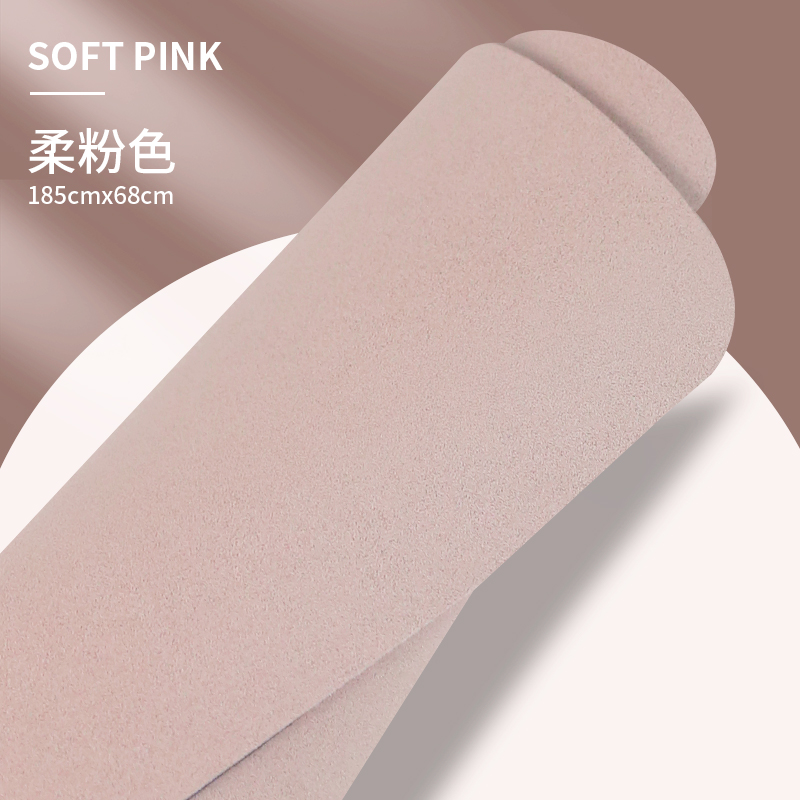
Strap length is not a free choice; it follows the roll. A professional mat at 185 x 68 cm and 0.45 cm thick rolls into a noticeably fatter cylinder than the same footprint at 0.15 cm, and a carry strap cut for one will not sit properly on the other. Fix the mat model, thickness and print method before anyone quotes webbing. Put plainly: a yoga mat strap is specified from the roll it has to hold, not from the flat dimensions on the spec sheet.
Surface and print method matter here too. The Matte Nature Rubber mat and the foldable version both use a Frosted PU + Rubber build with laser printed alignment lines, while the Watercolor printed mat is a PU + Rubber build carrying a full-surface design with latex printed lines. A laser-marked matte surface and a full-colour printed surface photograph differently in a kit shot, so choose the anchor mat with your packaging photography in mind.
What to put in the enquiry so quotes come back usable
- Which strap you mean — carry or stretching, stated in the first line.
- The anchor mat model — material, size and thickness, since these set the roll and the packed volume.
- Artwork and branding scope — whether your designs go on the mat only, or on the strap and packaging as well.
- Quantity tiers and the delivery window you need — ask which of the two components governs the timeline, and what happens to the schedule if the bought-in part is late.
- Sample expectations — a pre-production sample of the assembled set, not of the mat alone, so you can ensure the strap actually fits the roll.
FAQ
Do I need a strap if my mat already comes in a bag?
No. A bag and a carry strap solve the same problem, and shipping both raises your cost per set without adding value. Choose one carrying solution and put the saving into the mat.
Can the strap be printed with my logo?
Yes — webbing takes a printed or woven logo. Placement on the strap is limited by the width of the webbing, so simple wordmarks reproduce far better than detailed emblems.
Natural rubber or PVC for the mat in a kit?
Rubber-based builds such as the Frosted PU + Rubber mats give the grip and density that reviewers reward, and suit kits sold on quality. PVC is lighter on cost and easier on wide colour ranges, so it suits promotional giveaways where the mat is not the hero product.
Is a laser-marked logo more durable than a printed one?
On the mat surface, laser marking removes nothing that can peel because the mark is part of the surface, and it survives heavy studio use well. Printed designs offer full colour and pattern, which laser cannot, so durability is a trade against visual range rather than a straight win.
Can I order a small trial run of a kit?
Trial quantities are quoted case by case rather than published, because a kit spans two supply chains. Send the mat model and the strap specification together and ask for trial-run terms explicitly.
What usually delays a mat and strap order?
The bought-in component and the assembled sample approval, in that order. Mats are made to a schedule the factory controls; trim arrives on someone else's. Confirm both during quoting rather than after you place the order.
Working out which mat should anchor your set? Compare the printed and laser-marked professional mats at printingyoga.com, or send your designs and quantities and we will help you scope the kit around them.