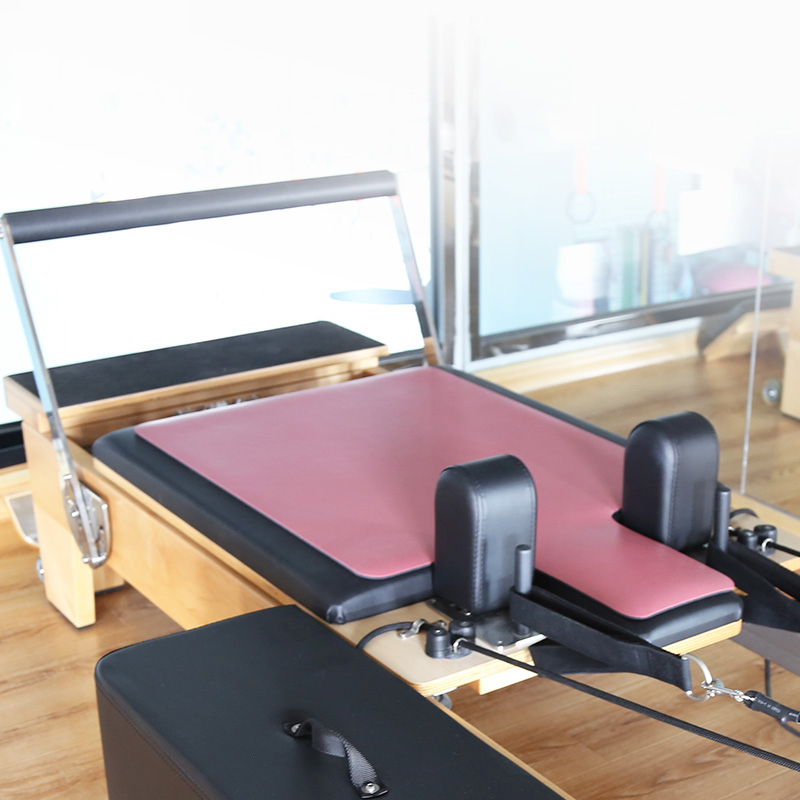
Cork on a yoga mat is a face material, not the whole mat. A thin cork sheet is bonded to a rubber or PU body that does the cushioning and holds the floor, so when a buyer says cork mat the real decision is which surface sits under the hands and feet. In the Printing Yoga catalogue cork arrives as the ColorBlock Rubber/Cork panel, a PU Rubber/Cork build at 97*57*0.45cm aimed at Pilates and mat-work programmes, while the full-length studio bodies use a Frosted PU + Rubber face at 185*68*0.45cm or a PVC body at 183*61*0.6cm. That one choice moves three things at once: how the surface behaves once palms are damp, how a logo can be applied, and what the tooling costs you during a first production run.
What cork actually is in an OEM spec
Cork is granulated bark pressed into a sheet and laminated onto a base. It is not a foam and it is not a coating, which is why it is quoted as a laminate line item rather than as a colour. Two things follow. First, the feel of the mat is split between two materials: the cork face sets the texture, the rubber or PU body sets the cushion and the weight. Second, anything you want to do to the look of the mat has to survive a lamination step, so artwork decisions belong at the spec stage and not after the first sample lands.
Cork is usually picked for its texture rather than its colour. A pressed bark face keeps a dry, slightly abrasive grain that many practitioners find stays usable when the hands are lightly damp, whereas a smooth polyurethane face loses bite as soon as it is wet. The trade is visual: cork is a fixed warm brown with natural speckle, so the surface cannot be turned into a wide colour field the way a rubber face can. Brands that want cork and colour usually get there with a colour-blocked build, which is exactly what the ColorBlock Rubber/Cork panel does.
Cork, matte rubber and PVC side by side
| Surface | Catalogue build | Look you can create | Logo method that fits | Best for |
|---|---|---|---|---|
| Cork laminate | PU Rubber/Cork ColorBlock, 97*57*0.45cm | Natural bark grain, colour blocking rather than full-bleed artwork | Engraved or debossed marks that read as tone-on-tone | Pilates and studio mat-work programmes, natural-material brand stories |
| Frosted PU + rubber | Matte Nature Rubber, 185*68*0.45cm | Single colour with a matte, non-glare face | Laser marking, including alignment lines | Full-length studio practice, brands that want a quiet premium look |
| PVC | PVC body, 183*61*0.6cm | Single colour, thicker feel underfoot | Laser marking, including alignment lines | Entry price points, gyms and hotels replacing stock often |
Which surface should you specify?
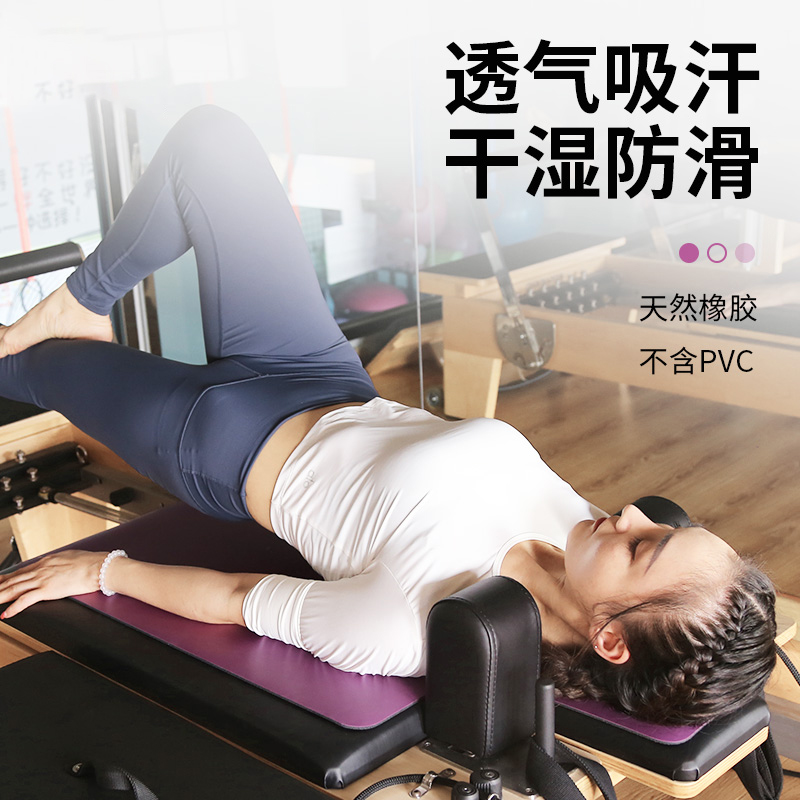
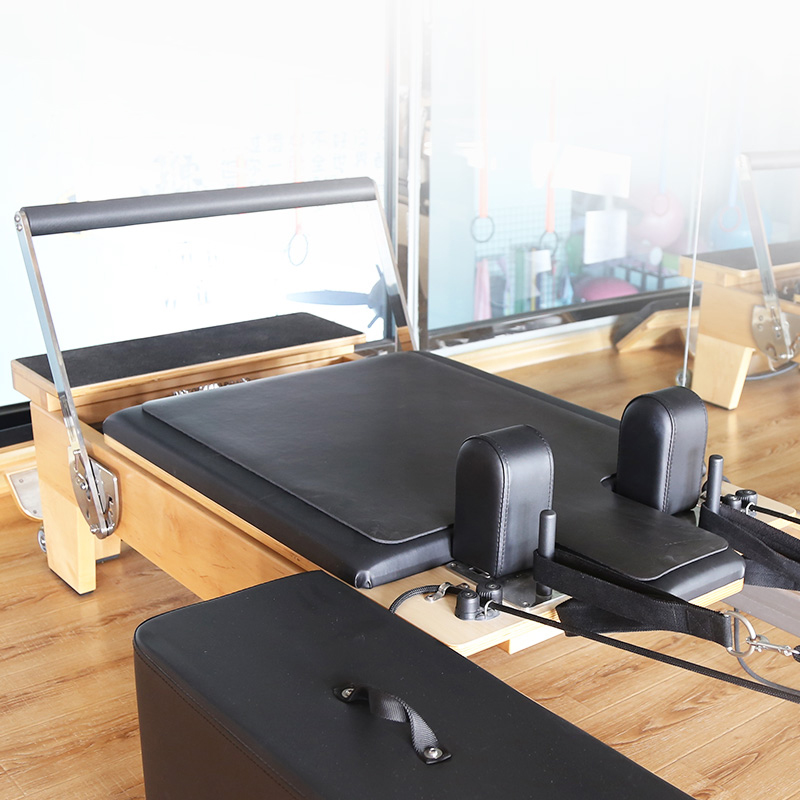
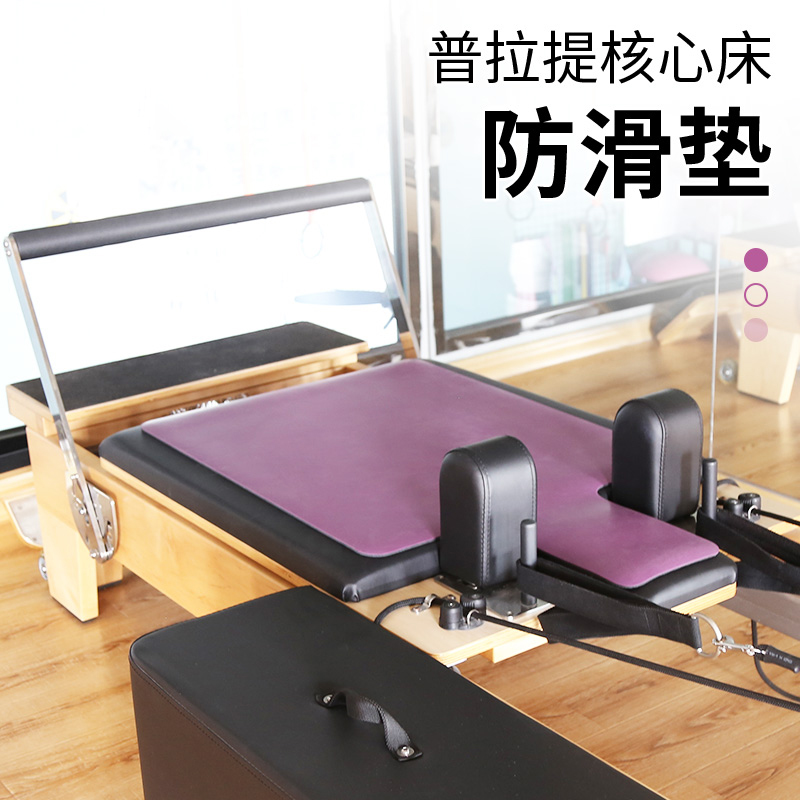
If you are building a Pilates or mat-work line, the cork panel is the natural fit. At 97*57*0.45cm it is deliberately shorter and wider than a yoga body, so it sits on a reformer or a studio floor without the roll-over you get from trimming a full mat. Order it when the programme is the selling point and the mat is equipment rather than a retail hero product.
If you sell a natural-materials story and your customers ask what the mat is made of before they ask what it looks like, cork answers the question on sight. Pair it with plain language on the product page about the two layers; buyers who care about materials read the details and notice when a brand is vague.
If you need a full-bleed printed design, do not specify cork. The bark grain fights the artwork and the catalogue cork build is a single-colour colour-blocked construction, not a print carrier. Printed graphics belong on the natural rubber printed bodies, and a laser-marked logo on a matte rubber face is the cleaner route when the brand mark has to stay subtle.
If your buyer is a gym or hotel group replacing mats on a short cycle, the PVC body at 183*61*0.6cm is usually the honest recommendation. It is thicker underfoot, it takes hard cleaning, and nobody is heartbroken when a unit is retired. Cork in that setting is money spent on a surface the end user never chose.
Questions to settle before the purchase order
- Format first. Decide whether you need the cork panel size or a full-length body, because the two are different products and not two sizes of one product.
- Branding method. Engraving, laser marking and printing are not interchangeable across surfaces. Confirm the method against the face material, not against the name of the mat.
- Sample before volume. A cork face is a texture decision, and texture does not photograph. Ask for a physical sample so your team can feel it, then approve.
- Packing and delivery. Panels ship flat or rolled depending on the format; agree the carton plan early so the freight quote you build your margin on is the one you actually pay.
- Capacity and timing. Ask what the manufacturing capacity looks like in your window rather than in the abstract, and ensure the delivery date you promise your own customers has slack behind it.
Printing Yoga runs its own factory for mats and cushions, so the same team handles material sourcing, printing services and quality standards under one roof. That matters on a laminated product: when the cork face and the rubber body are bought and bonded by different parties, defects turn into an argument instead of a fix. If you want to compare builds directly, the ColorBlock Rubber/Cork panel, the Matte Nature Rubber mat and the PVC premium mat are the three reference products behind this guide.
Frequently asked questions
Is a cork surface better than rubber for a yoga mat?
Neither wins outright. Bark laminate keeps a dry grain that many practitioners prefer with damp palms; a frosted polyurethane face gives a smoother, quieter feel and accepts laser marking cleanly. Choose by practice type and by the look the brand wants to own.
Can you print a full-colour design on it?
Not in the way a printed rubber mat allows. The catalogue build is single colour with colour blocking, so artwork-led ranges should sit on the natural rubber printed bodies instead. Ask for a sample of both before committing a season to either.
Do you offer cork mats in full studio length?
The catalogue format is the 97*57*0.45cm ColorBlock panel. Full-length bodies are Frosted PU + Rubber at 185*68*0.45cm and PVC at 183*61*0.6cm. If a longer laminate is what your range needs, raise it as a custom enquiry rather than assuming it is a stock option.
How do we get our logo onto the mat?
On a laminated face, marks that work with the material read best: an engraved or debossed mark keeps the natural look. On the matte rubber and PVC bodies, laser marking is the catalogue method and is already used to create alignment lines. Send artwork as vector files so the marking path is exact.
Can we order a small trial batch first?
Trial quantities are the sensible way to start with any new surface, and the experience of handling one carton tells your team more than a spec sheet will. Confirm the terms in writing with the sales team before production, then scale once the retail response is in.
Which one should a new brand launch with?
Most new ranges launch on a full-length body because that is what retail customers expect to see, then add the shorter panel once a Pilates or studio programme exists to sell it into. Launching the other way round works only when the programme comes first.