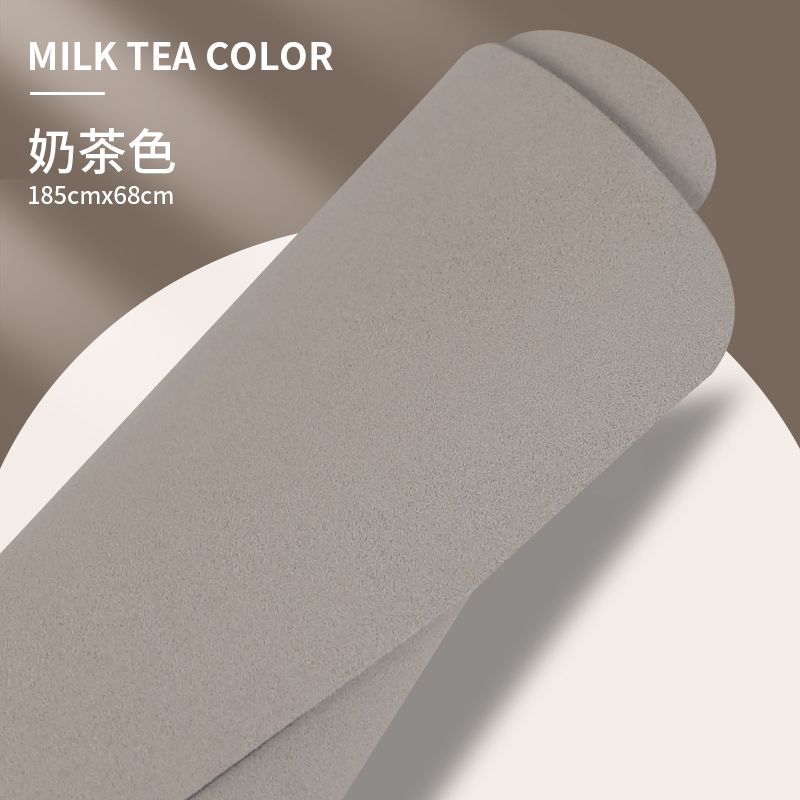
The short answer: yes, a new natural rubber yoga mat has a distinct rubber smell, and it is normal rather than a defect — it comes from the rubber itself, not from a coating or a solvent added during printing. The smell fades with airing and use; a latex allergy, however, does not fade, and that is the question a studio buyer actually has to answer. Printing Yoga builds mats on two different substrates for exactly this reason: Frosted PU + Rubber for grip-led ranges, and PVC where a latex-free product is the requirement. Decide which of the two problems you are solving before you choose the material.
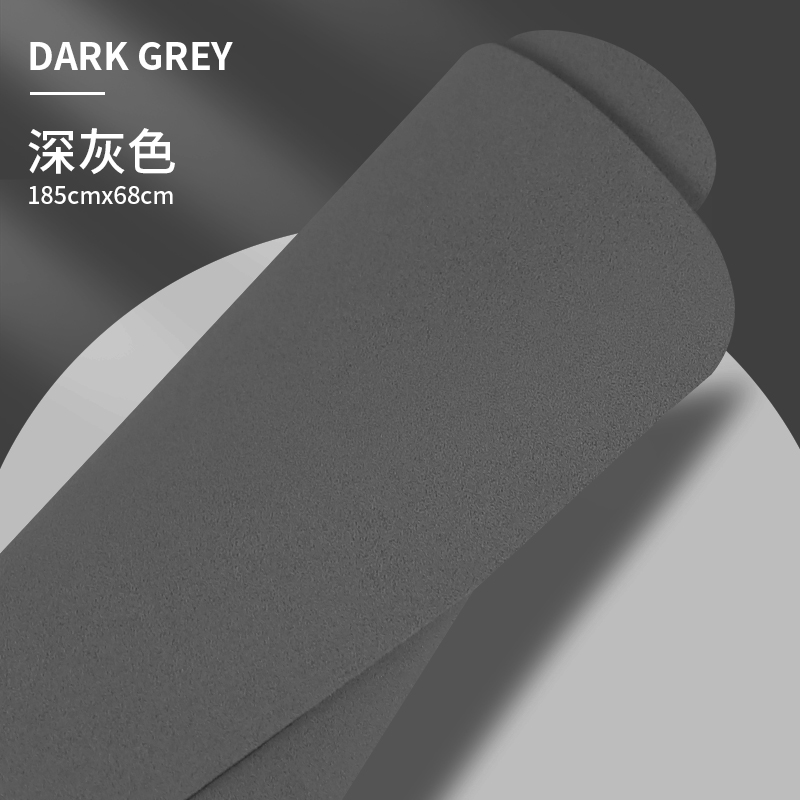
Where the smell comes from
Natural rubber is a plant material, and the compounds that give it elasticity also give it an odour. A freshly moulded mat sits rolled and wrapped from the factory floor to your warehouse, so the smell concentrates inside the roll and hits the customer hardest the moment they open it. That first impression is what ends up in product reviews, which is why it deserves attention during manufacturing planning rather than after the first complaint.
Two details decide how strong that first impression is: how long the mat was sealed, and what the surface is. Our Frosted PU + Rubber build carries a PU surface over the rubber body, so the top face a student's hands touch is not raw rubber. It still smells when new because the body underneath is rubber, but the odour tends to read as clean rather than sharp, and it drops away over the first few practices.
PVC is the other story. A PVC mat has its own faint plastic note when new and no rubber smell at all. Neither material is odour-free on day one; they simply smell like different things, and your customers describe them in different words.
Latex allergy is not the same question
Smell is a comfort issue that resolves itself. Latex sensitivity is a safety issue that does not. Natural rubber contains latex proteins, so any rubber-bodied mat is unsuitable for a student with a diagnosed latex allergy no matter how long it has been aired. If you sell to studios, gyms, hotels or teacher training programmes, someone will eventually ask you this question in writing, and the answer needs to be in your product details before they ask.
The practical answer for a brand is to keep one latex-free line in the range. A PVC mat covers that requirement and also gives you a wide colour range for printed designs, so the latex-free option does not have to be the boring one in your catalogue.
Comparing the three builds on odour, allergy and use
| What you are comparing | Frosted PU + Rubber, 0.45 cm | Foldable Frosted PU + Rubber, 0.15 cm | PVC, 0.6 cm |
|---|---|---|---|
| Size | 185 x 68 cm | 185 x 68 cm | 183 x 61 cm |
| New-mat odour | Rubber note, fades with airing and use | Rubber note, less material so less of it | Faint plastic note, no rubber smell |
| Contains natural rubber | Yes | Yes | No |
| Surface a student touches | Frosted PU over a rubber body | Frosted PU over a rubber body | PVC throughout |
| Best suited to | Studio and retail ranges sold on grip | Travel and event ranges that fold into a bag | Latex-free lines, teaching kits, promotional runs |
| Branding | Laser printed alignment lines and logo | Laser printed alignment lines and logo | Laser printed alignment lines and logo |
If you… choose…
If your customers are studio regulars who judge a mat by grip, choose the Matte Nature Rubber mat at 185 x 68 x 0.45 cm and manage the odour with packaging and copy rather than by switching material. Tell buyers plainly that a new rubber mat smells and that it settles — brands who explain it up front get fewer returns than brands who stay quiet and hope nobody notices.
If you supply studios, hotels or training programmes that must serve anyone who walks in, choose a PVC line as your latex-free option. The PVC mat at 183 x 61 x 0.6 cm carries the same laser printed alignment lines, so the latex-free mat still looks like part of your range instead of a substitute.
If your range is built for travel and events, choose the foldable Frosted PU + Rubber mat at 0.15 cm. There is far less material in a folding mat than in a 0.45 cm one, so there is less of everything — less cushioning, and less odour to air out when a customer unpacks it in a hotel room.
If a customer has told you they react to latex, do NOT offer them a rubber mat that has been aired for longer. Airing changes the smell, not the proteins. This is the one case where the honest answer is a different product, and having that product in stock is what keeps the enquiry from going to a competitor.
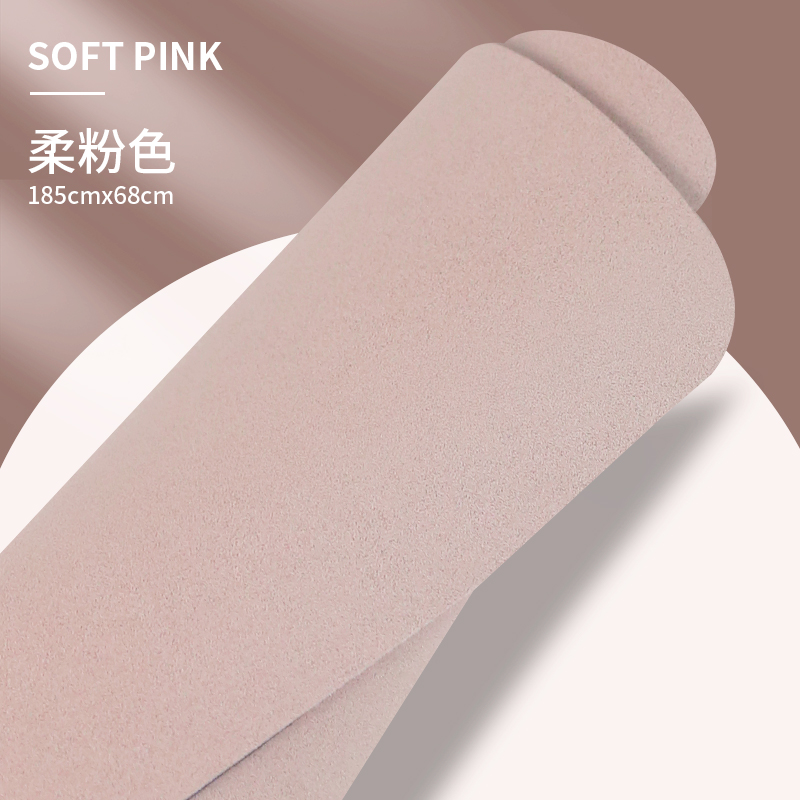
What to write into the spec and the listing
- Material stated in plain words — Frosted PU + Rubber or PVC, on the listing itself, not buried in a downloadable sheet. Latex-sensitive buyers search for this before they search for anything else.
- An odour line in the product copy — one honest sentence that a new rubber mat has a rubber smell which fades. It costs nothing and it protects your review scores.
- Unwrapping guidance — ask your supplier how the mats are wrapped, and whether the packaging can be specified so a customer can unroll and air the mat immediately on delivery.
- Storage during transit and warehousing — mats sealed in a hot container smell stronger on arrival. This is worth raising with whoever handles your freight, not only with the factory.
- Which of your designs go on which substrate — printed artwork behaves differently on rubber and PVC surfaces, so lock the substrate before you finalise artwork rather than after.
None of this requires new manufacturing standards. It requires the details being agreed at quoting time, which is the part most first-time buyers skip and then discover at the worst moment.
FAQ
How long does the smell from a natural rubber yoga mat last?
It fades over the first practices rather than on a fixed schedule, because it depends on how long the mat sat sealed and how much air it gets afterwards. Unroll it in a ventilated room instead of leaving it rolled in a bag and it settles noticeably faster.
Can you make a yoga mat with no smell at all?
No material is completely odourless when new. What we can do is help you pick the substrate whose new-product smell suits your customer: rubber-bodied mats for grip-led ranges, PVC where any rubber note is unwelcome or where latex must be avoided.
Is a natural rubber mat safe for someone with a latex allergy?
No. Natural rubber contains latex proteins and airing does not remove them. Offer a PVC mat instead, and say so clearly in the listing so the customer does not have to email you to find out.
Does washing the mat get rid of the smell?
Cleaning helps with sweat and use odours, not with the smell of new rubber, and harsh cleaners can dull a frosted PU surface. Air the mat for the new-rubber smell, and keep cleaning gentle and routine.
Does the printing or the laser marking add any smell?
Laser printed alignment lines mark the surface itself rather than adding a layer, so the branding is not what your customer is smelling on a new mat. Any odour on arrival comes from the mat body and its packaging.
Can we order both a rubber line and a latex-free line in one production run?
Quantities and scheduling are quoted case by case, since the two substrates run on different lines and that affects capacity and delivery. Send both specifications together and ask for the combined terms rather than pricing each on its own.
Deciding which substrate should carry your designs? Compare the rubber and PVC products at printingyoga.com, or send us your artwork and quantities and our OEM services team will scope the range with you — including which line to create as your latex-free option, so you can ensure every customer who asks gets a straight answer.