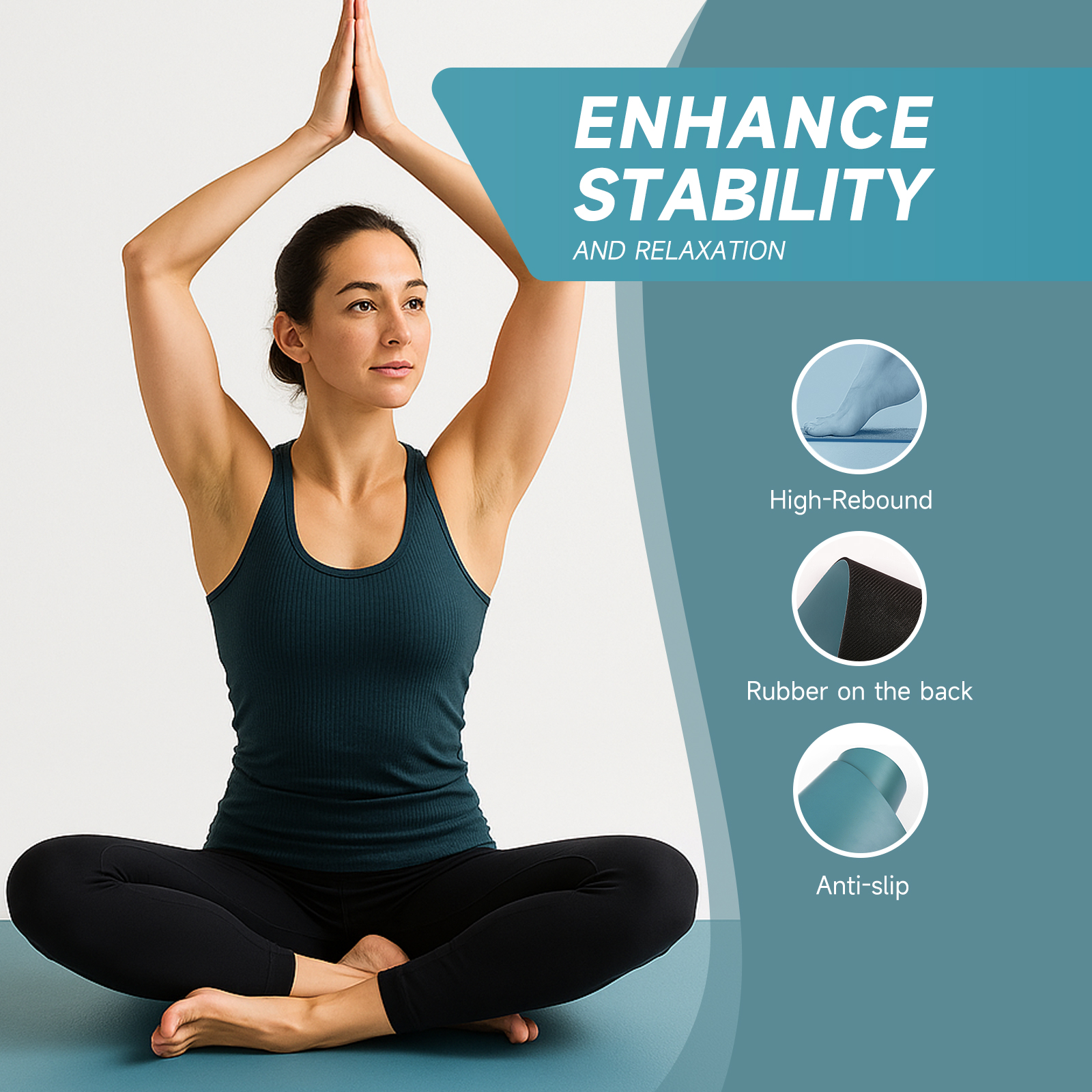
On carpet, buy a dense mat rather than a thick one. A natural rubber mat at 185*68*0.45cm stays where you put it because its own mass presses the tacky underside into the pile, while a soft TPE mat at 183*61*0.8cm floats on the fibres and compresses unevenly under your hands. Almost every complaint about "my mat slides on carpet" is a problem underneath the mat, not on its printed top surface — which is why top-side grip specs do not help here. This guide is written for buyers who create their own line of products for carpeted homes, hotel rooms and corporate wellness rooms, and who need to ensure the spec sheet says the right thing before manufacturing starts.
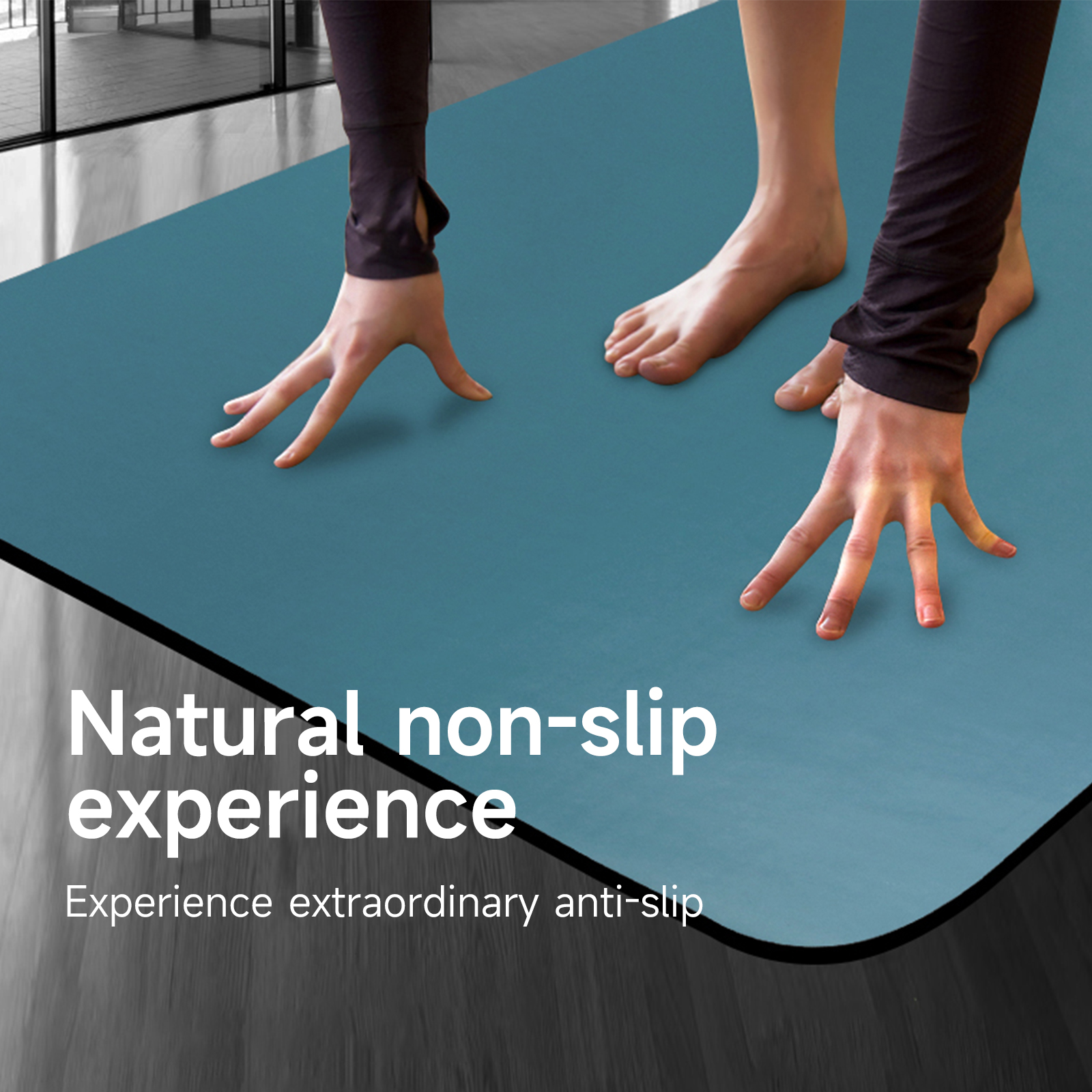
Three ways a mat fails on carpet
A mat that behaves perfectly on studio hardwood can fail on a bedroom carpet in three distinct ways, and they need different fixes.
- Float. A light closed-cell foam mat never reaches the floor. It rides on the tips of the pile, so every downward-dog hand push slides it forward. Adding grip texture to the top surface does nothing, because the sliding interface is at the bottom.
- Sink. A thick, soft cushion mat compresses into the carpet under your palms and heels at the same time. Your wrists drop, your stance widens, and the mat feels unstable even though it has not moved at all. This is the failure most often misreported as "slipping".
- Ruck. A flexible mat with no dimensional stability bunches into ridges as the carpet pile pushes back. The mat stays in place but stops being flat, which ruins alignment lines and makes standing sequences unpleasant.
The details matter for anyone specifying an OEM run: float is fixed by mass and underside material, sink is fixed by density and by resisting the urge to go thicker, and ruck is fixed by base-layer stability. One material change rarely solves all three, so decide which floor you are actually selling into before you make the call.
If you sell into carpeted markets, use these rules
These conditional rules are the ones we give buyers during a spec review, and they are deliberately narrow — they help more than a generic "best mat for carpet" claim.
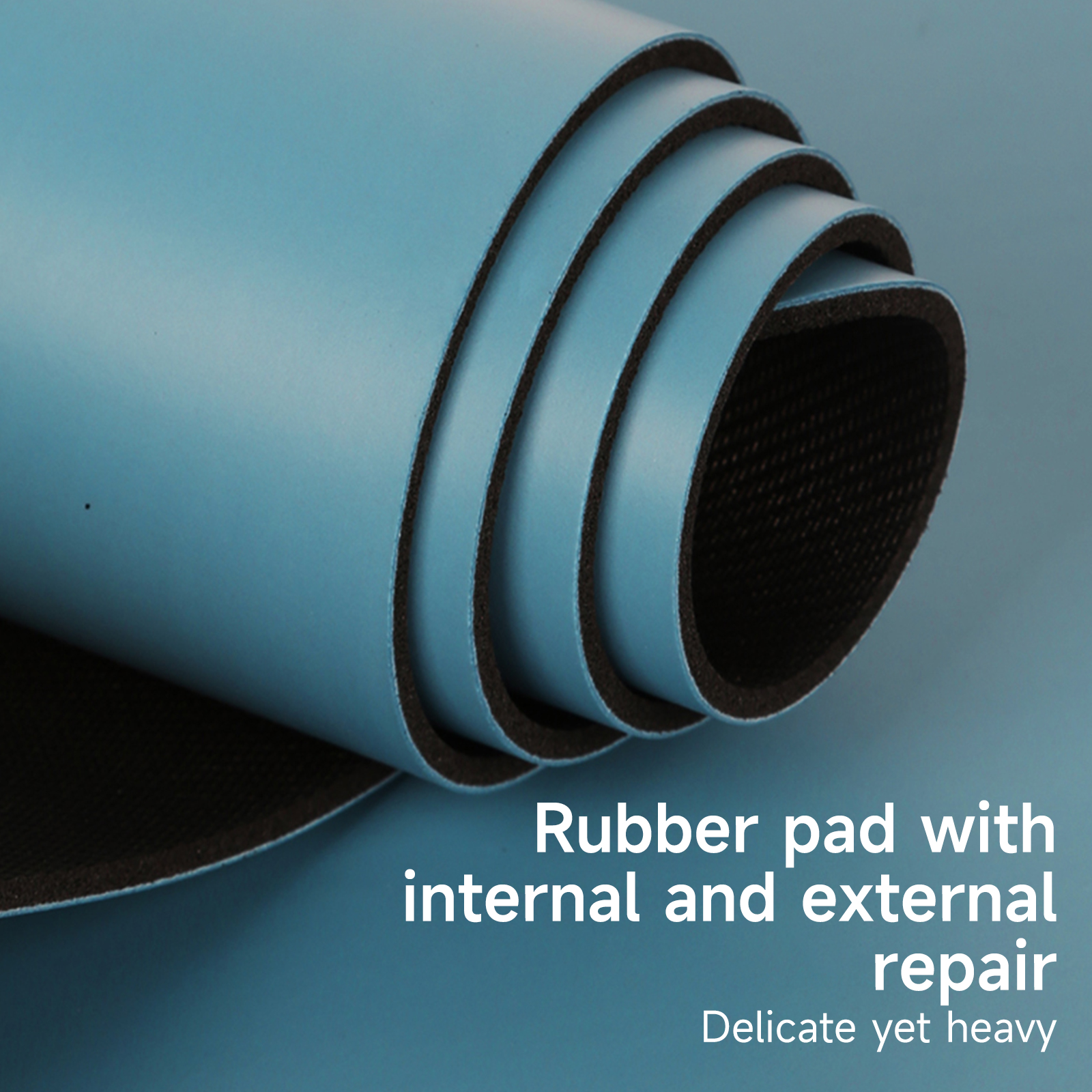
- If your end user practises on medium or high-pile residential carpet, specify a natural rubber base at 185*68*0.45cm. The rubber underside is the only layer that grips pile mechanically rather than by friction, and the extra width over a 183*61 body gives the user somewhere to put their hands when the mat does move a little.
- If your buyer keeps asking for more cushioning, give them a denser 0.45cm rubber build, not a softer thicker one. Carpet already supplies the cushioning; stacking a soft 0.8cm mat on top of it is what creates the unstable, sinking experience that generates returns.
- If you are building a travel or hotel-room SKU, accept that a foldable mat will always underperform on carpet and position it honestly — foldables trade underside mass for packability, and the crease lines give the pile somewhere to push.
- Exclusion — if the floor is low-pile commercial carpet tile with a hard backing, do not order the 0.8cm foam upgrade at all. On that surface a thick foam mat is pure downside: it adds sink without adding grip, and a standard 0.45cm rubber build already sits flat. Selling the upgrade into that segment is the fastest way to earn a bad review you cannot answer.
Carpet performance by construction
The table compares the three builds our customers most often put in front of carpet-heavy audiences. All three exist as stock tooling, so a custom run does not require new moulds.
| Build | Spec | On medium-pile carpet | Main trade-off |
|---|---|---|---|
| Natural rubber, laser-printed alignment lines | PU + Rubber, 185*68*0.45cm | Best. Mass plus rubber underside holds position; stays flat | Heaviest to ship and to carry |
| Matte natural rubber | Frosted PU + Rubber, 185*68*0.45cm | Equal hold underneath; matte top adds sweaty-hand security | Matte surface shows wear sooner on printed designs |
| Double-colour TPE | TPE, 183*61*0.8cm | Weakest. Light body floats on pile, thickness adds sink | Cheapest and lightest; better suited to hard floors |
Read the table as a floor-surface ranking, not a quality ranking. The TPE build is a good mat — on a wooden or tiled floor its thickness is exactly what a beginner wants. It is only the carpet context that inverts the usual "thicker is more premium" logic.
What to write on the spec sheet
If you want a factory to reproduce carpet performance reliably across repeat orders, put these four lines in the specification rather than describing the effect in words.
- Base material, stated separately from the top layer. "Rubber base, PU top" is a manufacturable instruction; "non-slip" is not, and it is why two runs from the same drawing can behave differently.
- Finished size and thickness as a single string, for example 185*68*0.45cm. Width is the quiet variable — the difference between a 61 and a 68 body is very noticeable when a mat creeps on pile.
- Underside finish. State whether the bottom face is left as raw rubber or embossed. Embossing changes how the mat engages pile, and it is easy for a factory to switch it silently between runs unless the drawing fixes it.
- Print method. Laser-printed alignment lines survive the abrasion of being dragged back into place on carpet better than surface prints do. If your designs are complex, decide early whether the print or the placement matters more.
Printing Yoga runs these builds as stock tooling with in-house printing capacity, so a carpet-focused SKU is normally a material and size choice rather than a new development project. Our OEM services cover custom logo placement, colourways and packaging; the TPE premium mat is listed with a minimum order quantity of 1, which lets a buyer order a single sample and test it on their own floor before committing to a production run. Sampling first is worth the delivery time — carpet varies far more between markets than hardwood does, and no datasheet substitutes for putting the mat on the actual floor.
Frequently asked questions
Do I need a special yoga mat for carpet?
No — you need a dense one. There is no separate product category worth creating here. A natural rubber mat at 185*68*0.45cm, the same one that performs on studio floors, is also the best answer on pile. What you should avoid is the thick soft foam mat that many shoppers buy precisely because of the floor they practise on.
Will a thicker mat stop my mat sliding on carpet?
Usually the opposite. Thickness adds compressible material between you and the floor, so your hands sink further and the mat feels less stable. Mass and the underside material stop sliding; thickness does not. If a customer reports sliding on carpet and you sell them the 0.8cm upgrade, expect the complaint to come back.
Does a rug or towel under the mat help?
A thin rug makes things worse by adding another slippery interface. A damp towel on top of the mat solves a sweaty-hand problem, not a carpet problem. If the mat is moving across the floor, the fix is underneath the mat, and no accessory on top changes that.
Can you make a carpet-friendly version of our existing design?
Yes, and it usually requires no new artwork. Keeping your designs and moving the same print onto a rubber base at 185*68*0.45cm is a standard change. Our team will confirm how the print reproduces on the new surface during sampling, so the high-quality look your brand standards call for carries across before the production order is placed.
How do I test this properly before ordering?
Order one mat of each candidate build and test them on the worst carpet you expect your customers to own, not the best. Push hard through both palms in a downward dog, then hold a lunge and try to rotate the back foot. A mat that survives both on high-pile carpet will be fine everywhere else — this is the quickest way to make a decision that holds up after delivery.