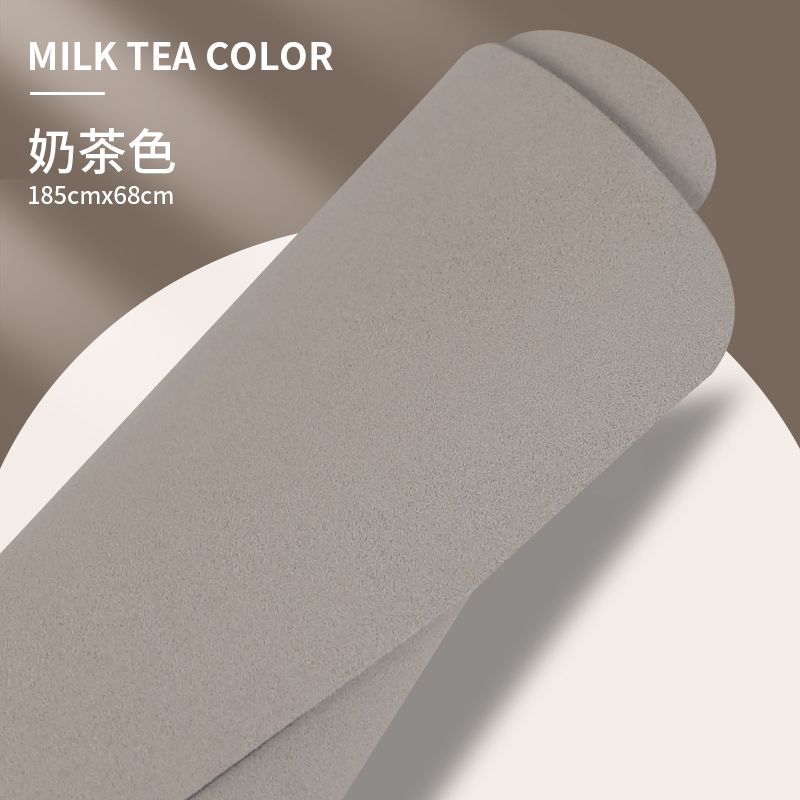
For Bikram and other heated formats, the right mat is the one that grips better once it is wet: a frosted PU over natural rubber surface, not a smooth PVC sheet. Sweat is the whole design problem — a heated room turns an ordinary mat into a slip hazard within one class. At Printing Yoga we create hot yoga mats as OEM products for studios, teacher training programmes and retail brands, and the closest reference build in our catalogue is the Matte Nature Rubber - 185*68*0.45cm - Single Color Professional Yoga Mat with Laser Printed Alignment Lines, made from frosted PU + rubber. This guide covers what to specify, what to exclude, and how we help you launch a bikram yoga mat under your own label.
What a bikram yoga mat has to survive
A hot yoga mat is judged on three things and nothing else: wet grip, odour resistance, and how the surface behaves after repeated soaking. Everything else is decoration. When you brief a factory, describe the failure you want to avoid rather than the adjective you want on the label — "hands must not slide forward in downward dog when the surface is soaked" is a testable requirement, while "high-quality grip" is not. Writing the details that way is what separates a specification a factory can build to from a wish list.
Surface texture does most of the work. A frosted PU top layer holds a thin film of moisture inside the texture instead of letting it pool, so friction holds up as the practitioner sweats. A closed, glossy PVC face does the opposite — the same water forms a continuous film, and the mat gets fastest exactly when the class gets hardest. That is why our natural rubber builds carry a frosted PU + rubber face while the PVC option stays in the studio-loaner and dry-practice lane.
Thickness is the second decision, and it is a trade rather than an upgrade. A 0.45 cm natural rubber deck gives joint protection for floor work while staying stable in standing balances. A 0.6 cm PVC deck is softer underfoot but less stable. A 0.15 cm foldable build is deliberately thin so it packs flat. There is no universally correct number — only the number that matches how your customers actually practise.
Three builds compared
All three products below run on tooling we already have, so your designs sit on a proven base instead of a new development cycle. Sizes and materials are taken directly from the live product records on our own store.
| Build | Size (cm) | Material | Behaviour when wet | Best for |
|---|---|---|---|---|
| Matte natural rubber, laser printed alignment lines | 185*68*0.45 | Frosted PU + Rubber | Grip holds up as sweat is taken into the frosted texture | Bikram, hot vinyasa, studio retail programmes |
| PVC premium mat, laser printed alignment lines | 183*61*0.6 | PVC | Surface film builds up; grip falls away as moisture increases | Dry studio use, gym loaners, entry price tiers |
| Foldable matte natural rubber | 185*68*0.15 | Frosted PU + Rubber | Same frosted surface, thinner deck, folds flat for delivery and carry | Travel, retreats, teacher training kits, event programmes |
Conditional verdicts: which build is yours
- If you are launching a hot yoga line and can only carry one SKU, take the 185*68*0.45 matte natural rubber build. It is the only one of the three whose surface is designed to keep working under sweat, and at 0.45 cm it still reads as a general-purpose mat, so a single SKU covers a wide range of class formats.
- If you sell mainly to travelling teachers, or run retreat and event programmes, specify the foldable 185*68*0.15 build. It keeps the frosted PU + rubber face but folds instead of rolling, which cuts carton volume and simplifies delivery on kit-based orders.
- If your buyer is a gym chain equipping a non-heated room at the lowest landed cost, the 183*61*0.6 PVC mat is the honest answer — thicker cushioning, entry price tier, and wet grip simply is not part of the job.
- Exclusion — if your programme is Bikram or any heated format, do not order the PVC build, whatever the unit price looks like. We will say the same thing during sampling: a PVC face in a heated room produces slip complaints and returns that cost more than the saving. A supplier who takes that brief without warning you is telling you something about their standards.
Branding a mat without killing the grip
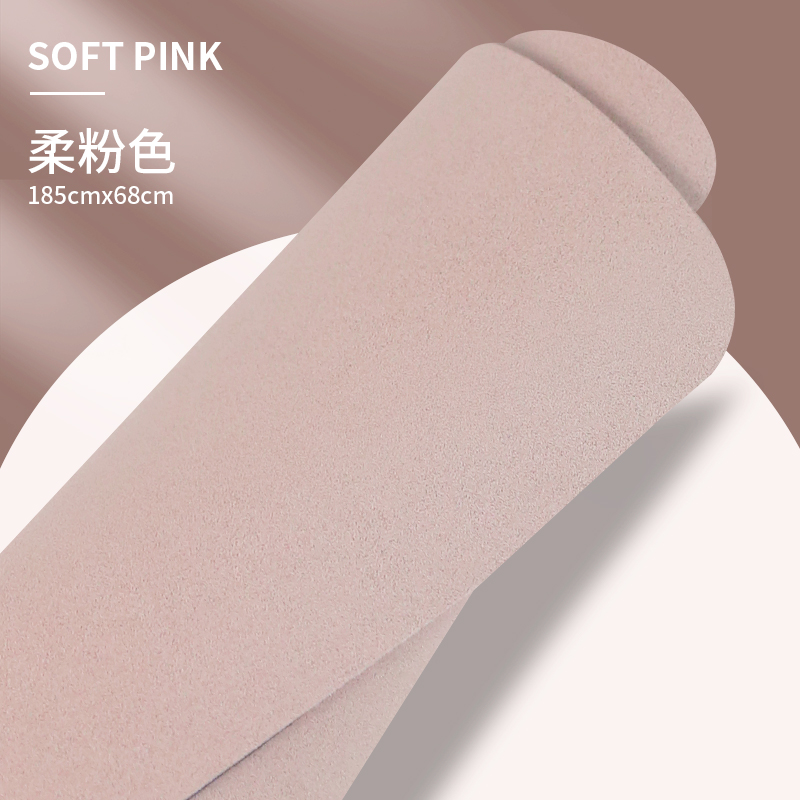
Anything added to the top surface changes how it behaves when wet, so the print method is a performance decision and not only a visual one. Laser printed alignment lines mark the surface without laying down a separate coating, which is why all three builds above use that method for their line work — the texture the practitioner touches stays continuous. Latex printing gives you full-colour artwork and is the right call for pattern-led retail products, and we run it across our printed natural rubber range. What we do not recommend for heated formats is a heavy coated print across the main contact zone.
In practice, most hot yoga brands put their identity into the alignment system, the edge treatment and the colourway rather than a full-bleed graphic. It is a narrower canvas, and it is also the one that survives the class. Our team maps your designs onto whichever method fits the build before tooling starts, so you meet the constraint during artwork rather than after the first production run.
Working with us on an OEM hot yoga mat
We are a factory-direct manufacturer, so the people who quote your products also run the line. Our OEM and ODM services cover artwork adaptation, sampling, single-colour and printed surface options, alignment line layout, packaging and export documentation. Because these mats sit on existing tooling, capacity for repeat orders is planned against a known base rather than an experiment, and inspection happens against the same reference sample you approved — which is what lets us ensure the tenth container matches the first. If you want to see the range before you brief us, start with our matte natural rubber mat and compare it with the foldable version.
FAQ
Natural rubber or PVC for a custom hot yoga mat?
Natural rubber with a frosted PU face, every time, for heated practice. Our 185*68*0.45 matte build uses frosted PU + rubber precisely because that surface takes moisture into the texture. PVC has real uses — cushioning at a lower price tier, easy wipe-down on shared equipment — but a heated room is not one of them.
Can you print my logo on a bikram yoga mat without ruining the grip?
Yes, if the method matches the build. Laser printing marks the surface without adding a coating layer, which is what our alignment-line mats use, and it is the safest choice for a heated format. Latex printing is available for full-colour artwork and suits pattern-led products for general practice. We tell you which one your artwork needs before sampling, not after.
What thickness should a hot yoga mat be?
Our three reference builds are 0.45 cm, 0.6 cm and 0.15 cm, and they answer different questions. Take 0.45 cm for a balance of joint protection and standing stability, 0.6 cm when cushioning matters more than balance, and 0.15 cm when the mat has to fold flat for travel. Ask what your customers complain about — sore knees or wobbly balances — and let that pick the number.
Do my customers still need a mat towel?
Many hot yoga practitioners will use one out of habit, and that is fine. The difference is that a frosted PU surface is designed to work without one, so the towel becomes a hygiene and comfort choice rather than a safety requirement. If a product only functions with a towel on top, the mat is doing the wrong job.
Can you make a foldable mat for a teacher training kit?
Yes. The 185*68*0.15 foldable matte natural rubber build exists for exactly that use — retreats, teacher training programmes and event kits where carton volume and carry weight decide the logistics. It keeps the same frosted PU + rubber surface as the thicker mat, so the practice experience stays consistent across your range even when the format changes.
Which mats can you customise for a new brand?
All three builds in the table are open for OEM work, and we offer single-colour, printed and laser-marked surface options across the natural rubber range shown on our product pages. Send us your designs and target format and we will come back with the build that fits — including where we think your specification will cause a problem in a heated room.