Yes, you can travel with a yoga mat — the question is which mat, because the one that is best on a studio floor is rarely the one that survives a week of airports. A travelling mat is judged on three things a home mat never has to pass: how small it packs, how fast it recovers its shape after being crushed, and how easily it cleans in a hotel bathroom. Printing Yoga builds mats for brands whose customers practise on the road, and the specification that wins there is a deliberately different one — thinner, foldable or short, and finished so that a wipe-down is enough.
This guide covers what actually goes wrong when a mat travels, the four ways practitioners solve it, and — for brands and studios — which of those to create as products so the range covers the trip rather than only the practice.
What goes wrong when a mat travels
Ask anyone who has flown with a mat and the complaints repeat. They are all about the journey, not the yoga, which is why mat reviews written for home practice do not help this buyer.
- It does not fit the bag. A rolled full-thickness mat is a long cylinder. It rides outside the luggage, catches on doorways, and turns a carry-on into a two-hand job.
- It comes out creased. Any mat packed under pressure takes a set. Some materials release that memory within an hour; others keep a ridge you then practise on all week.
- It gets dirty in ways home mats do not. Airport floors, hotel carpet, sand, and shared studio space all land on the same surface, and there is nowhere to hang a wet mat to dry.
- It weighs the trip down. Thickness is comfort and thickness is weight. Every millimetre that helps the knees costs something at the check-in desk.
- It is the wrong size for the room. Hotel floor space between the bed and the wall is not studio space, and a full-length mat sometimes simply will not lie flat.
Read those together and the design brief writes itself: pack small, recover fast, wipe clean, stay light. Grip still matters, but it is now one requirement among five rather than the only one.
The four ways practitioners solve it
These are the routes buyers actually take, and the routes a brand can create products for. The table compares what each one gives up, because every travel solution is a trade.
| Travel route | How it packs | What you give up | Best for | What a brand should watch |
|---|---|---|---|---|
| Foldable thin mat | Folds flat into a case or suitcase like a garment | Cushioning; joints feel the floor underneath | Flyers with cabin-bag-only trips and firm hotel floors | Crease recovery at the fold lines — the whole promise lives there |
| Thin rolled travel mat | Rolls to a slim cylinder, straps to a bag | Cushioning, and it still rides outside the luggage | Road trips and train travel where outside carry is fine | Roll diameter against the bag range you already offer |
| Short or half-length mat | Small footprint both packed and unrolled | Full-body length; suits seated, kneeling and restorative work | Small rooms, meditation and Pilates-style practice on the road | Being honest in the listing about who the length suits |
| Rent local, carry a towel | Nothing to pack but a towel | Any control over the surface you practise on | Studio-hopping trips where a rental mat is always available | The towel becomes the hero product, so its grip is your grip |
Notice that the first three all buy packability with cushioning. That is not a manufacturing limitation we could design away — it is the material doing its job. A mat cannot be simultaneously thin enough to disappear into a suitcase and thick enough to protect knees on tile, and any supplier who tells a buyer otherwise is selling a story rather than a product.
If you are choosing or specifying a travel mat
These are the rules we give brand and studio buyers during a specification call, in the order they usually matter.
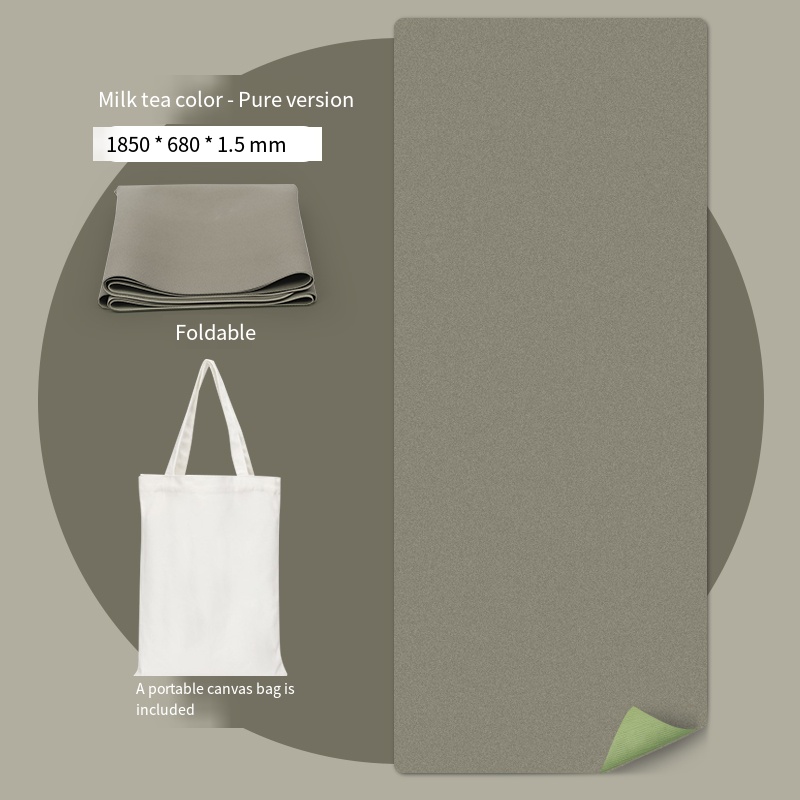
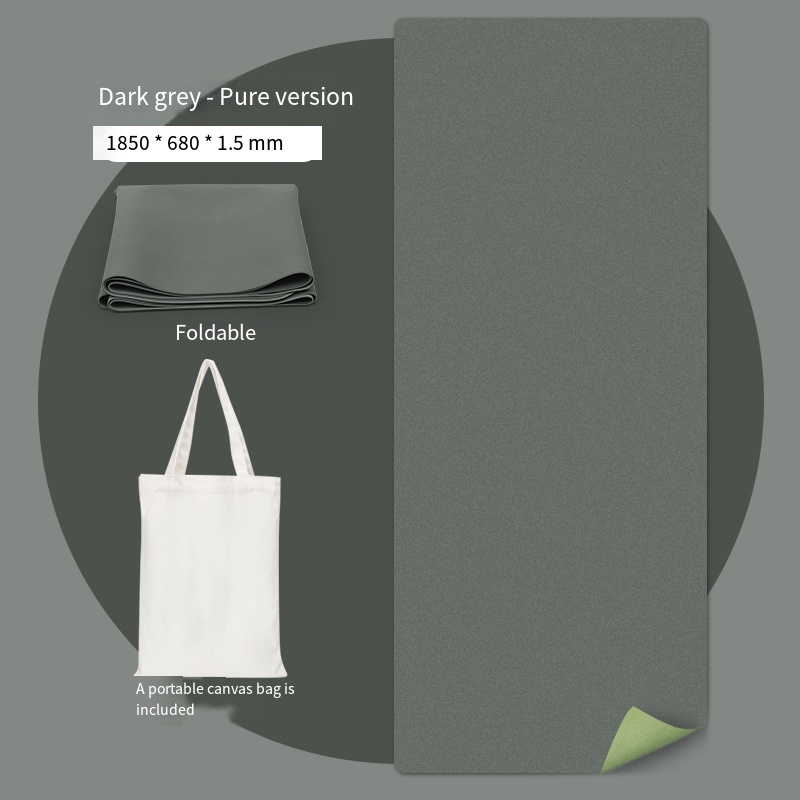
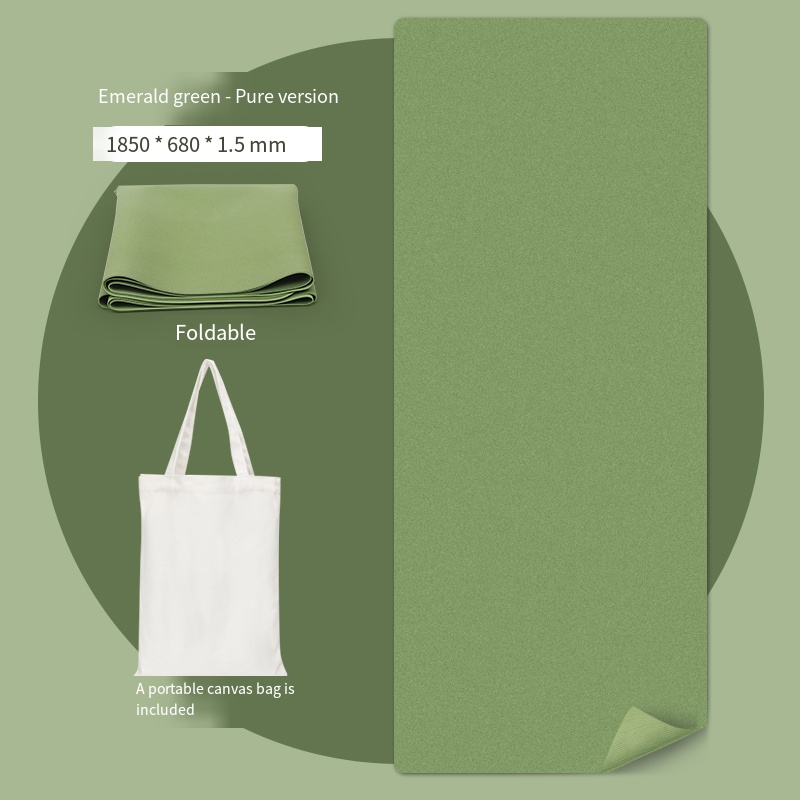
- If you are selling to customers who fly with cabin luggage only, specify the foldable route. Our foldable matte natural rubber mat at 185*68*0.15cm keeps full practice length while folding flat like clothing, which is the only format that reliably goes inside a case rather than strapped to it.
- If you are designing for hotel-room practice rather than studio practice, look at a short mat instead of a thin one. The colour-block rubber and cork mat at 97*57*0.45cm keeps real cushioning because it saves its space on length rather than on thickness — the better trade when the floor is tile and the room is small.
- If you are adding travel to an existing range, keep the surface and the branding identical to your home mat. A traveller who liked your matte natural rubber mat at 185*68*0.45cm is buying the same feel in a packable format, not a new product to evaluate. Same texture, same logo method, different thickness — that is the whole brief.
- If you are selling into hot yoga, do not put a thin folding mat in front of those customers. A folded mat plus heavy sweat is the worst combination in the category: the fold lines hold moisture, the thin body offers no absorbency, and the surface goes slick exactly when it matters. Sell them a towel over a rental mat, or a grippy full mat they check into the hold — but do not let a packability feature take the blame for a grip failure.
What a brand should actually specify
A travel mat is a manufacturing decision more than a marketing one, and the details that decide whether it is any good are all set before the first unit exists. When we quote a travel programme we push buyers to fix five things early, because changing them later means new samples.
- Fold pattern or roll direction. Where the mat folds decides where creases live and how long they last. Fix this before artwork, because a printed design that lands across a fold line will show the fold forever.
- Branding method. Laser-engraved marks are part of the surface and survive folding and scrubbing; printed marks sit on top of it. Both are legitimate, and both are services we offer — but for a mat that will be folded, wiped and shoved into luggage, engraving is the safer default.
- Surface cleanability. Travel mats get cleaned with whatever is in the hotel bathroom. Specify a surface that tolerates a damp cloth without clouding, and write the care instruction into the packaging rather than leaving it to a support email.
- Packed format. Decide whether the mat ships folded or rolled, and whether it comes with a case, a strap, or nothing. This is a delivery and packing decision that quietly sets your shipping cost per unit.
- The honest length statement. If the mat is short, say so in the first line of the listing. Returns from length surprises cost more than the sales the vague wording won.
We run mats, cushions and props on our own lines and offer the full set of services around them — sampling, branding, printing, packing and shipping documents — so a travel variant can sit on the same schedule and the same quality standards as the rest of your range. Our capacity and our wide catalogue also help in a specific way here: if the first travel sample is wrong, the alternative is usually another body we already tool, not a fresh supplier search that costs a season.
FAQ
Can you take a yoga mat on a plane?
In practice yes, and travellers do it constantly — a mat is usually treated as a personal item or strapped to a bag, though airlines differ and none of them promise it in writing. The reason foldable mats sell is that they remove the argument entirely by going inside the case, where nothing has to be judged at the gate.
Does a folded yoga mat stay creased?
It depends almost entirely on the material and where the folds fall. A rubber-based body under a matte finish relaxes its fold marks after it has been unrolled and warmed by a short practice; cheap foam keeps the crease and eventually cracks along it. When you evaluate a sample, fold it, leave it packed overnight, and then look at it — that single test tells you more than any datasheet.
Is a thin travel mat bad for your knees?
On a hard floor, yes, and no marketing copy changes it. The usual fix is not a thicker travel mat but a folded towel or blanket under the knees for the few poses that need it. If your customers practise a lot of kneeling work while travelling, steer them to a short thick mat rather than a long thin one.
How do you clean a yoga mat while travelling?
Wipe it with a damp cloth after each practice and let it dry unrolled before it goes back in the bag, because a rolled damp mat is what creates the smell people blame on the material. A mat that has been packed wet more than once will keep that odour, so the habit matters more than the cleaner.
What size mat is best for hotel rooms?
A short mat is often the right answer even though buyers rarely think of it first. Floor space between the bed and the wall is the real constraint, and a shorter body that lies flat beats a full-length mat that has to curl up the wall. Length is the specification most worth trading away in a travel product.
Can we create our own branded travel mat in a small run?
Yes, provided the customisation stays in the upper layers — your branding and artwork on a body we already produce. A travel-specific body colour or a new folded footprint is a different conversation, because those need their own batch or their own tooling. Send us the trip you are designing for and we will help you pick the body that already fits it.
Specifying a travel mat with us
Tell us who travels with your product and how, and we will help you shape the specification around the journey rather than around the practice. Browse the range on printingyoga.com, pick a body, and send your quantity, colourway and artwork — we will come back with the minimum, the price and the delivery window for that exact specification, and we check line capacity against your ship date before quoting so the date you receive is a commitment rather than a hope.