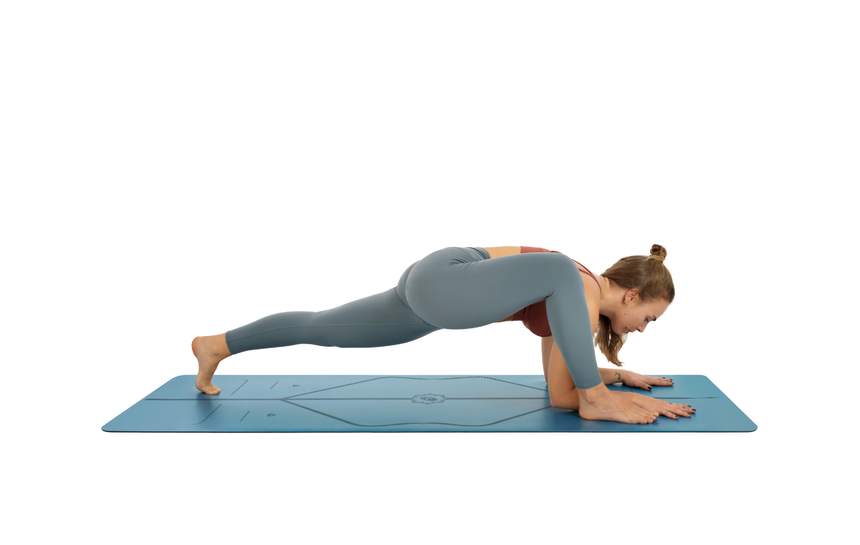
Lizard Pose (Utthan Pristhasana in Sanskrit) brings some variety to your hip-opening routine while also building strength and flexibility. The many variations of this pose, plus the option to use props, make it accessible to yogis of all levels.
Step-by-Step Instructions for Lizard Pose
- Begin in Downward Facing Dog Pose.
- Step your right foot to the front of your mat outside of your right hand
- Bend your right knee and align it over your ankle.
- Lower your forearms to the mat or onto blocks. Keep your elbows under your shoulders and your forearms parallel.
- Press through your left heel to keep your left leg extended straight.
- Hug your right knee toward your right shoulder.
- Press into your forearms and palms to open your chest and extend your spine.
- After five to ten breaths, step back to Downward Facing Dog and repeat the pose on the other side.
🧘 Tip from a Yogi
The approach to full Lizard Pose includes a lot of exit ramps, so listen to your body and choose the variation that’s right for you today. It doesn’t matter if your elbows don’t reach the floor or your back knee comes down. Just breathe wherever you are.
Utthan Pristhasana Basics
Sanskrit Meaning: Utthan (Intense) Pristha (Back) Asana (Pose)
Yoga Level: Intermediate
Pose Type: Standing
Pose Category: Hip Opener
Common Props: Blocks under the forearms
Benefits of Lizard Pose
- Deeply stretches the hips, hamstrings, and hip flexors
- Improves flexibility and range of motion in the lower body
- Strengthens the legs and builds stability
- Prepares the body for deeper hip openers
Lizard Pose Key Alignment Cues
1. Knee Over Ankle
For the greatest stability, align your front knee directly over your ankle so your shin is perpendicular to the floor.
2. Keep Your Pelvis Level
If your hip is dipping on the side of your extended back leg, press into your back foot to lift your hip and keep your pelvis level.
3. Keep Your Chest Open
Don’t let your chest sink. Press into your forearms to keep your shoulder blades separated.
Beginner Tips for Lizard Pose
- Lower your back knee to the floor for support
- Use blocks under your forearms if they don’t come to the floor
- Keep your arms straight as an alternative
Utthan Pristhasana Variations & Modifications
Lizard Pose with Back Knee Down
Lowering your back knee allows you to focus more on the hip stretch.
Revolved Lizard Pose
Bend your back knee and reach your opposite hand back to grab your back foot for a quad and chest stretch.
Preparatory Poses
Low Crescent Lunge Pose (Anjaneyasana)
Open your hip flexors and prepare for deeper hip stretching.
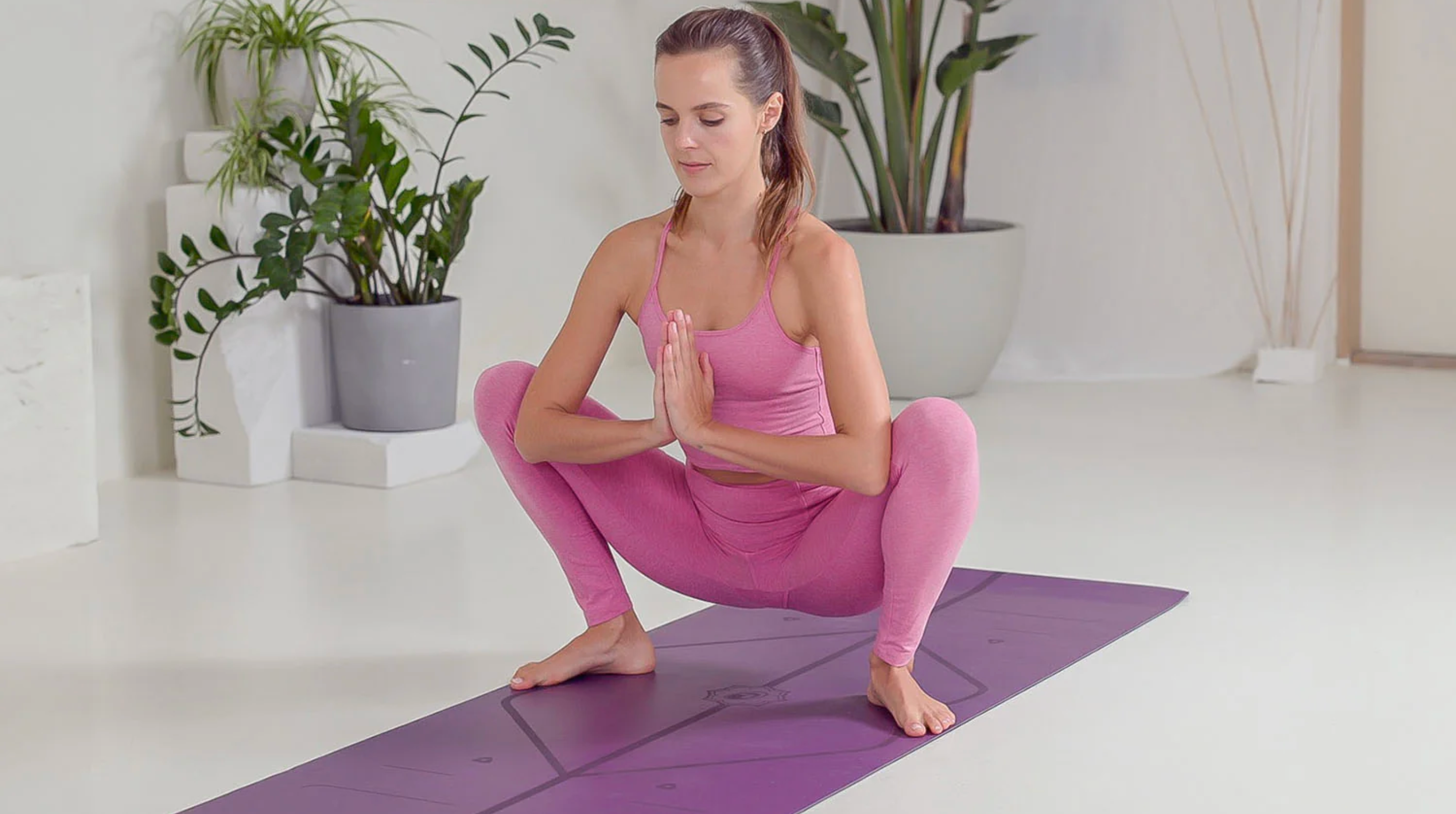 Garland Pose (Malasana)
Warm up your hips in this squat before coming into the lunge position.
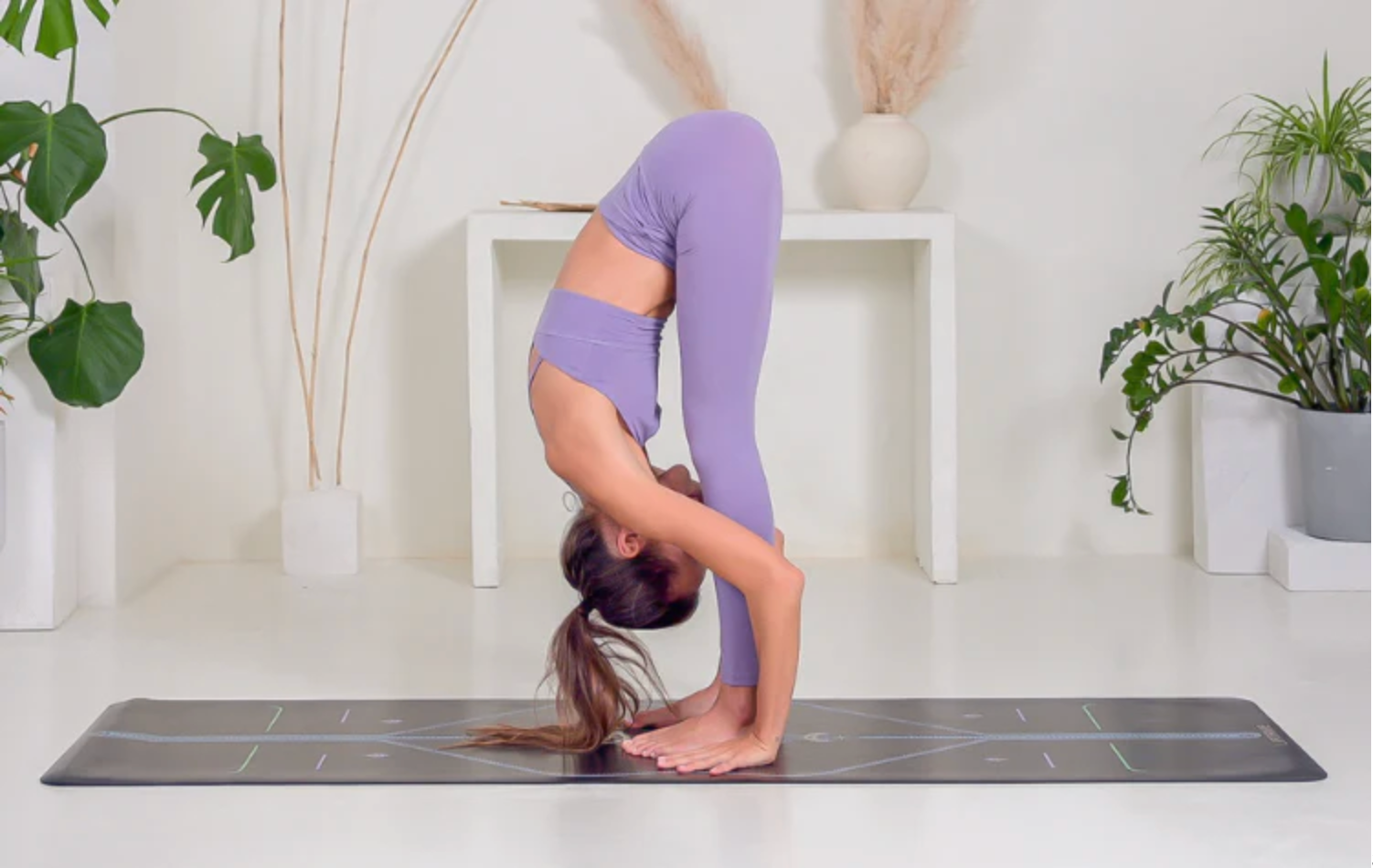 Standing Forward Fold (Uttanasana)
Keep your knees soft to release your hamstrings and spine.
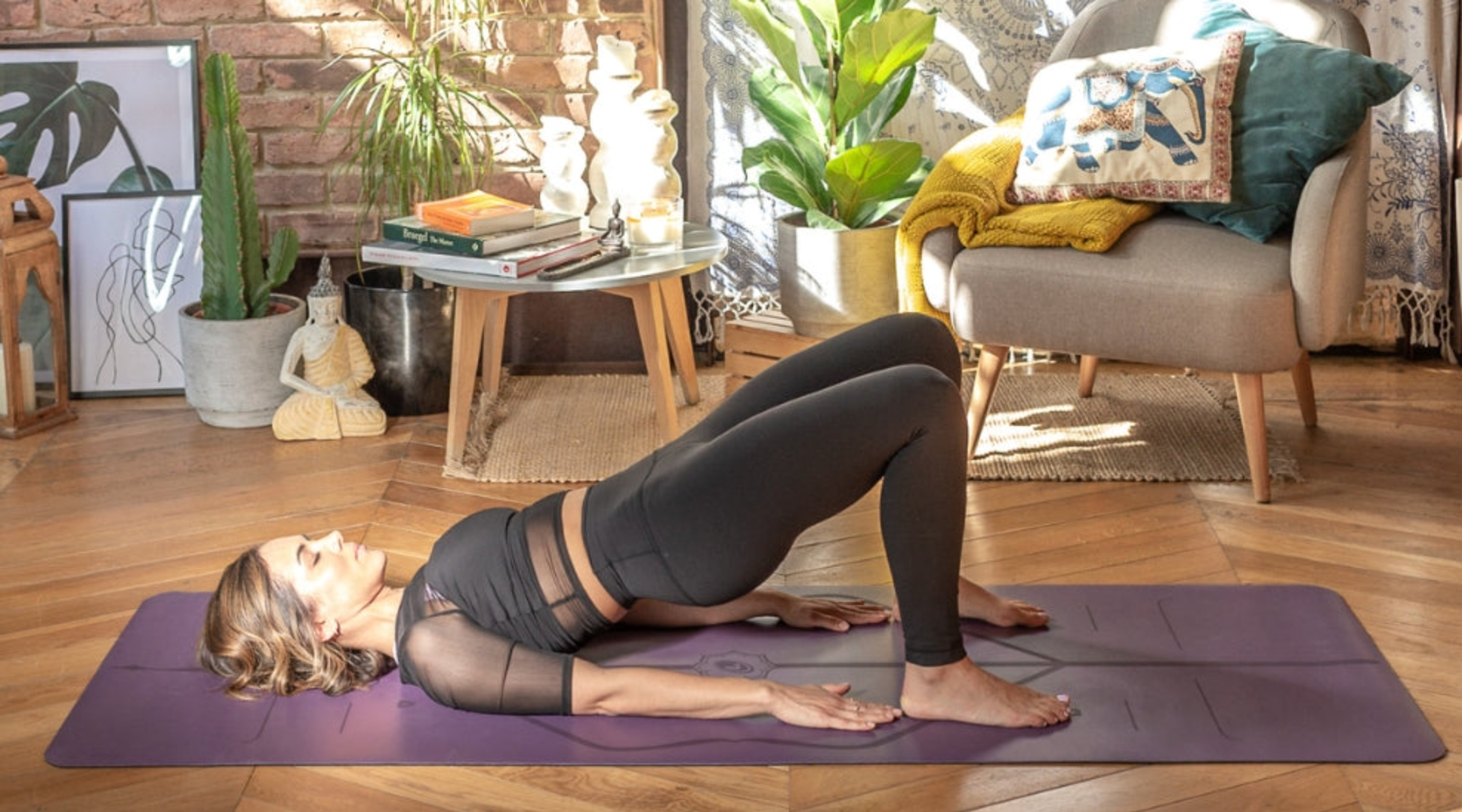 Bridge Pose (Setu Bandhasana)
Balance your spine with a gentle backbend and glute activation.
Why We Practise Lizard Pose
We love Lizard Pose because it’s a little uncomfortable. Learning how to stay with a pose that tests your edges is at least as valuable as opening your hips. Using your breath as a tool in this situation can help you get more comfortable with discomfort and deal with stress and uncertainty off your mat as well.