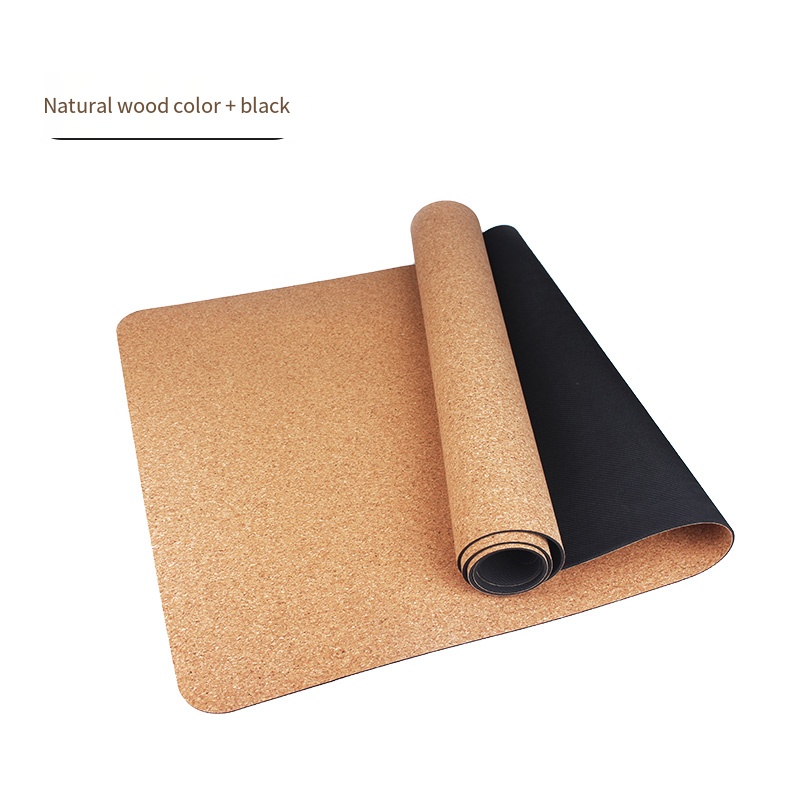
Yes, cork mats are good for hot yoga when the class leaves your hands damp rather than dripping, because a cork face keeps its dry, grainy bite on moist palms, but in a class where sweat pools on the mat a cork top needs a towel over it and careful drying afterwards.
That split is the honest answer, and it comes from what cork is. On a yoga mat, cork is a thin face of pressed bark bonded to a rubber base. The cork decides how the surface feels under wet skin; the rubber decides cushion, weight and how the mat holds the floor. Our own cork build, the Cork + Rubber - 183*66*0.4cm - Professional Yoga Mat, is made exactly this way. How cork compares with rubber and PVC as a surface in general is covered in Cork Yoga Mats: How Cork, Rubber and PVC Surfaces Compare; this page stays with one question, which is heat and sweat.
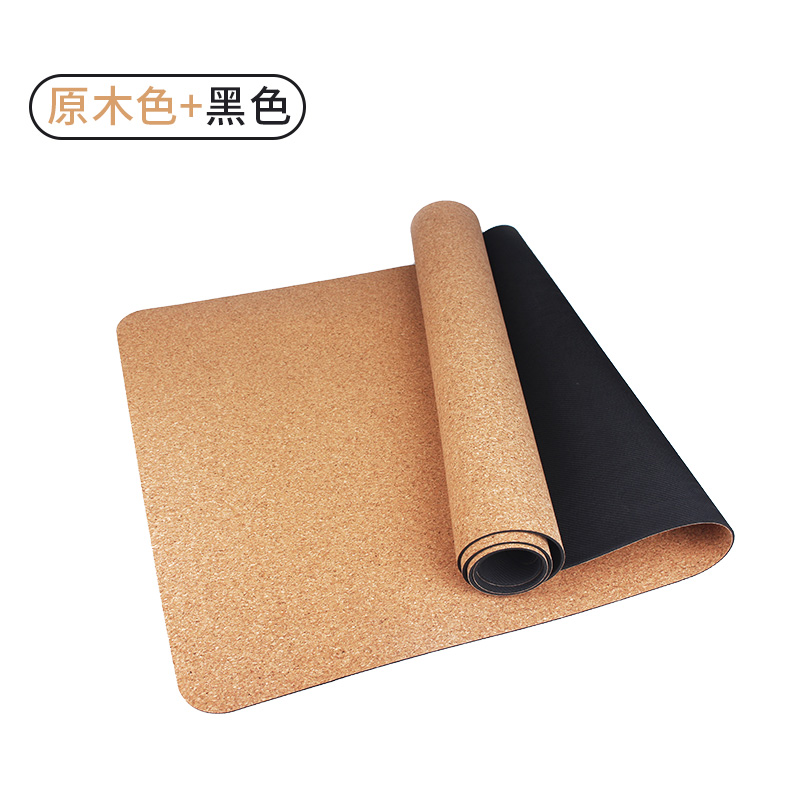
How a cork yoga mat behaves as you sweat
A cork yoga mat such as the Cork + Rubber 183*66*0.4cm build feels driest at the start of class and tends to hold the hands better once the surface is slightly moist. The pressed bark grain gives damp skin something to catch on, where a smooth closed surface lets the same moisture spread into a slippery film.
Three stages are worth separating, because most disagreements about cork in hot yoga come from people describing different stages:
- Dry hands, first minutes. Cork can feel less sticky than a rubber or PU face before you warm up. Some practitioners mist the area under the hands and feet with a little water before starting; that is a normal habit with cork, not a fault in the mat.
- Damp hands, most of the class. This is where cork is at its best. The grain stays usable and the face does not turn glossy.
- Standing water. Once sweat drips fast enough to pool, any mat surface is working against a layer of liquid. Cork copes better than a closed PVC face, but it is also the surface that most dislikes being left soaked, so this stage is where a towel earns its place.
When a cork mat is the right hot yoga mat, and when it is not
A cork mat suits warm and heated classes where you sweat steadily but do not flood the mat, and it suits people who dislike the tacky feel of rubber on the palms. A frosted PU over rubber surface, such as our Matte Nature Rubber 185*68*0.45cm mat, is the safer choice for classes that leave the mat wet from end to end.
If you practise in a heated room and finish with a damp mat, cork does the job without extra kit. If you finish with puddles, either lay a mat towel over the cork for the second half of class or choose the frosted PU + rubber build, whose textured top is made for a soaked surface; the reasoning is laid out in what actually grips when a mat is wet. If your hands are dry by nature and you rarely sweat through the palms, cork may feel too smooth for you early in class, and a rubber face will feel more secure from the first pose.
Thickness matters less than surface here. The Cork + Rubber mat is 0.4cm thick, close to the 0.45cm of the matte rubber mat, so the two feel similar underfoot in standing balances; the difference you notice in a hot room is almost entirely the top layer.

Looking after a cork mat after a hot class
A cork mat used for hot yoga should be wiped with a barely damp cloth and left to dry flat and unrolled before it is stored, because the cork face on a Cork + Rubber mat dries slowly and marks where water or skin oil sits on it. Rolling it up wet in a bag is the habit that shortens its life.
Keep the routine short so it actually happens after every class:
- Blot pooled sweat with your towel before you leave the room.
- At home, wipe the face in sections with a cloth that is damp, not wet. Skip alcohol sprays, oils and scouring pads.
- Lay the mat flat or hang it over a rail, cork side out, away from direct sun and radiators.
- Roll it only when the surface feels dry to the touch.
Cork darkens a little with use, and the areas under the hands and feet change first. That is the material ageing, and it does not mean the grip has gone. Care rules for the other mat surfaces are compared in Yoga Mat Cleaning and Care.
Questions people ask next
Do I still need a towel on a cork mat?
Not for a class that only leaves you damp. For the hottest, wettest formats a towel is useful on cork for a different reason than on other mats: it keeps standing sweat off the cork so the mat dries faster afterwards.
Does a cork mat smell in a hot room?
The cork face itself has a faint woody scent. The rubber base under it can carry a rubber smell when the mat is new, which fades as the mat airs; anyone with a latex allergy should check the base material before buying any rubber-backed mat.
Can a brand put its logo on a cork hot yoga mat?
Yes. Printing Yoga manufactures the cork and rubber mat for brands and studios with custom marking. Cork keeps its natural wood colour, so marks read best as tone-on-tone rather than as full-colour artwork; ask us for a sample if the look matters to your range.