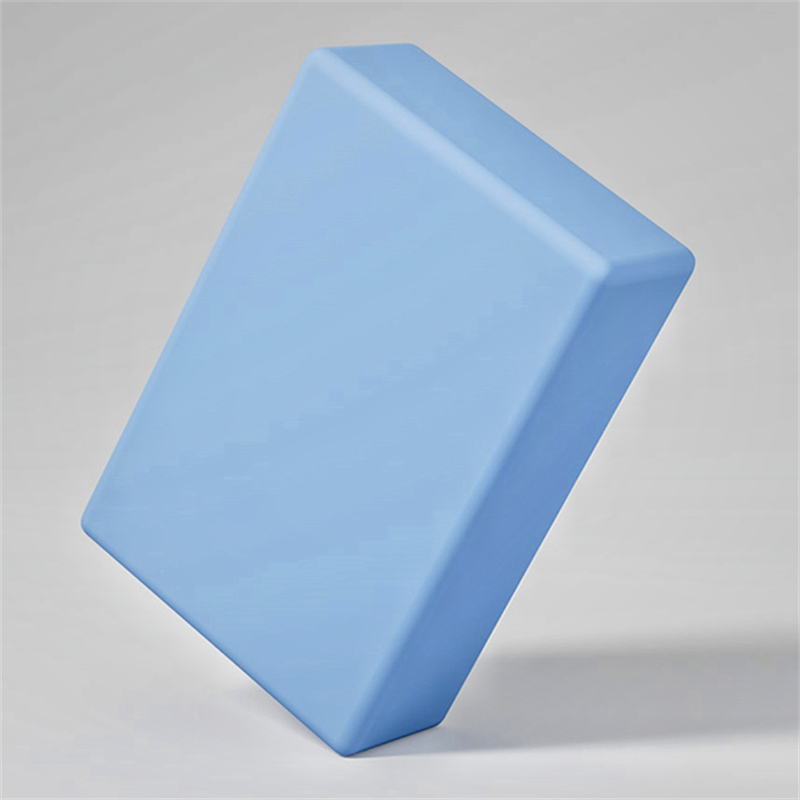
Foam yoga blocks are used to bring the floor up to your hands, to hold part of your body weight in seated and lying poses, and to give you something to squeeze or press against, so a pose fits your reach instead of forcing it.
A block is a simple object, and that is why it gets used in so many ways. The standard brick shape has three different edges, which means one block gives you three working heights. Our EVA - 23*15*7.5cm - Single Color Yoga Brick is a typical foam block: 7.5cm lying flat, 15cm on its long side and 23cm standing on end, at 200g a piece. This page explains what people actually do with a foam block, where foam is the better body for the job and where it is not. For buying blocks in volume, see our foam vs cork sourcing guide.
The three jobs a foam yoga block does
A foam yoga block does three jobs in practice: raising the floor, supporting the body and giving the muscles something to work against. The EVA brick at 23*15*7.5cm covers all three because each of its faces sets a different height.
- Raising the floor. In standing forward folds, triangle and half moon, the hand often cannot reach the mat without the back rounding. A block under the hand closes that gap. Start on the tallest edge and work down to the flat face as your reach grows.
- Supporting the body. Sitting on a block lifts the hips above the knees, which makes cross-legged sitting and kneeling easier to hold. Lying back with a block under the upper back or under the pelvis in a supported bridge lets the body rest in a shape it could not hold by effort.
- Something to work against. Squeezing a block between the thighs in bridge or chair pose, or pressing it between the palms overhead, switches on muscles that tend to go quiet. Foam suits this well because it gives slightly under pressure.
Which height to use
A 23*15*7.5cm foam block is used at its 7.5cm height when you need only a small lift, at 15cm for most standing poses and at 23cm when the floor feels far away. The rule is to pick the height at which your spine stays long, then lower the block over weeks rather than within one class.
| Block position | Height | Typical use |
|---|---|---|
| Flat on its widest face | 7.5cm | Seat lift for cross-legged sitting, support under the head or pelvis when lying down |
| On its long side | 15cm | Hand support in triangle and side angle, seat for kneeling poses |
| Standing on end | 23cm | Hand support in half moon and standing forward folds when reach is short |
The tallest position has the smallest footprint, so it is also the least steady. Place the block squarely, press down through the whole palm, and move to a lower setting if it rocks.
Why foam, and when cork does the job better
Foam yoga blocks are chosen when the block sits under the body or travels with you, because an EVA brick weighs 200g while a cork brick of the same 23*15*7.5cm size weighs 750g. Cork is chosen when the block carries your hand in a standing balance and you want it to stay put.
That weight difference explains most of what people feel. A foam block is gentle against the spine, the back of the head or the sit bones, so it is the usual pick for restorative work and for anyone new to props. It is also easy to carry to class along with a mat. A cork brick is firmer and heavier, which makes it steadier under a loaded hand but less comfortable to lie on. Many people end up owning one of each kind, or a pair of foam blocks first and cork later.
If you are buying one block to start, choose foam. If you mostly want support in standing balances and already own a soft prop, cork is worth the extra weight in your bag.
Looking after a foam block
A foam yoga block made of EVA is cleaned by wiping it with a cloth dampened in water and a little mild soap, then letting it air dry before it goes back in a bag. Harsh solvents and scouring pads roughen the surface, and a block stored damp picks up odour.
Foam marks more easily than cork. Fingernails, rings and rough floors leave dents and scuffs over time; these are cosmetic and do not change how the block supports you. Replace a block when an edge has crumbled enough that it no longer stands level.
Questions people ask next
Do I need one block or two?
One is enough for most hand-support uses. Two are useful for poses where both hands come down, such as a forward fold, and for supported lying poses that place one block under the back and one under the head.
Are foam blocks only for beginners?
No. Experienced practitioners use them to hold a pose longer, to keep alignment honest on a tired day and to make restorative poses possible at all. The block changes the pose to fit the body, which is useful at any level.
Can a studio or brand order foam blocks in its own colours?
Yes. Printing Yoga produces the EVA brick in stock colours including Black, Light Purple, Matcha Green, Pure Blue and Soft Pink, and makes custom colours and logo marking to order for studios and brands.