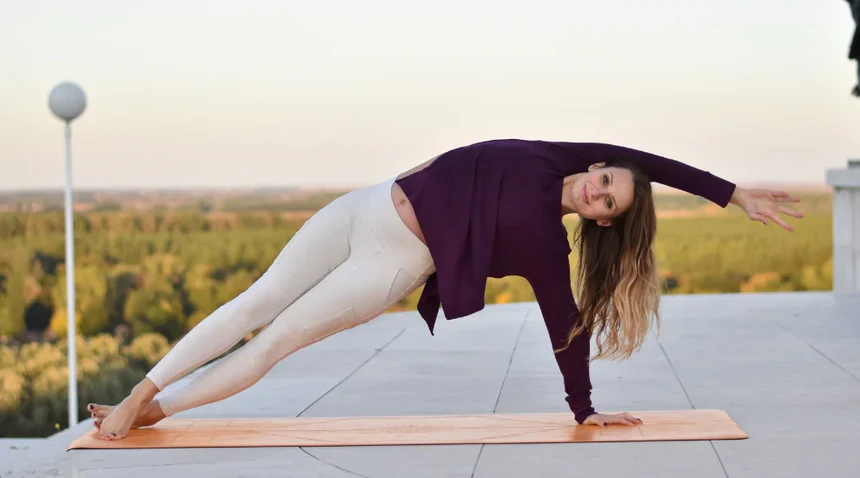
Side Plank may appear to rely solely on arm strength, and while the arms do a significant amount of the work, it is also highly dependent on core engagement, especially when attempting certain variations. However, if you are a beginner to yoga, don’t worry — there are supported options to help you gradually build the strength needed for the full expression of the pose.
When it comes to alignment in poses, we often talk about the stability created by stacking joints directly on top of each other. In Side Plank, following that logic, the wrist of your supporting arm would be positioned directly below your shoulder. However, in this case, due to the angle created by the rest of your body with the floor, this is not the alignment we recommend. Your supporting arm bears a lot of weight, so we suggest aligning it at a 90-degree angle to the rest of your body rather than to the floor. In practice, this means your wrist will be slightly closer to the front of your mat than your shoulder.
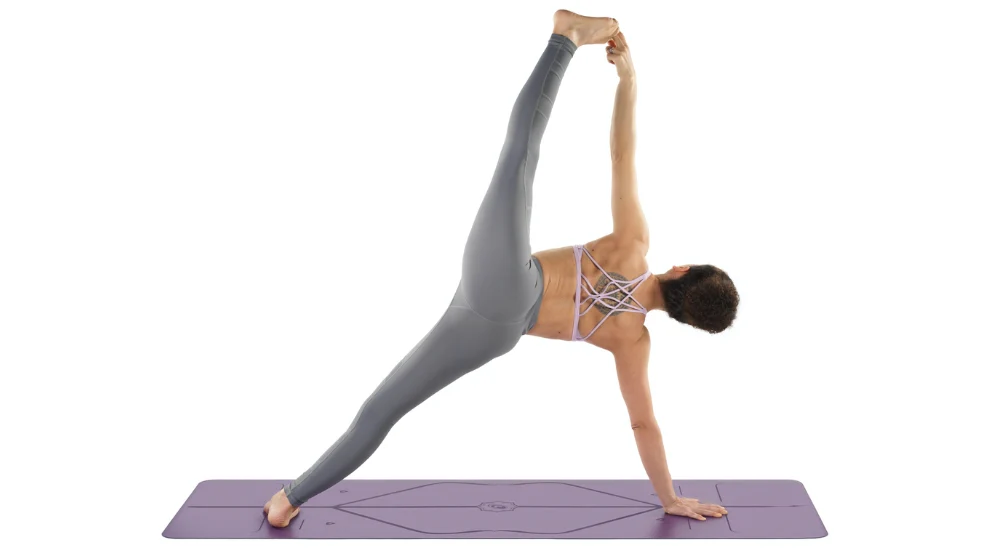
Benefits of Side Plank:
- Strengthens the arms, back, and core.
- Improves balance.
How to Practice:
- Start in a high plank position. Press your heels back and shift your weight slightly back so your shoulders move behind your wrists.
- Shift your weight onto your right arm, rolling your body to the right to balance on the outer edge of your right foot, turning your body to face the left.
- Stack your left foot on top of your right, instep against instep. For more stability, you can stagger your feet slightly instead of stacking them perfectly. In either case, keep your feet flexed and active.
- Both your pelvis and shoulder girdle should be open toward the left side.
- Extend your left arm up toward the ceiling, palm active and fingers spread. Open your chest and gaze toward your left hand.
- Press firmly through your right palm and the outer edge of your right foot. Lift your hips high; the underside of your body can even form a slight crescent moon shape.
- Hold for a few breaths, then return to high plank. Repeat on the other side, resting in Child’s Pose if needed.
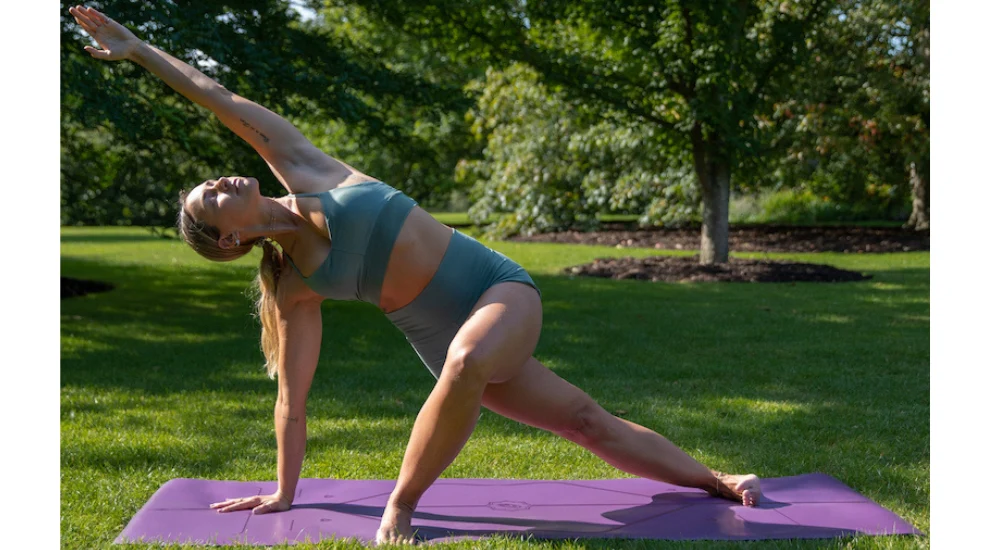
Supported Side Plank
If your hips tend to sink toward the floor in Side Plank, you might need some extra support. Your own leg makes a very convenient prop.
In this variation, step your top foot about halfway toward the center of your mat. Press firmly through that foot to lift your hips away from the floor.
You can also extend your top arm forward for a nice side-body stretch.
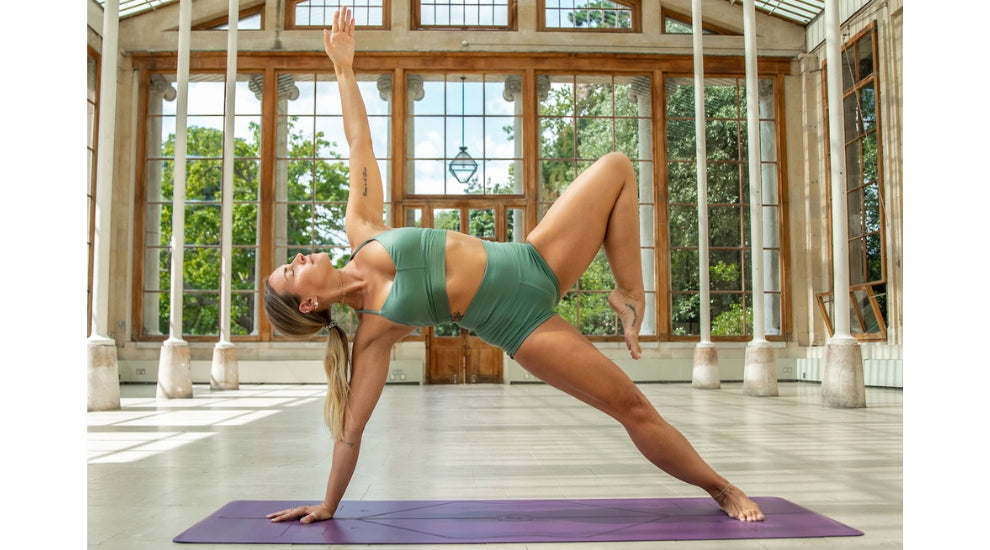
Side Plank Variation (with Top Leg Movement)
The first step in adding movement with the top leg is simply trying to lift it away from the bottom leg. This requires significant core recruitment. Practicing leg lifts in Side Plank helps you build that strength.
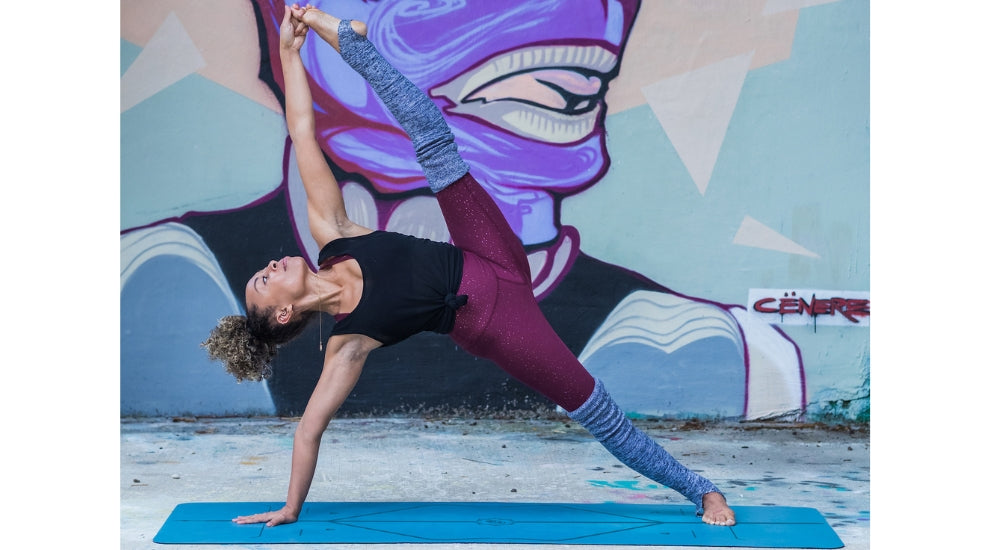
A Tree Pose leg is a handy transition. Push your hips up as high as possible to counter the downward pressure of the top leg. Try lifting the top leg completely off the bottom one (as shown in the image) to challenge your balance. As you work to lift the top leg, root down firmly through the sole of your bottom foot.
Full Side Plank
Holding the extended foot, as shown in this variation, also requires sufficient hamstring flexibility. If you're not there yet, you can lift and extend the top leg without grabbing it, or use a yoga strap for assistance.
To enter this variation: Bend your top knee and grab your big toe. Begin to straighten the top leg, aiming the sole of your foot toward the ceiling. If your hips protrude backward during this process, draw them back in as you settle into the full expression.
If you feel wobbly or unstable, remember that this is how Wild Thing is often born — so expect to tip over a few times as you practice (transitioning into a Downward-Facing Dog).