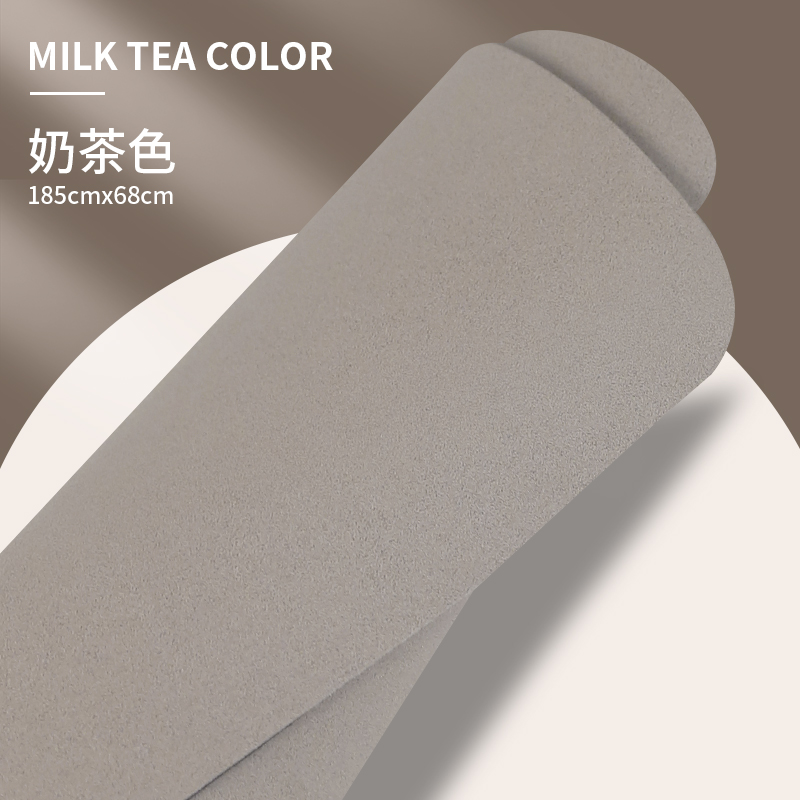
A white yoga mat is worth producing when your brand needs a clean, bright surface that makes artwork and alignment lines stand out — but white is the least forgiving color a mat can carry. It shows sweat marks, skin oil and floor dust faster than any darker tone, and the surface material you choose decides whether that shows up as a wipe-off film or a permanent shadow. The practical answer for most buyers: put white on a smooth single-color face, keep the working zone slightly off-white, and let printed designs carry pure white only where hands and feet do not land.
Why white behaves differently from every other mat color
Darker pigments hide the small marks every mat collects in daily use. White does the opposite: it turns each handprint into a visible outline, and a studio that rolls the same mat twice a day will see the difference within weeks. That is not a defect in the product — it is physics — but it changes how you should make the specification and what you should promise your customers. Our manufacturing team asks every buyer who requests white the same questions: where will the mat be used, how will it be cleaned, and does the white need to survive long enough to still look good in customer photos a season later?
The answers sort into three builds you can inspect today. The Matte Nature Rubber mat is a Frosted PU + Rubber build at 185*68*0.45cm with laser printed alignment lines; its frosted face hides light marks better than a glossy one. The Nature Rubber flagship uses a PU + Rubber build at the same 185*68*0.45cm size, the smoothest face for full-surface designs. For entry programs, the TPE single color mat at 183*61*0.6cm is the budget platform, with MOQ 1 on the product page.
If you are deciding whether a white mat fits your program
- If you sell into home practice or photo-led retail, where the mat is used a few times a week and the product photo sells the line, a white or ivory frosted PU surface is a strong choice — cleanliness reads as premium and your designs pop against it.
- If you want white as the brand color but supply busy studios, specify an off-white or warm ivory for the full surface and keep pure white for the logo and alignment lines. The mat still reads as white on the shelf, while daily marks stay far less visible.
- If you want a white mat for hot yoga, choose a frosted PU face and tell your customers to wipe it after every session; a textured open surface will trap sweat residue and grey out faster than the rest of your range.
- If you need the cheapest possible white mat for a one-off event giveaway, TPE works, but do not position it as a long-life premium product — a lighter TPE face shows wear sooner, and that experience lands on your brand, not on the factory.
- If you run a rental or shared-mat studio where mats are never cleaned between users, a white mat is the wrong product. Choose a mid or dark tone and put the white into the printed logo instead.
White mat builds compared
| Build | Surface | How white shows marks | Best for |
|---|---|---|---|
| Frosted PU + Rubber, 185*68*0.45cm | Matte frosted face | Light film that wipes off; texture softens handprints | Premium retail, home practice, hot yoga with daily wiping |
| PU + Rubber, 185*68*0.45cm | Smooth face | Marks visible sooner, but sharpest print contrast | Printed designs on a white ground, artist collaborations |
| TPE, 183*61*0.6cm | Closed-cell foam face | Shows scuffs and wear earlier on light tones | Events, giveaways, entry-price lines |
| PVC, 183*61*0.6cm | Smooth PVC face | Easy to wipe, but not our first pick for light colors | Budget studio stock where darker tones are acceptable |
How to specify white so reorders match
"White" on a purchase order is not a specification. Pure white, ivory, cream and cool white all come back from a factory looking different, and the gap only becomes obvious when two batches sit side by side in your warehouse. Send a physical swatch or a Pantone reference, and approve a real sample on the real surface material before bulk production starts. Our design team can help create print-ready files from your logo, and details such as the alignment line tone, edge finish and packaging are confirmed during the sample stage. The standards we ensure on light colors are the same as on any other shade: the physical sample decides, the screen does not.
Two more details matter more on white than on any darker tone. First, the alignment lines: on a white face, laser printed lines give a subtle tone-on-tone look, while printed lines in a contrasting color give stronger guidance for beginners. Second, packaging: a white mat that picks up dust or a crease mark in transit arrives looking used, so ask for individual protective wrapping and roll the mat face-out to avoid pressure marks. Our delivery process ships every mat rolled and wrapped, but on a white order it is worth confirming the packaging details in writing.
Care instructions are part of the product
A white mat that gets cleaned correctly stays white; one that gets scrubbed with harsh products or left in direct sun can discolor. Include a short care card with every white mat: wipe with a damp cloth and mild soap after use, air dry out of direct sunlight, and store rolled rather than folded. This small insert does more to reduce returns on light-colored products than any change in material, and it is the kind of service detail our team will help you write when you order your custom products.
FAQ
Do white yoga mats get dirty quickly?
They show dirt quickly, which is not the same as getting dirty faster than other colors. Every mat collects sweat and skin oil; white simply makes it visible. A frosted PU face and a habit of wiping after each session keep a white mat looking clean for much longer.
Which material is best for a white yoga mat?
For premium lines, a Frosted PU + Rubber build such as our 185*68*0.45cm matte mat. The frosted texture softens the look of handprints while the rubber base gives the cushion and grip buyers expect. TPE works for entry-price programs but shows wear earlier on light tones.
Can you print a design on a white yoga mat?
Yes. A white ground gives the highest contrast for printed artwork, so colors in your designs come out bright and true. We usually recommend placing the busiest part of the design outside the hand and foot zones so the working area stays easy to clean.
Can we get an off-white or ivory instead of pure white?
Yes, and for studio use it is often the better choice. Send us a physical swatch or a Pantone reference and we will produce a sample on the actual surface so you can compare tones in your own hands before bulk production.
Will the white color turn yellow over time?
Light colors are more sensitive to sunlight and harsh cleaners than darker ones. Storing the mat out of direct sun and cleaning it with mild soap rather than strong solvents is the most effective way to keep the tone stable, which is why we suggest shipping a care card with every white mat.
Is there a minimum order for a white custom mat?
It depends on the build. The TPE single color mat lists MOQ 1 on its product page; for custom color work on rubber builds, contact our team with your quantity and we will confirm what is possible for your project.
Ready to make a white mat for your brand? Browse our matte rubber mats or send us your reference color, and the Printing Yoga team will help you plan the right build.