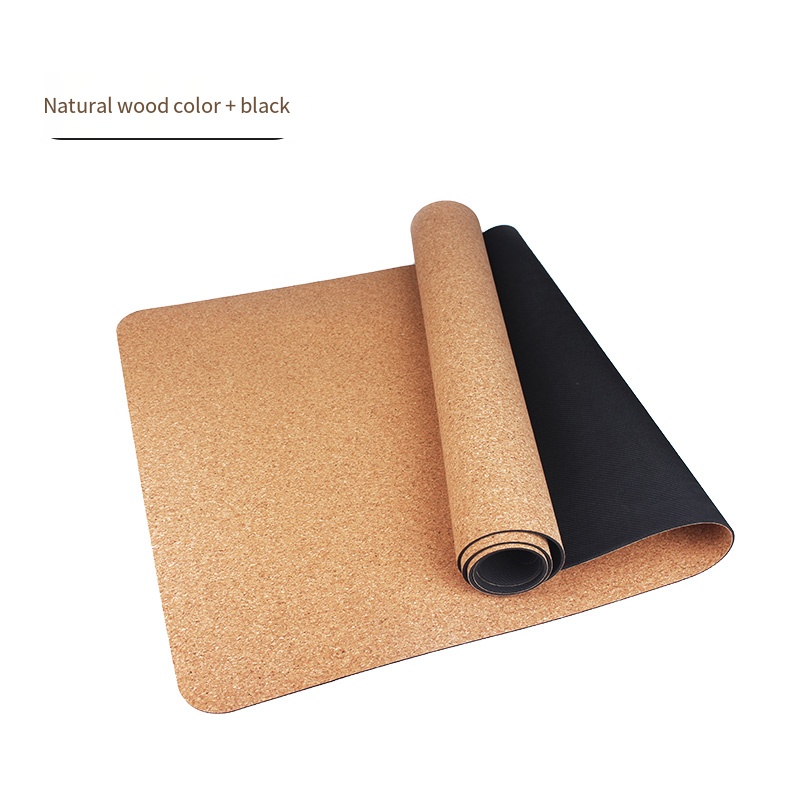
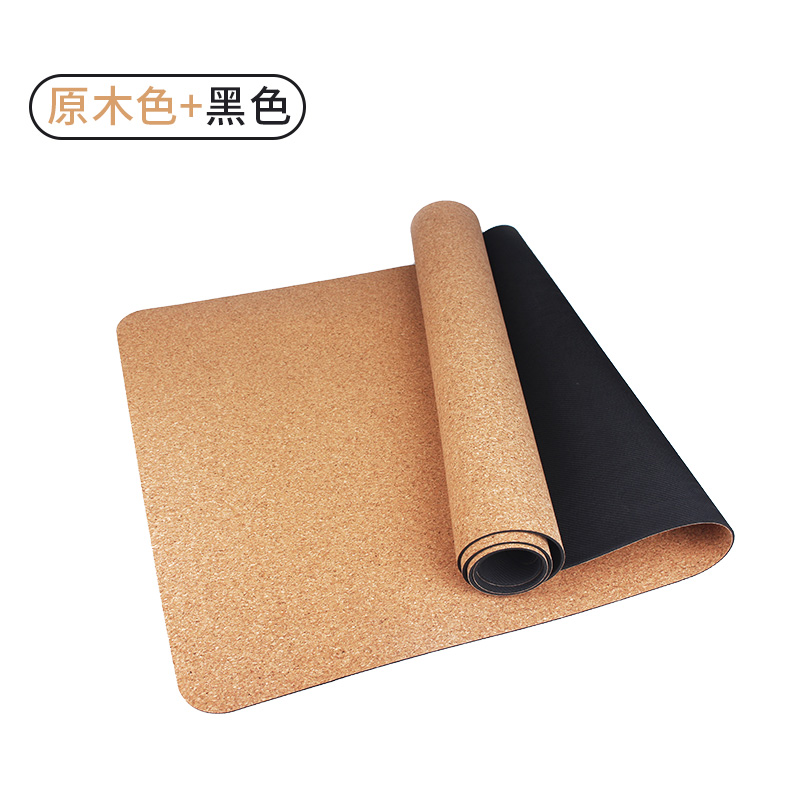
A jute yoga mat is a deck with a woven plant-fibre face bonded to a grippy base, and Printing Yoga does not make one. Our manufacturing lines produce cork, PU, natural rubber, TPE and PVC surfaces, with no jute weaving or jute lamination step. If the woven fibre itself is the point of your product, you need a different supplier. If what you are really after is a natural-looking, dry-feeling surface with a plant-based story, our Cork + Rubber 183*66*0.4cm mat is the closest thing we build, and this guide explains how the two compare so you can brief the right factory.
What buyers usually mean by a jute mat
Jute is a bast fibre, spun into a coarse yarn and woven into the same kind of cloth used for sacking and rugs. On its own that cloth slides on a floor and offers no cushion, so a mat sold under this name is almost always a composite: the weave sits on top, and a polymer or rubber layer underneath does the work of gripping the floor and softening the knees. The search phrase "jute natural rubber yoga mat" describes one version of that sandwich. Other versions pair the weave with a foam base.
That matters for sourcing because the word on the label only describes the top face. Two products with the same name can have very different bases, weights and smells, and very different answers to the questions an importer has to answer for a retailer. Before you compare quotes, ask every supplier to state the base material in writing and to confirm how the fibre is fixed to it.
How a woven fibre face behaves in practice
Buyers are drawn to the weave for three reasons: it looks hand-made, it feels dry under the palm, and the fibre grows quickly as a crop. Those are real advantages for a brand story. The trade-offs are just as real, and they come from the same structure:
- Texture. The yarn is coarse. Some users experience that as reassuring traction; others find it rough on knees, elbows and bare forearms during long holds.
- Loose fibres. A woven natural yarn can shed short fibres when new, and the cut edge of the weave needs to be sealed or bound so it does not fray.
- Moisture. Plant fibre takes up water. A weave that stays damp after a sweaty class needs time to dry flat before it is rolled, or it can hold odour.
- Printing. An open, uneven weave is a poor canvas for fine artwork. Detailed designs, thin alignment lines and small logos lose their edges on it.
- Batch variation. The fibre colour shifts from harvest to harvest, so two deliveries may not match exactly.
None of these makes the material wrong. They are the details a buyer should see on a sample before committing, and they explain why brands that want crisp printed designs usually end up on a smoother face.
Jute, cork, PU on rubber and TPE compared
The table below sets the woven face against the three surfaces we do make. The jute column describes the material category in general terms; it is not a Printing Yoga product. The other three columns refer to mats in our catalogue.
| Point | Jute-faced mat (not made by us) | Cork + Rubber | PU + Rubber | TPE |
|---|---|---|---|---|
| Catalogue reference | None | 183*66*0.4cm Professional Yoga Mat | 185*68*0.45cm with laser printed alignment lines | 183*61*0.6cm Single Color Premium Yoga Mat |
| What the hand touches | Coarse woven plant yarn | Fine-grained bark surface | Smooth, matte polyurethane skin | Closed foam with an embossed pattern |
| Natural look | Strong, rustic | Strong, warm wood tone | Depends on the chosen colour | Depends on the chosen colour |
| Feel on knees and forearms | Can feel rough | Smooth | Smooth | Soft, cushioned |
| Fibre shedding | Possible when new | No loose yarn | No loose yarn | No loose yarn |
| Surface for fine artwork | Weak, the weave breaks up detail | Suits simple marks and lines | Suits alignment lines and logos | Suits simple marks |
| Wipe-down after class | Needs drying time | Wipes clean | Wipes clean | Wipes clean |

Which route fits your program
- If you are building a range around a rustic, hand-loomed look and the visible weave is what your customer is paying for, source from a mill that specialises in woven fibre mats. We are not that factory, and we would rather tell you now than try to make a product outside our capacity.
- If you want a plant-based surface story but also need a deck that is smooth on skin, take the Cork + Rubber mat. The warm tone comes from the bark itself, and there is no yarn to shed.
- If you need crisp alignment lines, a sharp logo or a brand colour, choose the PU + Rubber 185*68*0.45cm mat. Its even face is what lets a laser mark stay readable.
- If you are filling an entry-level slot where cushioning and a light roll matter more than a natural-material claim, the TPE 183*61*0.6cm mat is the practical choice.
- If you only want the word "jute" on a hang tag and do not mind what is under it, do not choose us, and be careful with whoever says yes: the base layer decides how the product performs and what you can honestly claim about it.
What to put in a brief for a woven-face mat
If you go ahead with a specialist mill, the experience of our own sampling process suggests the same discipline applies to any natural surface. Create a short written brief and make the supplier answer each line:
- Name the base material, not only the face. Rubber, foam and blended bases behave differently.
- Ask how the weave is bonded and how the edges are finished, and pull at a sample edge yourself.
- Rub the face firmly with a dark cloth to see how much fibre comes away.
- Wet the surface, leave it flat, and note how long it takes to feel dry and whether any smell develops.
- Ask what colour tolerance the mill will hold between batches, and agree it before bulk.
- Check that any eco wording on your packaging matches documents the mill can actually supply.
These checks ensure that what arrives on delivery matches the sample you approved. They also meet the standards a retailer's compliance team is likely to ask about, because each one produces evidence instead of an adjective.
Where Printing Yoga fits
We make high-quality mats in cork, PU on rubber, natural rubber, TPE and PVC, and our services cover custom colour, laser marking, printed designs and packaging. For a buyer who arrived looking for a woven fibre deck, the honest summary is this: we can supply the natural-looking slot in your range with cork, and the performance slot with PU on rubber, and we cannot supply the weave. Many brands carry both kinds of products from two suppliers, and that is a sensible way to build a range.
If cork sounds like the right substitute, read our comparison of cork, rubber and PVC surfaces in the blog, then ask us for a physical sample. A photo cannot show how bark grain feels under a damp palm, and a sample settles the question during the first week instead of after the first container.
Frequently asked questions
Are jute yoga mats good?
They are good for one kind of buyer and a poor fit for others. A jute yoga mat suits people who want a dry, natural-looking, hand-made feel for slow or seated practice and do not mind a coarse texture under the knees and forearms. It is a weak choice when you need cushioning, crisp printed artwork, a surface that wipes dry between classes, or the same colour from one delivery to the next, because the weave can shed when new, holds moisture and breaks up fine detail. If the natural look is the point but the roughness is not, a cork face over rubber gives most of the same story on a smooth surface.
Do you manufacture jute yoga mats?
No. Printing Yoga has no weaving or fibre lamination line, so a woven plant-fibre face is outside what we build. Our natural-surface option is the Cork + Rubber 183*66*0.4cm Professional Yoga Mat.
Is a jute mat the same thing as a natural rubber mat?
Not necessarily. The name describes only the woven top. Underneath, a supplier may use rubber, foam or a blend, so always ask for the base material in writing before comparing prices.
Is cork a fair substitute for a woven fibre surface?
For most brands, yes. Cork gives a similar warm, plant-based appearance and a dry touch, without loose yarn or a coarse weave against the skin. It will not reproduce the hand-loomed look, so buyers who need visible threads should stay with a specialist mill.
Can fine artwork be printed on a woven natural face?
Only in a limited way. An open weave breaks up thin lines and small type. If your design depends on sharp edges, a smooth polyurethane skin holds them far better.
Which of your mats should I sample first if I wanted a natural look?
Start with the Cork + Rubber deck, and add the PU + Rubber 185*68*0.45cm version if you also need laser printed alignment lines. Seeing both side by side makes the choice quick.