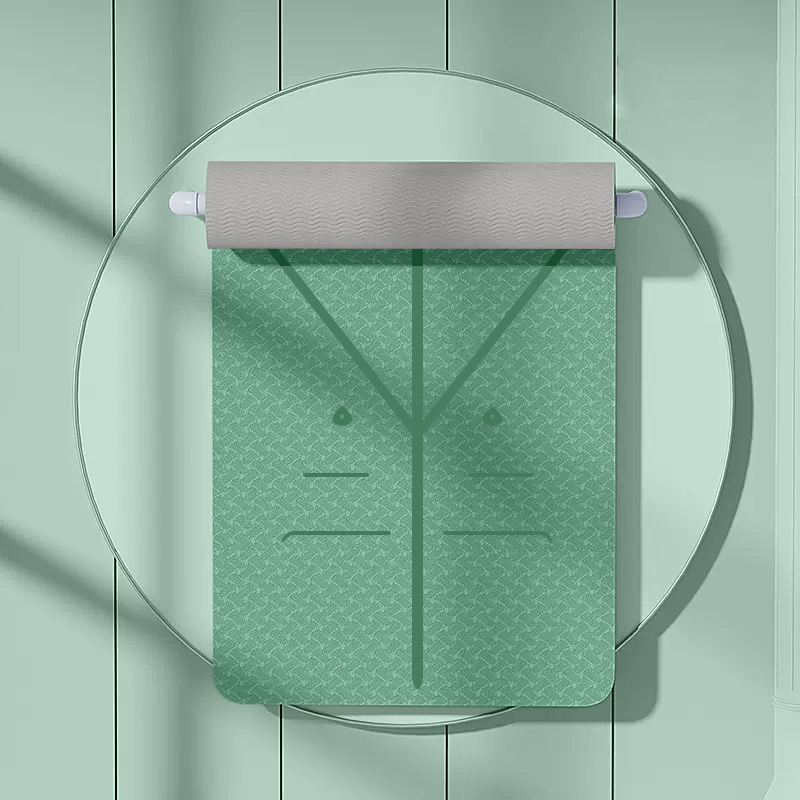
For a yoga class you need a yoga mat, clothes you can bend and stretch in, a bottle of water and a small towel; blocks, a strap and a bolster are useful extras that most studios keep on the shelf, so you rarely have to bring them yourself. Everything else is optional. The mat is the one item worth choosing with care, because it is the only piece of equipment you touch for the whole class, and the details printed in its product name tell you most of what you need to know before you buy.
The short list: what to bring to a yoga class
A first class does not call for a bag full of products. Four things cover almost every style of class, and they are the same four things a studio owner should make sure a new student can borrow or buy at the front desk.
- A yoga mat. It gives you grip under hands and feet and a clean surface of your own. A standard studio mat in our range is the 183*61*0.6 cm single color TPE mat.
- Comfortable clothes. Anything that stretches and stays in place when you fold forward. You practise barefoot, so no special shoes are needed.
- Water. A bottle with a lid that closes, kept at the back corner of the mat.
- A small towel. To dry your hands during class, or to lay over the mat if your palms get damp.
What the studio usually provides
Blocks, straps, bolsters and blankets are props. They make a pose easier to reach or more comfortable to hold, and most studios supply them because a class needs many identical sets. If you are joining a class, ask before you buy any of these. If you run the class, props are the part of the kit list you are expected to meet, while the mat is the part students increasingly prefer to own.
Many studios also keep loan mats. Borrowing one is fine for a trial class. Regular students usually bring their own mat for hygiene reasons and because a familiar surface makes the experience more consistent from week to week.
How to choose the one thing that matters: the mat
A mat name on Printing Yoga reads as material, then length, width and thickness in centimetres. So 183*61*0.6 cm means a mat 183 cm long, 61 cm wide and 6 mm thick. Three mats from our range show the practical choices a class-goer faces.
| Mat | Material | Size (cm) | Thickness | Best for |
|---|---|---|---|---|
| Single Color Premium Yoga Mat | TPE | 183*61 | 6 mm | General classes, beginners, studio loan sets |
| Single Color Professional Yoga Mat | PU + Rubber | 185*68 | 0.45 cm | Regular practice where grip and a steadier base matter |
| Foldable Matte Yoga Mat | Frosted PU + Rubber | 185*68 | 0.15 cm | Carrying to class in a bag, or laying over a studio mat |
All three carry laser printed or printed alignment lines, which help a new student place hands and feet without looking around the room. Weight, price and delivery time are not the same across these products, so check the product page rather than assuming one figure fits all of them.
Which setup fits you
If you are going to your first class, bring water, a towel and comfortable clothes, and borrow a studio mat. You will learn more about what you like in one class than from any buying guide.
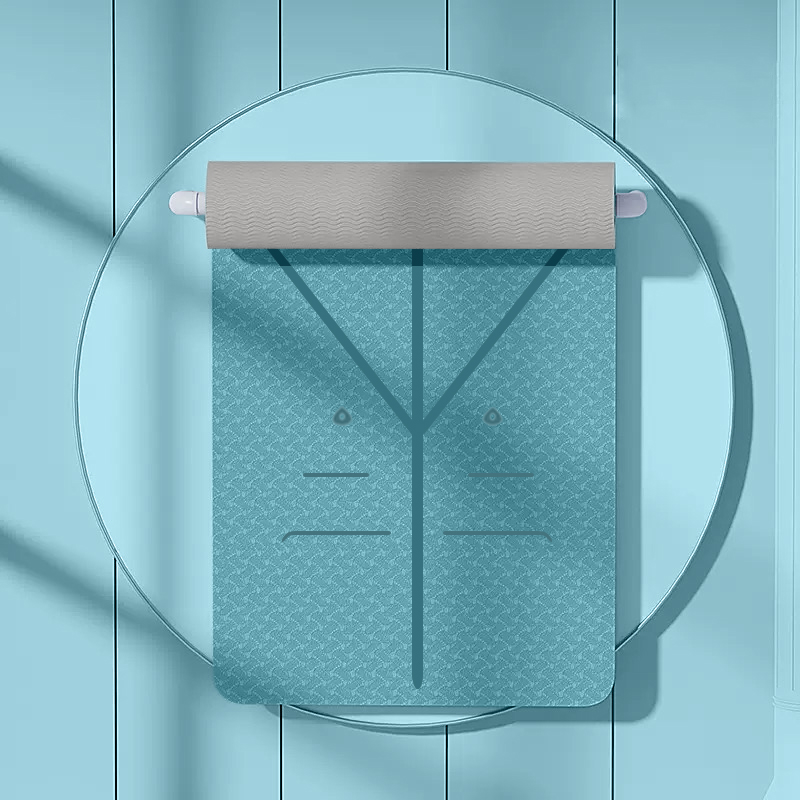
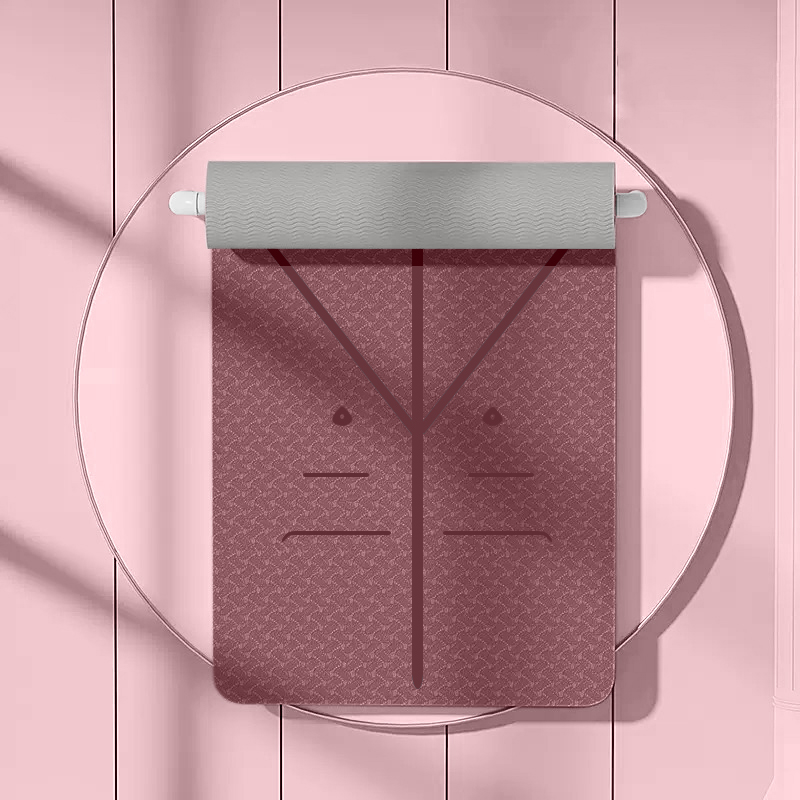
If you have decided to attend every week, buy your own mat. A 6 mm TPE mat at 183*61 cm is the size most studio floors are laid out for, and it comes in five stock colours: Knight Black, Light Purple, Matcha Green, Pure Blue and Soft Pink.
If you travel to class by bike or public transport, a foldable mat is easier to live with than a rolled one. At 0.15 cm thick the foldable matte rubber mat fits in a bag, and you can lay it on top of a studio loan mat when you want more cushioning.
If you run a studio and are putting together class sets, order mats in one size so the room lines up, and add your logo so loan mats are returned to the right shelf. Our manufacturing services cover custom logo and custom designs on these mats.
If your class is taught entirely on studio equipment, such as a reformer class, do not buy a yoga mat for it. A mat adds nothing there, and the studio will tell you what small items to bring instead.
What you do not need
You do not need shoes, gloves, a matching outfit or a full prop set to start. You also do not need the thickest mat on the shelf. Extra thickness feels soft under the knees, but a very thick mat is harder to balance on when you stand on one leg. A mid thickness mat is the sensible default until you know which poses you spend the most time in.
For studios and brands: turning the list into stock
For a studio, the question changes from what one student needs to what a full room needs. Decide how many mats cover your largest class and add spares, since the right figure depends on your room capacity rather than on any standard number. Keep to one mat size, choose a surface that can be wiped down between classes, and ask for alignment lines if you teach many beginners. Printing Yoga is a manufacturer, so the same mat can be supplied plain for loan sets or with your branding to sell at the front desk. Send us the size, material and artwork details and we will confirm what is possible for your order, including quantity and delivery.
Frequently asked questions
Do I need to bring my own mat to a yoga class?
Not always. Many studios lend or rent mats, so check when you book. Most regular students bring their own because it is more hygienic and they know how the surface grips.
What should I wear to a yoga class?
Wear stretchy, close fitting clothes that stay in place when you bend forward or lift your arms. Yoga is practised barefoot, so you do not need shoes or socks on the mat.
Do I need yoga blocks and a strap for my first class?
No. Studios usually provide blocks and straps, and the teacher will show you how to use them. Buy your own only once you practise at home.
What size yoga mat do I need for class?
A mat of 183*61 cm suits most people and most studio layouts. If you want more room to the sides, a 185*68 cm mat is wider and slightly longer.
How thick should a yoga mat for class be?
A mid thickness mat works for most classes. In our range that means 6 mm in TPE or 0.45 cm in natural rubber. Very thin mats, such as a 0.15 cm foldable mat, are made for travel or for laying over another mat.
Can a studio order mats with its own logo?
Yes. The mats above support custom logo work, and Printing Yoga produces them to order for studios, gyms and brands. Contact us with your artwork and quantity to get exact options.