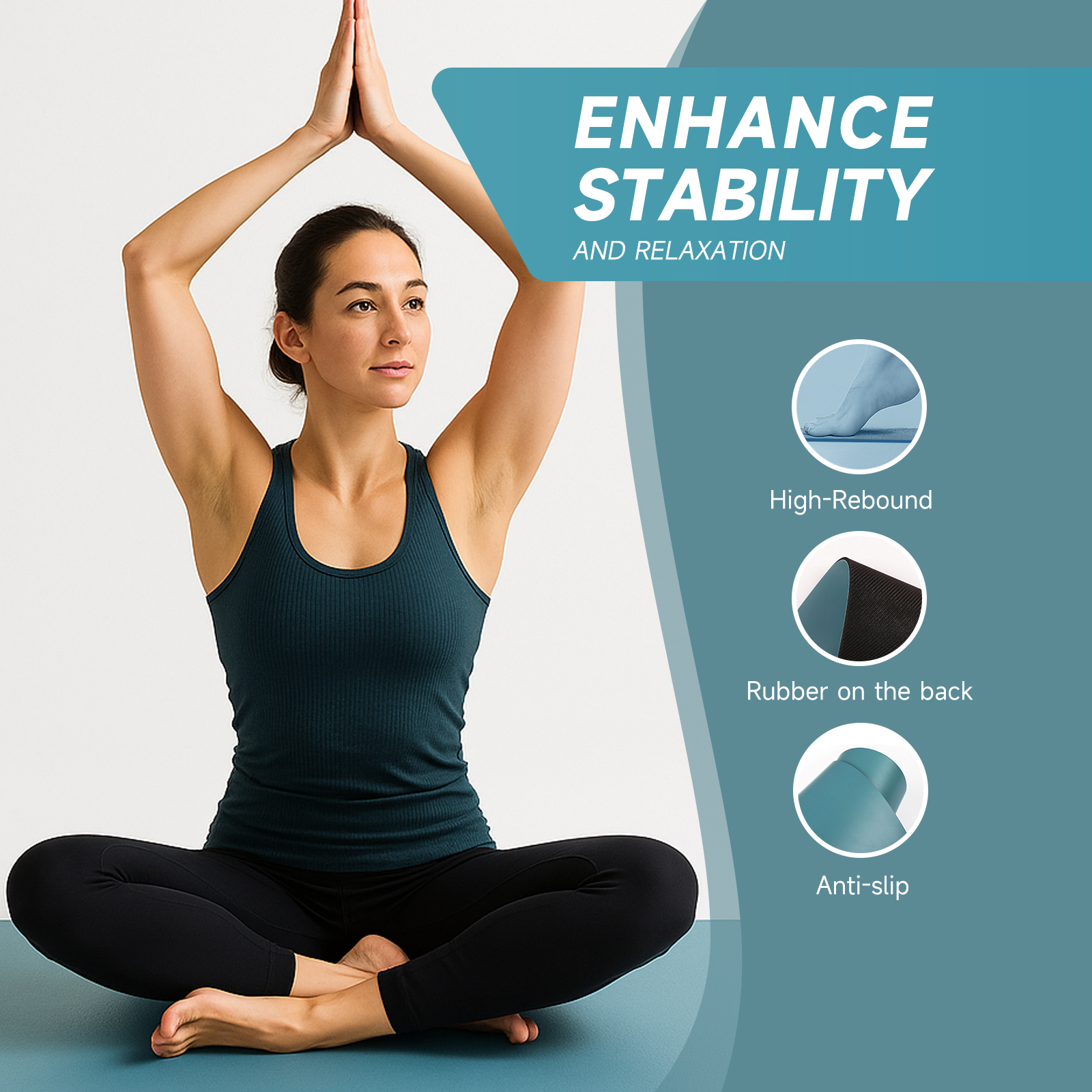
Neither is better across the board: a thick yoga mat is better when you kneel, lie down or work on a hard floor, and a thin yoga mat is better when you stand, balance or carry the mat, so the right choice depends on what the mat does most of the week.
Thickness is a trade, not a ranking. Every extra millimetre of foam or rubber buys comfort under the knees and spine, and costs the same amount of steadiness under a standing foot. This guide puts real thicknesses from the Printing Yoga range side by side, gives a verdict by use, and answers the follow-up questions buyers ask when they cannot decide between a slim deck and a cushioned one.
What actually changes as a mat gets thicker
Cushioning goes up. A thicker section spreads the load of a knee, hip or elbow over a wider patch of floor, which is why restorative and floor-based classes lean thick.
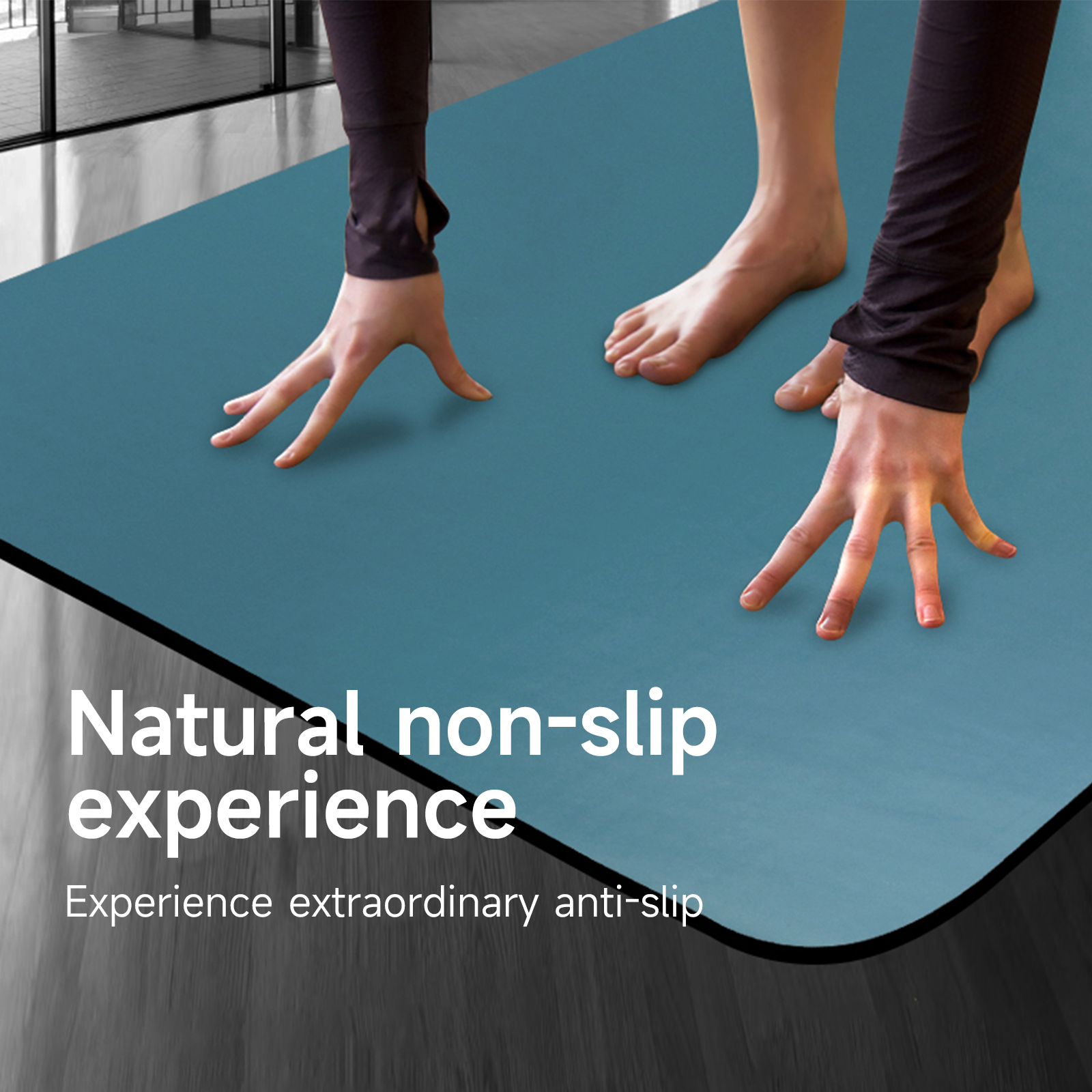
Ground feel goes down. On a slim deck the foot reads the floor directly; on a soft, tall deck the ankle has to correct for the give. Balance poses feel less settled, and that is the most common complaint about mats that are "too thick".
Portability goes down. A thin rubber mat at 0.2cm folds flat; an 8mm TPE deck rolls into a fat tube that lives in the studio or the car.
Material changes the picture too. Natural rubber is dense, so our 0.45cm rubber mat feels firmer underfoot than a 0.6cm TPE mat, even though the numbers are close. Compare thickness only within the same material, or you will be comparing density rather than height.
Are thick yoga mats bad?
No, thick yoga mats are not bad in themselves; they are only the wrong tool for some jobs. The downsides are specific: a soft, tall deck makes one-legged balance poses feel less settled, it hides the feedback your feet get from the floor, and it is bulky to carry. For kneeling, lying down and practising on a hard floor, the same thickness is exactly what you want.
So the honest answer is "bad for balance and travel, good for floor work". If you notice your standing ankle wobbling or your wrists sinking in plank, the mat is probably too soft for that practice; a denser 0.45cm rubber deck usually feels steadier than an 8mm foam one. If you notice sore knees on tile or concrete, the mat is probably too thin, and a 0.6cm or 8mm deck is the better fit.
Thin to thick: real builds compared
| Mat | Size | Material | Feels like | Best at |
|---|---|---|---|---|
| Foldable rubber mat | 183*61*0.2cm | Rubber | Thin, close to the floor | Travel, layering over a studio mat |
| Foldable TPE mat | 183*61*0.4cm | TPE | Light, slim | Home practice where storage matters |
| Natural rubber mat | 185*68*0.45cm | PU + Rubber | Firm, dense, steady | Standing and flowing classes |
| TPE mat | 183*61*0.6cm | TPE | Middle of the range | Mixed classes, schools, gyms |
| Double color TPE mat | 183*61*0.8cm | TPE | Soft, cushioned | Floor work, knees, hard floors |
| PVC alignment mat | 183*61*0.8cm | PVC | Cushioned but denser than TPE | Studios that want padding plus guide lines |
If you are deciding: conditional verdicts
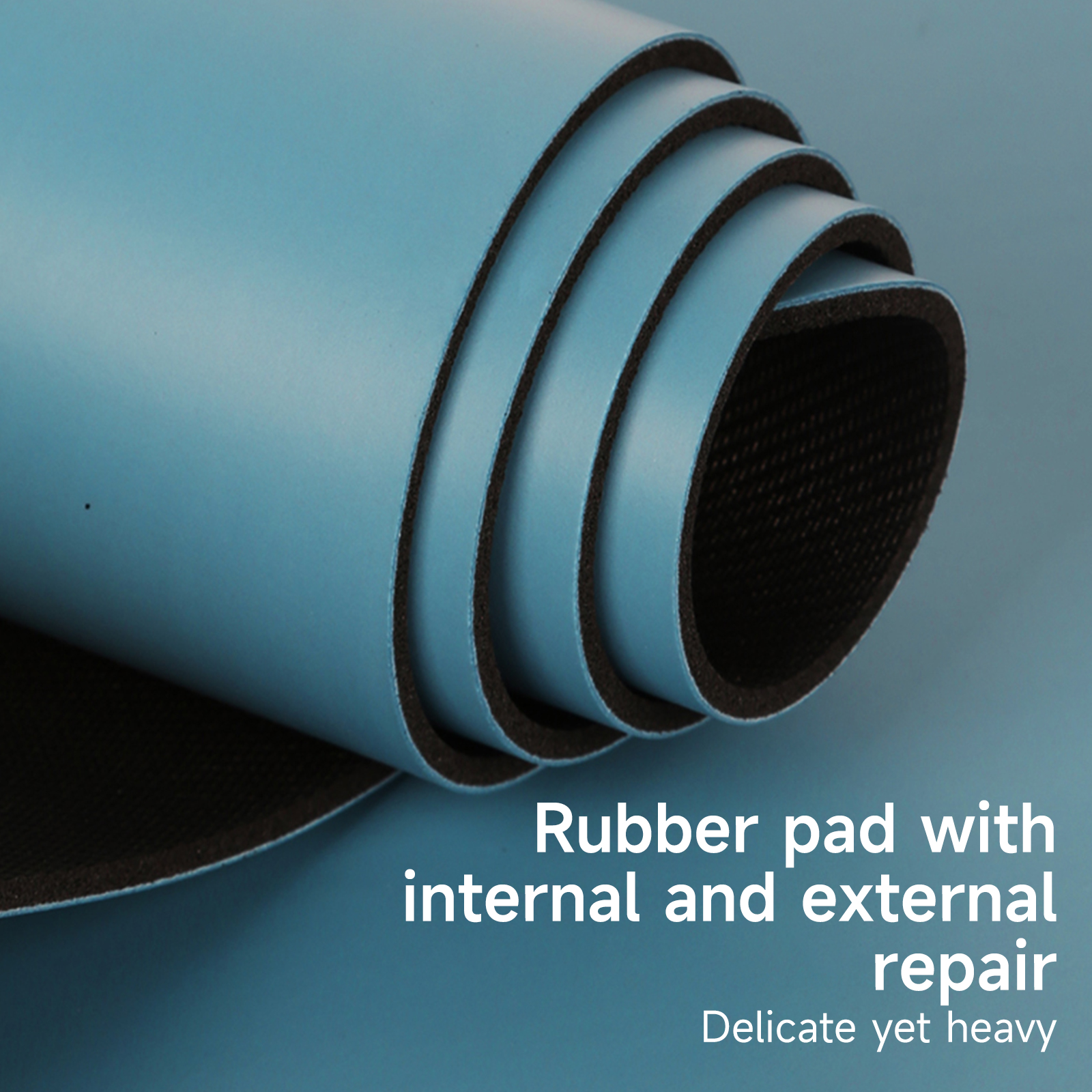
If you mostly practise standing and balancing — flow classes, standing sequences, anything on one foot — go thinner and denser. The 185*68*0.45cm natural rubber mat keeps the foot close to the floor, and its weight stops it shifting.
If you spend most of the class on your knees or back, go thicker. An 8mm TPE deck such as the 183*61*0.8cm double color mat takes the sting out of a tiled or concrete floor in a way a thin mat cannot.
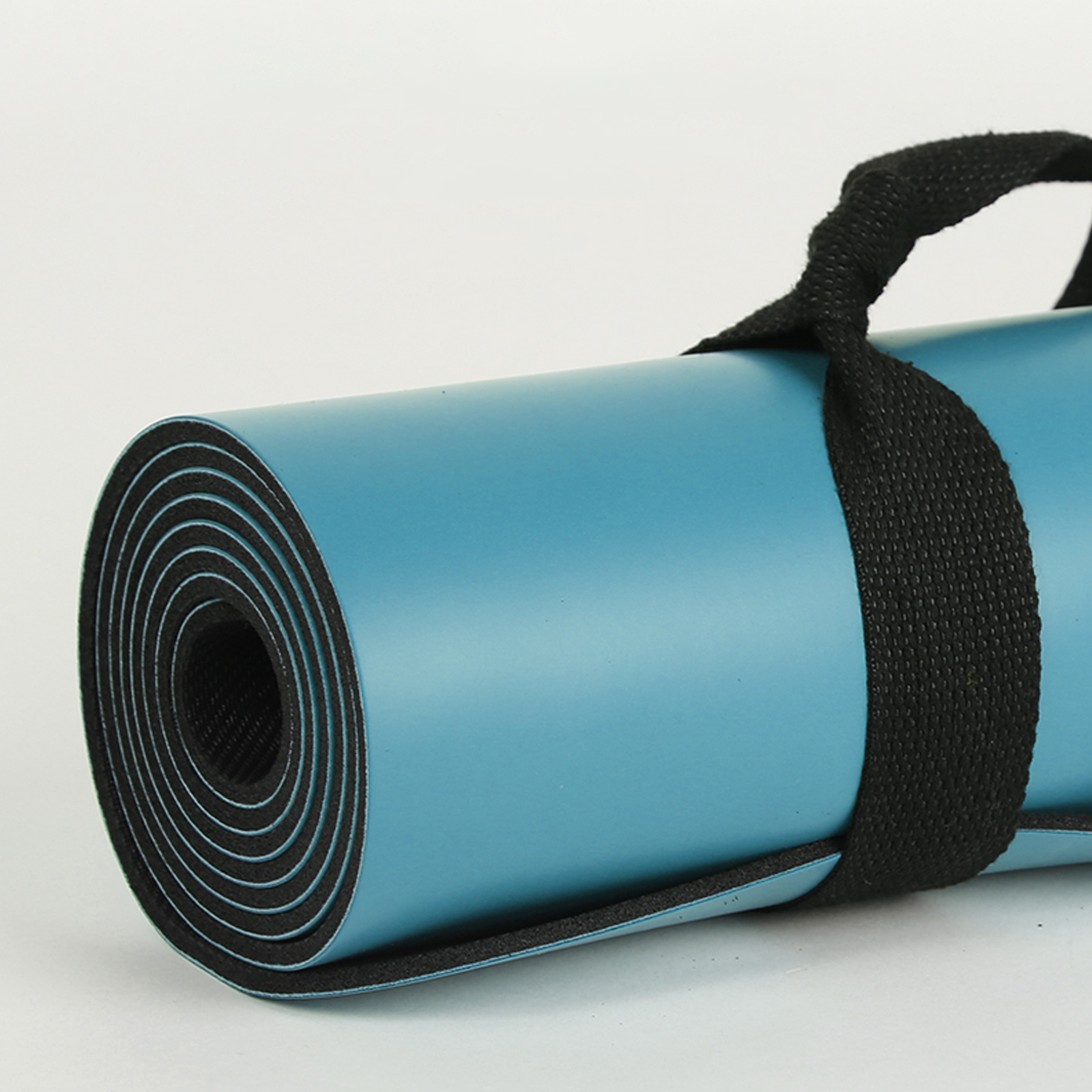
If the mat has to travel, thin wins outright. A 0.2cm rubber mat or the 0.4cm TPE foldable mat goes into a suitcase; a cushioned deck does not.
If you are buying one mat for a whole studio or school, the middle band is the safe pick: a 0.6cm TPE mat gives enough padding for floor work without making standing poses wobbly.
If you expect a thick mat to fix painful knees on its own, it will not — this is the exclusion. A taller deck softens pressure, but a folded blanket or a second thin mat under the knee does more for a sensitive joint than adding height to the whole surface, and it keeps your standing poses steady.
Thick and thin in a brand range
For a private-label line, the question is rarely thick or thin; it is which two thicknesses to launch. A common pairing is a slim, dense deck for flowing classes and a cushioned deck for floor-based programmes, so customers choose by use rather than guessing. Printing Yoga can print your designs, logo and alignment lines on both ends of the range, and the listed minimum order on our TPE bodies is 1, so a sample of each thickness is easy to test side by side before you commit to bulk.
FAQ
Are thick yoga mats bad for balance?
They can make balance harder. A soft, tall deck gives under the standing foot, so the ankle works to stay level. For balance-heavy classes a denser deck around 0.45cm in rubber usually feels steadier than an 8mm foam surface.
Are thick yoga mats bad for your wrists?
Not usually, but a very soft deck lets the heel of the hand sink in plank and downward dog, which some people feel as wrist strain. A firmer, denser surface keeps the hand level; thickness alone is not the problem.
Is a thicker mat better for beginners?
Often, yes, for the first months. New students spend more time kneeling and adjusting, and a 0.6cm TPE deck is forgiving on joints while still stable enough to stand on. As balance improves, many move to a firmer, slimmer surface.
Is a thin mat ever better than a cushioned one?
Yes — for travel, for layering on top of a studio mat for hygiene, and for practices where you want to feel the floor. A foldable 2mm rubber mat packs flat and weighs little, which a padded deck never will.
What thickness should a studio order for mixed classes?
The middle band. A 6mm TPE body suits most mixed timetables; add a smaller batch of 8mm decks for restorative or senior classes rather than making every mat soft.
Can you make the same design in two thicknesses?
Yes. We can print the same artwork and alignment lines on a slim body and a cushioned body, so a brand range looks consistent while customers pick the height that suits their practice.