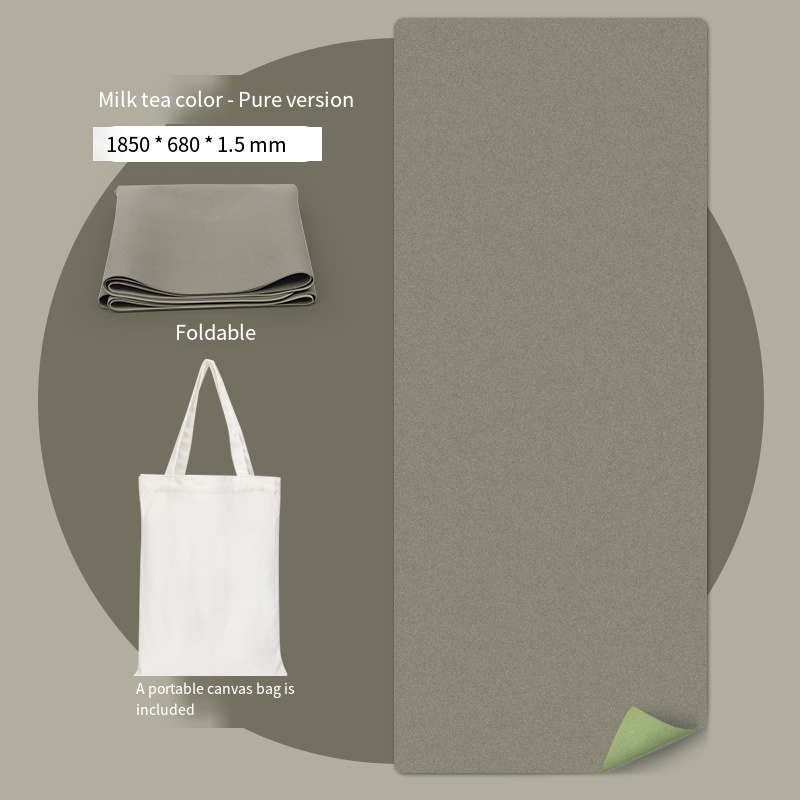
Yes, you can usually bring a yoga mat as a carry on: most travellers either fold a thin travel mat inside their cabin bag or strap a rolled mat to it, but each airline sets its own cabin allowance, so check yours before you fly.
Yoga mats are not a dangerous item, so the question at the airport is rarely “is it allowed” and almost always “does it count as an extra bag”. The answer depends on how the mat is packed far more than on the mat itself. Below we set out the three ways a mat travels in the cabin, where each one tends to cause friction at the gate, and what we make in our own factory for brands whose customers fly with a mat.
Carry on, personal item or strapped on: how a mat is counted
Airlines think in pieces, not objects. A mat that sits inside your cabin bag is simply part of that bag and is never counted on its own. A mat that hangs outside the bag on a strap is a judgement call: many gate agents treat it as part of the bag, some ask you to tuck it away, and a few count it as your personal item. A mat carried separately in its own sling or mat bag is the one most likely to be counted as an extra piece.
That is why the most reliable way to fly with a mat is to make it disappear into luggage you were already allowed to bring. Security screening is usually routine for a plain rubber or TPE mat; it goes through the scanner like any other soft item.
Three ways to take a mat into the cabin compared
| Packing method | Typical mat | How it is usually counted | What you give up | Best for |
|---|---|---|---|---|
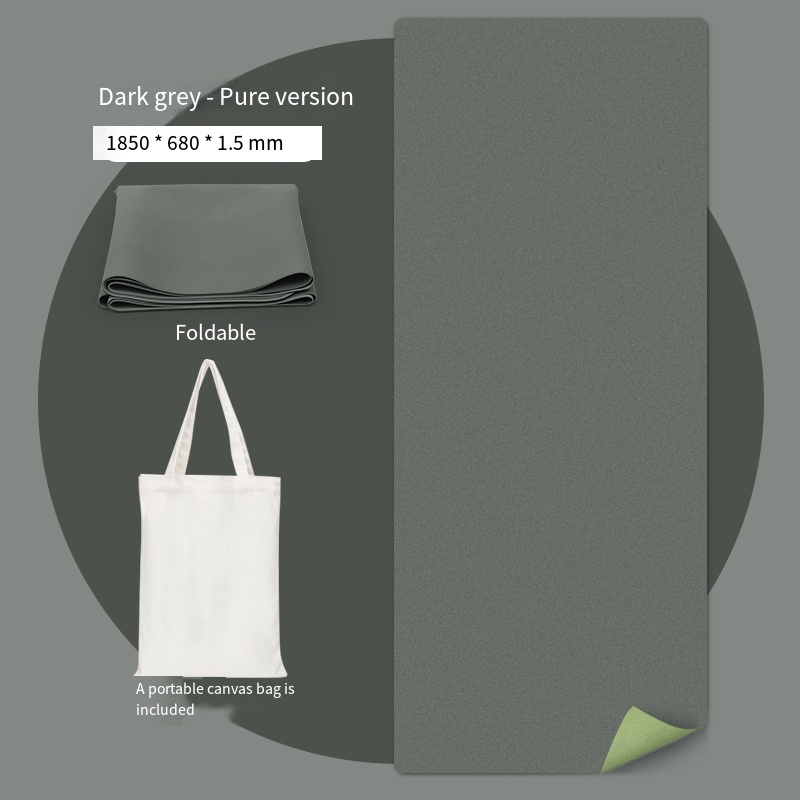
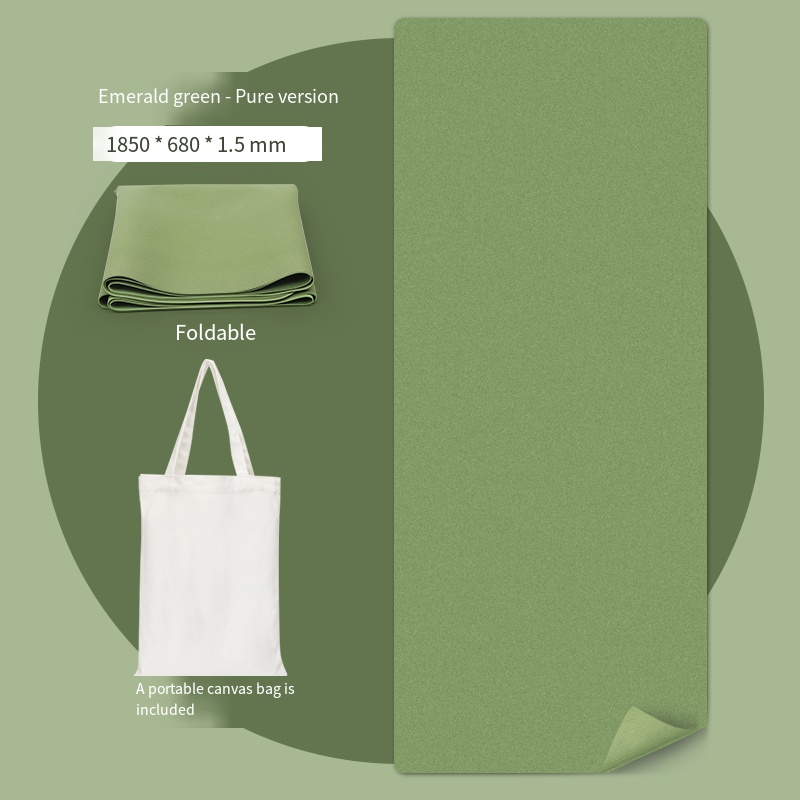
| Folded inside the cabin bag | Foldable matte natural rubber, 185*68*0.15cm | Part of the bag, never a separate piece | Cushioning; joints feel the floor | Cabin-bag-only trips and strict low-cost fares |
| Folded flat, thin rubber | Foldable natural rubber, 183*61*0.2cm | Part of the bag; slides in beside clothes | A narrower practice area than a 68cm mat | Travellers who want natural rubber grip at minimum bulk |
| Folded but cushioned | Double colour TPE foldable, 183*61*0.6cm | Usually fits a larger cabin case or a backpack | Takes noticeably more room in the bag | Flyers who kneel a lot and accept a fuller bag |
| Rolled and strapped outside | Any standard rolled studio mat | Gate agent’s call: part of the bag or a personal item | Certainty at the gate; the roll can be asked to go in the hold | Flexible fares with generous cabin rules |
If you are flying with a yoga mat: conditional verdicts
- If you fly on a fare that only allows one small cabin bag, take a mat that folds and pack it inside. The 185*68*0.15cm foldable matte rubber mat keeps full practice length and folds flat like a garment, so there is nothing for the gate to count.
- If your fare includes a cabin bag and a personal item, a rolled mat strapped to the cabin bag usually passes, but have a plan B: a roll that will not fit under the seat may be asked to go in the overhead bin with the bag it is strapped to.
- If you need real knee cushioning at your destination, accept a fuller bag and take the 183*61*0.6cm TPE folding mat, or check a full-thickness mat in the hold and keep a thin one in the cabin.
- If you are not willing to argue at the gate, do not carry the mat as a loose third item. A mat in its own sling is the format most often counted as an extra piece, and that is exactly when travellers are asked to pay or check it.
Packing tips that make a carry-on mat easier
Fold a travel mat face to face so the grip surface is protected from zips and shoes. Lay it flat against the back panel of the case, where it also stiffens the bag. When you arrive, unfold it a few minutes before practice so the fold lines relax; rubber softens quickly with warmth and body weight. A thin mat also makes a practical layer over a hotel towel or a carpet for floor work.
What brands should specify for a mat customers will fly with
For brands, the selling point of a travel mat is that it removes the question at the gate entirely. That means specifying a mat that folds, with grip that does not depend on thickness, and a surface that tolerates being wiped with whatever is in a hotel bathroom. Our factory produces all three foldable builds above with custom designs and alignment lines, and the TPE folding mat is available from a minimum order of 1 piece, so a brand can check the fold and the print before committing to a larger run.
FAQ
Can a yoga mat be a carry on by itself?
It can, but on many fares a mat carried on its own counts as your one cabin item or personal item, which leaves no room for a bag. Packing it inside or strapping it to the bag you were already allowed is usually the better trade.
Can I carry a yoga mat on a plane in my hand luggage?
Generally yes. A yoga mat is not on the usual lists of restricted items, and a plain rubber or TPE mat goes through screening like other soft goods. The airline’s size and piece rules are what matter, so read your fare conditions.
Can I take a yoga mat as carry on if it is rolled?
Often, as long as it is strapped to an allowed bag rather than carried as a loose extra item. A rolled mat is the format most likely to be questioned at the gate, because it sits outside the bag and is easy to count.
Is it better to check a yoga mat in the hold?
If you need a thick, cushioned mat at your destination, checking it is the simplest route. If you only need a mat for a short trip, a folding mat in the cabin avoids the checked-bag fee and the risk of the mat arriving late.
Will folding a mat for a flight damage it?
Not if it was built for it. Thin travel mats are made to crease and recover. A thick rolled mat pressed flat in a case can keep a lasting ridge, which is why a dedicated travel build is the safer choice.
Can a brand make its own branded travel mat?
Yes. Printing Yoga produces folding mats with custom designs and logos in our own factory, and we can advise on which build suits customers who travel with cabin luggage only. Delivery details and production capacity are confirmed when the design is finalised.