Short answer: cotton, hemp and bamboo yoga apparel buy you hand feel, breathability and a sustainability story — and they cost you stretch recovery, drying speed and print options. Printing Yoga is a synthetic-knit activewear manufacturer: every apparel item we produce is a polyester-spandex or nylon-spandex knit, from an 82.5% polyester / 17.5% spandex legging shell to a 78% nylon / 22% spandex printed long-sleeve. We do not run pure organic cotton lines. So this guide does two things honestly — it tells you when a natural fibre is the right call and you should brief a different mill, and it tells you when a synthetic blend is genuinely the better product for your customer.
Why this question keeps coming up
Buyers searching for cotton, hemp or bamboo yoga clothes are almost never asking a fabric question. They are asking a trust question: where was this made, what is in it, and does the brand behind it tell the truth. A brand founder briefing a factory inherits exactly the same problem one level up — you cannot repeat a sustainability claim you have not verified, and a supplier who agrees to every fibre you name is a supplier who is about to substitute one.
That is the useful frame for this whole decision. Fibre choice is a manufacturing constraint first and a marketing line second. Pick the fibre that survives what your customer actually does in the garment, then find the factory whose capacity was built for it.
What each fibre actually does in a yoga garment
The four properties that decide whether a yoga garment survives a year of practice are stretch recovery (does it bag out at the knee), moisture handling (does sweat move or sit), opacity under load (does it go sheer in a forward fold), and print compatibility (can your artwork be applied without a stiff plastic patch). Natural and synthetic fibres split cleanly across those four.
| Fibre | Stretch recovery | Sweat handling | Print method that works | Best for |
|---|---|---|---|---|
| Cotton (usually with a little elastane) | Weakest — relaxes and stays relaxed after repeated wear | Absorbs and holds moisture; stays wet against the skin | Screen print, water-based pigment, embroidery | Studio-to-street tops, restorative and yin practice, loungewear |
| Hemp / hemp blends | Low; needs an elastane content to move at all | Breathable, but slow to dry | Screen print, pigment dye, embroidery | Loose layers, meditation and low-sweat practice, natural-fibre brand stories |
| Bamboo viscose | Soft but slack; drapes rather than holds | Good next-to-skin feel; still slower drying than polyester | Reactive or pigment print; results vary by mill | Bralettes, tees, sleep and travel pieces |
| Polyester-spandex (our 82.5/17.5 and 88/12 knits) | Strongest — designed to return to shape | Moves moisture to the surface and dries fast | Sublimation across the whole panel, plus heat transfer and embroidery | Leggings, bras, hot yoga, all-over printed designs |
| Nylon-spandex (our 78/22 knit) | Strong, with a softer and more matte hand than polyester | Fast drying; slightly warmer feel | Heat transfer, embroidery; sublimation does not bond to nylon | Premium-feel tops and second-skin pieces |
One detail decides more design briefs than any other row in that table: full-panel sublimation only bonds to polyester. If your brand identity is an all-over print, the fibre question is already settled for you — no amount of sourcing effort will make a cotton or bamboo base carry a sublimated design the same way.
If you… conditional verdicts
If you are building a hot yoga or high-sweat line, choose a polyester-spandex knit and stop looking at natural fibres. Sweat management is the whole product. Our 82.5% polyester / 17.5% spandex shell with a 94% polyester / 6% spandex inner layer exists for exactly this load, and a mesh panel — 89% polyester / 11% spandex on our half-zip top — is how you place ventilation where the body actually runs hot.
If your line is studio-to-street tops and low-sweat practice, cotton or bamboo is a defensible choice and you should brief a natural-fibre knitter. Accept up front that the garment will relax with wear, and design for it: a relaxed silhouette hides fibre relaxation, a compressive one advertises it.
If your customer complains that leggings go sheer or bag out at the knee, the fix is fabric weight and spandex content, not fibre romance. Ask any supplier for the exact blend in writing — a knit specified as 82.5% polyester with 17.5% spandex behaves very differently from one at 94/6, and both are honestly called "polyester-spandex".
Exclusion — if your brand promise is a certified pure organic cotton or hemp product, do not brief Printing Yoga. We do not run natural-fibre knits, we hold no organic-content certification, and a supplier who says yes to a fibre they do not stock is a supplier who will substitute it at bulk. Take that brief to a certified natural-fibre mill and ask for scope certificates and transaction certificates by order, not a logo on a website.
How to actually vet a yoga apparel manufacturer
Founders regularly spend years cycling through suppliers who all look identical online. The pattern behind that is usually the same: the brief was a mood board rather than a specification, so every factory quoted a different product. Tightening these details is what turns a long search into a short one.
Send a real tech pack. If your first tech packs are nearly ready, you are further ahead than most enquiries we receive. Include graded measurements, seam and stitch construction, trims, care labelling and the fabric blend by percentage. A factory that can read a tech pack will quote against it; one that cannot will send a price with no product behind it.
Ask what the factory actually knits, not what it can source. Any supplier can buy any fabric on the open market. What matters is which fabrics they run every week, because that is where the quality standards, the operators' experience and the spare capacity live. We say we run polyester and nylon knits because that is what our line does daily.
Test the print before the production run. Ask for a strike-off of your artwork on the exact base fabric. Colour on a screen and colour on a stretched knit are different things, and the difference only shows during wear and washing.
Pin the substitution clause. Write into the purchase order that no fibre or mill substitution is permitted without written approval. This single line protects the sustainability claims you will print on your own hang tags.
Ethical sourcing when the garment is not made locally
"Made in" is a proxy, not a proof. A garment sewn locally from an unaudited imported knit is not automatically more ethical than one produced overseas in a factory you have audited, whose fibre content is stated on every SKU and whose subcontracting you have restricted by contract. What makes a supply chain defensible is traceability you can show a customer: named mill, stated blend, audited facility, and a delivery record that matches the paperwork.
Practical version for a small brand: ask for the fabric mill name, keep a copy of the fibre-content statement for every SKU, require written approval for any subcontracting, and publish only the claims those documents support. That is a wide gap from most brands' marketing, and it is the gap your customers are actually asking about when they search for ethical yoga clothing.
Where OEM services fit
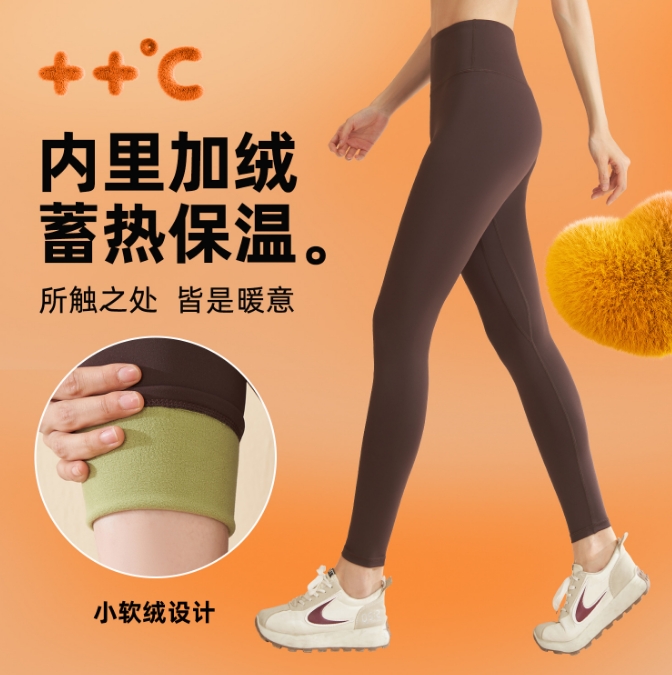
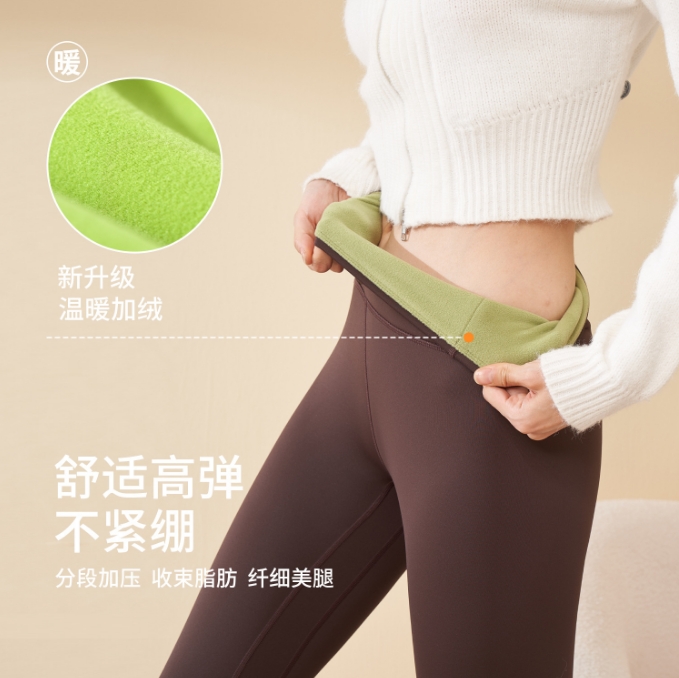
Printing Yoga produces custom and private-label activewear on synthetic knits — we can create colourways, cut-and-sew changes, custom prints and your own labelling on existing blocks, which is the fastest route from tech pack to sellable products. Our published MOQ on a private-label piece such as the custom V-neck sports bra is 300 pcs. If you want to see the blends discussed above in real products, the fleece-lined yoga pants and the half-zip short-sleeve top show how a shell and a mesh knit get combined in one garment.
We do not offer natural-fibre manufacturing, and saying so is more help to you than a yes that turns into a substitution three months later.
FAQ
What cotton, hemp or bamboo brands have you tried and you love?
We are a manufacturer rather than a shopper, so we will not rank other brands. The buying advice that transfers: check the fibre content label, not the marketing copy. A garment sold as "bamboo" is usually bamboo viscose, and one sold as "cotton yoga leggings" almost always contains elastane — without it the garment cannot stretch. Whichever brand you land on, the label tells you how it will behave far better than the product page does.
Is ethical yoga clothing still possible if it isn't made in the US?
Yes, but only if you replace the country label with documents. Ask for the mill name, the fibre-content statement per SKU, the audit report for the sewing facility, and a written no-subcontracting clause. Those four things describe a supply chain; a country of origin on its own does not.
I've been looking for activewear manufacturers for over 3 years and none are up to par — what am I doing wrong?
Usually one of two things. Either the brief is a reference photo instead of a tech pack, so each factory quotes a different garment and none match your expectation; or the order size sits below the point where a good factory can run your fabric, so you are being quoted from stock blanks. Fix the specification first, then match your volume to a factory whose everyday production capacity is the fabric you want.
My first tech packs are almost ready — what happens next?
You send the tech pack and your artwork, the factory quotes against it and flags anything unmakeable, then you approve a sample before bulk. Do not skip the fit sample to save time during development, and do not approve a print from a digital proof — get the strike-off on the real fabric. Sampling is where problems are cheap; bulk is where they are not.
Can you make my design in cotton if I supply the fabric?
Customer-supplied natural-fibre knits are outside what our line is set up to ensure quality on, so we would decline rather than take the risk on your first order. If cotton is the requirement, a natural-fibre mill will give you a better garment and a better price than a synthetics factory working outside its process.
The one-line version
Choose fibre by what the garment has to survive: synthetic knits for sweat, compression and all-over printed designs; cotton, hemp or bamboo for soft, low-sweat, street-facing pieces — and match the factory to the fibre instead of asking one factory to be good at both.