Ethical yoga gear sourcing is decided by what a supplier will put in writing, not by the words on a hang tag. Three documents settle it: the exact material composition of every SKU you order, a statement of which parts of manufacturing happen inside the supplier's own factory versus a subcontractor, and a delivery record you can check against real orders. If a factory can hand you those three within a working week, you can audit the claims yourself. If it can only offer adjectives — "sustainable", "conscious", "responsible" — treat the range as unverified until proven otherwise. This guide shows what those details look like on live Printing Yoga products, and where the honest limits of any overseas OEM sit.
What a supplier can actually document
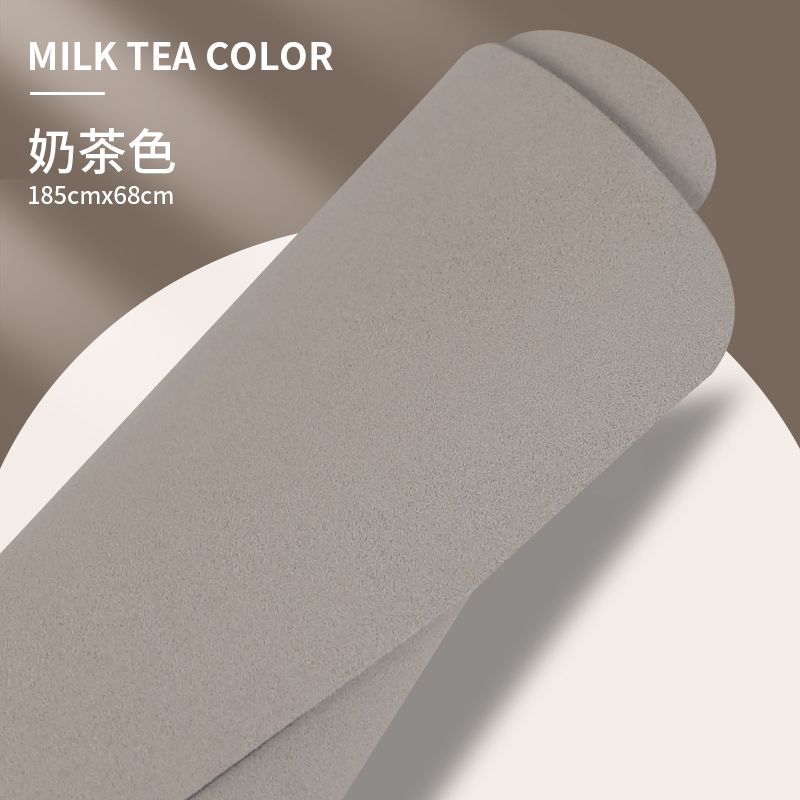
Start with composition, because it is the one claim that is cheap to verify and expensive to fake. Our quick-dry pant is published as an outer layer of 94% polyester fiber with 6% spandex, over an inner layer of 90% polyester fiber with 10% spandex. That is a testable statement: send the sample to a lab and the numbers either match or they do not. Compare that with a mat range, where the honest description is a material stack rather than a percentage — a professional mat built as Frosted PU + Rubber at 185*68*0.45cm, or a meditation cushion of suede over rubber at 68*68*0.3cm. Ask for the stack, layer by layer, and you have something to hold a supplier to.
Second, ask who performs each step. A factory that prints, cuts and packs in one building can answer questions about capacity and about how a rush order moves through the line. A trading company that brokers three unrelated workshops usually cannot, and the gap shows up as vague answers during sampling. There is nothing wrong with subcontracting a step; there is something wrong with hiding it.
Third, ask for the boring paperwork: packing lists, inspection photos taken during production, and the shipping documents from recent orders of similar products. Nobody enjoys reading them. They are also the only records that are hard to invent after the fact.
Transparency claims and what they are worth
| Claim you will hear | How to test it | What it proves |
|---|---|---|
| "Eco-friendly natural rubber" | Ask for the layer stack per SKU, then lab-test one sample | Material truth only — it says nothing about labour |
| "Our own factory" | Live video walk of the line making your product, unedited | Where manufacturing happens; capacity you can see |
| "Fast delivery" | Shipping documents from three recent orders of the same category | Real delivery experience rather than a quoted best case |
| "Ethically made" | Ask which standards, audited by whom, valid until when | Nothing at all unless a named audit body and date follow |
| "We can create any design" | Request a printed strike-off on the actual material | Whether your designs survive rubber, suede and fabric |
If you are choosing a supplier: conditional verdicts
If you sell on a transparency story — a brand page that names materials and factory steps — commit to publishing composition per SKU before you order, and make the supplier sign off the exact wording. A factory that hesitates over a public composition line is telling you something useful, and it is better to learn it now than after the first customer question.
If your customers ask about labour standards, do not accept a certificate image by chat. Ask for the audit body, the certificate number and the expiry date, then check them at the source. Any supplier that expects you to take a screenshot on faith is offering you a risk, not an assurance.
If you need a made-in-USA or made-in-EU label, we are not your supplier. Printing Yoga manufactures overseas, and no amount of paperwork changes that fact. Saying so plainly is part of the same discipline: a supplier that will not name its own limits will not name its subcontractors either. Buyers who want domestic production should stop reading here and shortlist domestic factories instead.
If you are mixing categories in one launch — mats, cushions and apparel together — keep the transparency wording per category. Fabric can be quoted to a percentage; a rubber mat cannot, and a blanket claim across a wide product range is the fastest way to end up with a statement you cannot defend.
How to run the check without a factory visit
Most brands never fly out, and that is fine. A video call during working hours, on the line, doing your product, tells you more than a glossy deck. Ask the person on camera to read the label on the roll of material and to walk past the packing area, then compare what you saw with the documents you were sent. If the two disagree, you have your answer.
Then order a small run before the big one. A trial order tests the whole chain — sampling, printing, inspection, delivery — at a cost you can absorb. We wrote a separate walkthrough of that in our blog library, and the same logic applies to any factory you shortlist, not just ours. The point is to buy an experience of the supplier before you buy stock from them.
Finally, keep the record. Save the composition statements, the call recording and the shipping paperwork in one folder per supplier. It costs an hour and it is what lets you answer a customer, a marketplace or a retail buyer in minutes rather than in weeks.
FAQ
My favourite brand moved production overseas — how do I vet a replacement?
Judge the new source on documents rather than on nationality. Ask for composition per style, the list of steps done in-house, and paperwork from recent shipments. A well-run overseas plant that answers all three is a safer bet than a local workshop that answers none, and the reverse is equally true.
What does "ethically made" legally mean for yoga gear?
On its own, nothing. The phrase is unregulated in most markets, so it carries weight only when a named audit scheme, an issuing body and a valid date sit behind it. Treat the bare adjective as marketing copy and ask what specifically stands behind it.
Can a factory tell me the exact fabric composition of a custom style?
Yes, and it should. Ours is published per product: the quick-dry pant lists 94% polyester with 6% spandex outside and 90% polyester with 10% spandex inside. If a supplier will not commit those figures to your purchase order, assume the mill is unspecified and price the risk accordingly.
Why can you quote percentages for apparel but not for a rubber mat?
Because a mat is a bonded stack, not a blend. The honest description names each layer — a matte surface bonded to a rubber base at 185*68*0.45cm, for instance — and lists thickness. Anyone quoting a tidy percentage split for a laminated mat is guessing.
Does a small trial order really help me judge a supplier?
It is the cheapest audit available. A short run exercises artwork approval, production, inspection and shipping in sequence, and problems in any of those show up before you have committed real money. It also gives you the paperwork trail you will want later.
What should I ask about production capacity?
Ask what else runs on the same line in your season, not what the theoretical monthly maximum is. Capacity only matters relative to the queue in front of your order, and a supplier who answers that question honestly is the one whose dates you can plan around.
Printing Yoga runs custom production services for mats, cushions and yoga apparel, and we would rather lose an order than make a claim we cannot document. If you want the composition sheets and recent shipping records for a category you are considering, ask for them by name and we will send what exists — and tell you plainly where it does not.