A suede yoga mat is not a single material, so no single eco claim covers it. The face is a woven textile — brushed microfibre, almost always polyester — and the base underneath it is rubber. The rubber half can be a genuinely plant-derived, biodegradable input; the suede face is a synthetic textile that does not biodegrade in any meaningful timeframe. So “sustainable suede yoga mat” is defensible only when you say which layer you mean. This guide explains what each layer actually is, which claims survive scrutiny, and what to put in a tech pack if you want the environmental story to hold up after delivery.
What is actually in a suede yoga mat
Every mat sold as suede, vegan suede, microfibre or microfiber is a two-layer build. The top is a knitted or woven polyester textile that has been brushed and sheared to create the soft nap you feel; that nap is what makes the surface grippier the wetter it gets. The bottom is a rubber sheet that supplies weight, cushion and floor grip. The two are bonded together during manufacturing, which matters enormously for any end-of-life claim: bonded composites cannot be separated by a consumer, so neither layer can be recycled through ordinary household streams.
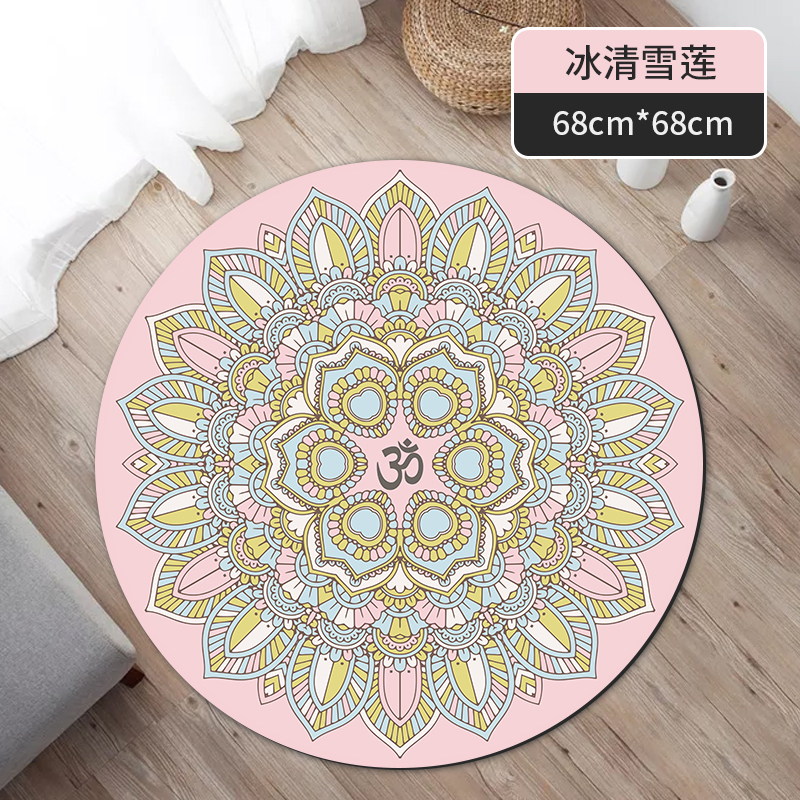
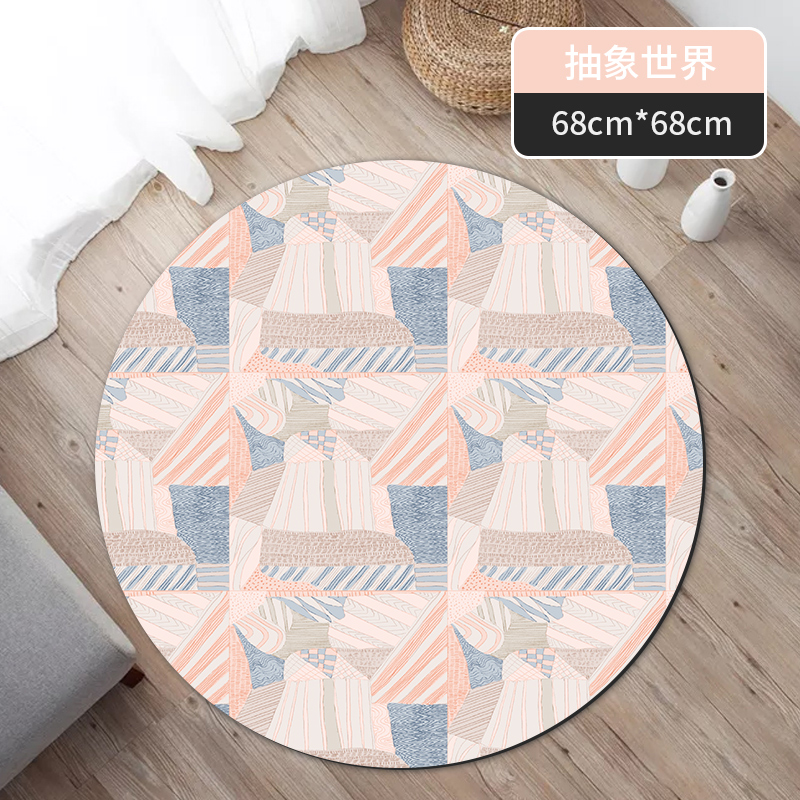
The Suede + Rubbe printed meditation cushion at Printing Yoga is the clearest example of the build in our own range — a suede face over rubber at 68*68*0.3cm, made for seated and restorative practice. You can see the construction on the round suede and rubber meditation cushion page.
Not every printed mat is suede, and buyers confuse the two constantly. Our Watercolor 1 printed mat is specified as PU + Rubber at 185*68*0.45cm — a coated polyurethane face, not a brushed textile. It photographs almost identically and behaves differently underfoot. If your artwork brief says “suede finish” but your factory quotes a PU face, you have two different products and two different environmental stories.
Which eco claims hold up, and which quietly do not
Below is the honest version of the claim set that circulates in this category. We have written what each phrase is really describing, so your marketing team can pick language they can defend if a retailer or a regulator asks for details.
| Claim on the listing | What it can honestly describe | Where it breaks | Safer wording |
|---|---|---|---|
| Biodegradable suede yoga mat | Nothing on the mat as a whole; at best the natural rubber base under lab conditions | Polyester nap does not biodegrade; the layers are bonded and cannot be separated | “Natural rubber base; polyester suede face” |
| Eco friendly suede yoga mat | A comparison against a specific alternative you name | Meaningless without the comparison — every category calls itself this | “Rubber base instead of PVC” |
| Sustainable suede yoga mat | A sourcing or longevity practice you can evidence | Implies a whole-lifecycle claim the build cannot support | “Built to outlast two seasons of studio use” |
| Vegan suede | Accurate and verifiable — no animal input at all | Buyers read it as “natural”; it means synthetic | Keep it, and add the fibre name |
| Low environmental impact suede yoga mat | A measured reduction you can show against your own previous spec | Unquantified, it is the weakest phrase in the table | State the change: base material, packaging, or freight |
| Recycled content | The polyester face, if you specify and pay for it | Only true if it is written into the tech pack and invoiced | “Face knitted from recycled polyester yarn” |
Notice the pattern. The claims that survive are the ones that name a layer, name a comparison, or name a document. The claims that collapse are the ones that describe the whole object in one adjective. That is the single most useful editing rule we can offer a brand writing this category page.
Conditional verdicts: which build is yours
If you are building a print-led collection and your artwork is photographic, full-bleed or gradient-heavy, the suede face is the right call and you should say so plainly. Brushed polyester takes fine detail that a rubber surface cannot hold, and the wet grip suits hot rooms. Sell it on the print and the sweat performance, not on compostability.
If you are selling into a market where environmental copy is audited — European retail, corporate wellness procurement, any tender with a sustainability questionnaire — lead with the rubber base and treat the suede face as a disclosed synthetic. Buyers in these channels respond far better to a brand that names the polyester than to one that hides it behind an adjective, and it protects you when the questionnaire asks for composition details.
If you want a single-material mat you can describe simply, drop suede entirely and go to a plain rubber top. Our matte natural rubber mat at 185*68*0.45cm carries laser-printed marks instead of a printed textile face, which keeps the composition to one material family and makes the eco story a paragraph rather than an argument. The trade-off is real: you lose photographic colour and you lose the wet-grip behaviour.
If you need a mat you can honestly call biodegradable or compostable, do not order a suede mat at all. This is the exclusion, and we would rather lose the order than help a client publish a claim that will not survive a retailer audit. No bonded textile-and-rubber composite meets that bar. Ask your manufacturer for a single-material rubber build instead and accept the print limitations that come with it.
How to specify a lower-impact suede mat that you can actually defend
The word “sustainable” is decided in the tech pack, not in the copywriting. These are the details that move the number, in the order they matter for a typical order.
- Name the base rubber. Natural rubber and synthetic rubber both feel like rubber in a sample and have very different footprints. Ask which one, in writing, and keep the answer on file.
- Specify the yarn for the face. Recycled polyester exists at ordinary production capacity and is a spec line, not a favour. If it is not in the tech pack, assume virgin yarn.
- Design for a longer life. A mat that survives twice as long halves its annual impact with no material change at all. Print durability and edge finishing do more here than any input swap.
- Cut the packaging. Individual polybags are the easiest reduction in the whole build, and the one buyers see.
- Ask about offcuts. A factory that can tell you what happens to its trim waste is a factory that has thought about this. One that cannot will not improve because you asked nicely.
- Ship by sea where lead time allows. Air freight can outweigh every material decision above it on this list combined.
Printing Yoga runs OEM and ODM services for mats, cushions and apparel, and we will put every one of these lines into the sample confirmation rather than leaving them as a conversation. If you want us to help draft the composition wording for your own listings, send us the claims you intend to make and we will tell you which ones the build supports. Our job is to ensure the product that arrives matches the page that sold it.
What quality standards to hold a suede mat to
Environmental wording is only half the buyer question; the other half is whether the mat lasts. Ask for a rub-fastness result on the printed face, a peel test on the bond between the layers, and an odour note after the mat has been sealed in its bag for a week. A high-quality suede mat comes out of a fresh carton with almost no smell. A weak bond shows up as edge lift within a season, and no eco claim survives a product that delaminates. Judge a supplier by the test reports it volunteers, not by the adjectives on its brochure.
FAQ
Is a microfibre yoga mat the same thing as a suede yoga mat?
Yes, in practice. Those two words describe the same brushed polyester face; suppliers pick whichever term their market recognises. Some catalogues also print it as microfiber. If a vendor quotes both as separate items, ask for the composition line on each — you will usually find they are identical.
What do microfiber yoga mat reviews actually test?
Independent reviewers focus almost entirely on wet grip, dry grip, print wear after repeated cleaning, smell out of the box, and whether the corners curl. They rarely examine environmental wording at all, which is exactly why those claims go unchallenged until a retailer asks. Read the durability evidence and treat the eco paragraph as marketing.
Can the suede top layer be made from recycled material?
It can, and this is the most credible improvement available for the build. Recycled polyester yarn is widely produced and behaves the same underfoot. It has to be written into your specification and it will show on the invoice; if nobody quoted it, nobody used it.
Does the rubber base make the mat compostable at end of life?
No. Even where that base is plant-derived, it sits bonded to a synthetic face nobody can separate at home. Composting is not an available route for this construction. The realistic story is a long service life followed by reuse as floor protection or padding.
Which is better for hot yoga, a suede face or a plain rubber top?
Suede, in most cases. The brushed nap becomes grippier as it absorbs sweat, while a smooth surface tends to get slick before it turns tacky. That behaviour reverses when the mat is bone dry, so studios running both hot and gentle classes often stock one of each.
Can you create custom prints on a suede mat for our own brand?
Yes — full-colour artwork on the textile face is the main reason brands choose this build. Send your designs as layered files with the bleed marked, and we will produce a sample before any bulk run so you can approve colour against physical goods rather than a screen.