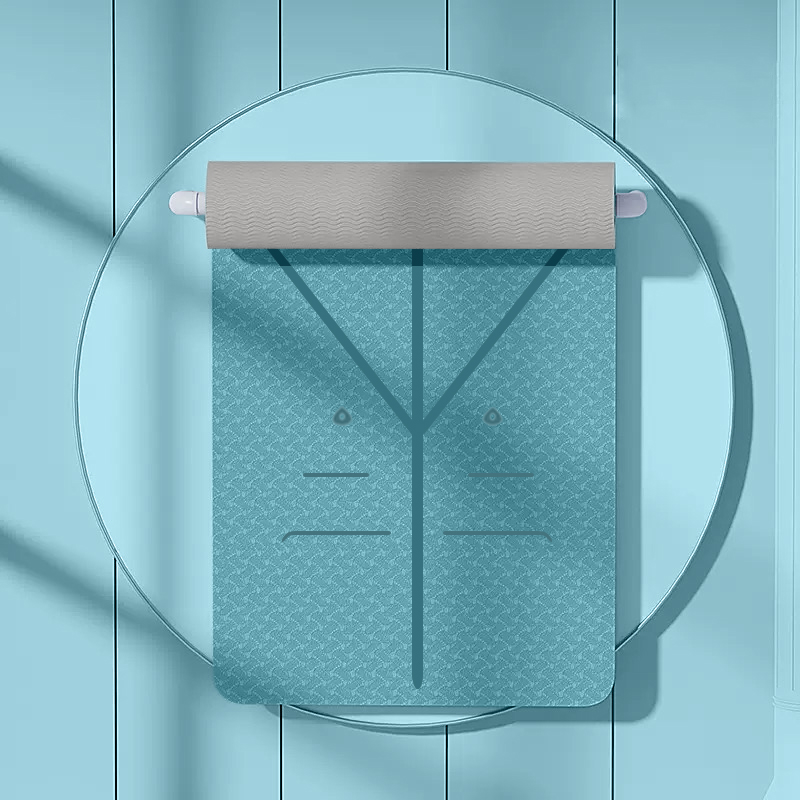
A good exercise mat for a gym or group fitness program is the one whose weight fits how the mat is handled every day, not the one with the biggest thickness figure. Two decks in our own range show why: both measure 183*61*0.8cm, yet the TPE build is listed at 0.95 kg and the PVC build at 3.3 kg. The light deck suits mats that members carry, hang up and hand back many times a day; the heavy deck suits a station where the mat has to lie flat during fast floor work. At Printing Yoga we make both as factory-direct OEM products, so choosing the best fitness mat for your program is a handling decision first and a cushioning decision second.
Why weight is the spec gym buyers skip
Spec sheets lead with thickness because it is the easiest number to compare. But a fitness mat in a gym lives a different life from a personal yoga mat. It is pulled off a rack, carried across the room, unrolled, wiped down, rolled again and re-hung by many different people in a single day. Weight decides how all of that goes. A light foam deck is quick to hand out, easy for every member to carry and cheaper to move in bulk. A dense deck takes more effort to shift, but it sits flat, its edges stay down, and it is less likely to creep when someone drives through mountain climbers or a plank series on it.
Thickness tells you how high the cushion is. Weight at the same size tells you how dense the material under your member actually is, and density, not height, is what a knee or an elbow feels at the bottom of a movement. That is why two mats with the same 0.8cm figure can give a completely different experience on the floor. Our other guides cover deck height in detail, including thick exercise mats for Pilates and mats for home workouts; this guide is about the half of the specification those numbers leave out.
If you are choosing the best fitness mat for a program
If you run group classes where members collect and return a mat every session, specify the TPE double color deck at 183*61*0.8cm. At 0.95 kg it is light enough for anyone to carry in one hand, and the 8mm height still protects knees during kneeling and core work. It is listed in five two-tone colourways (Blue Gray + Navy Blue, Crimson + Light Gray, Dark Pink + Navy Blue, Light Purple + Light Gray and Matcha Green + Charcoal Gray), and each one is listed with a mesh bag and an elastic shoulder strap, which helps when mats travel between rooms or go home with members.
If you need the lightest deck for stretching zones, mobility corners or event and corporate wellness kits, specify the TPE single color deck at 183*61*0.6cm. It is listed at 0.7 kg in Knight Black, Light Purple, Matcha Green, Pure Blue and Soft Pink, also with the mesh bag and strap. Less material means less to store, less to ship and less for a participant to carry home.
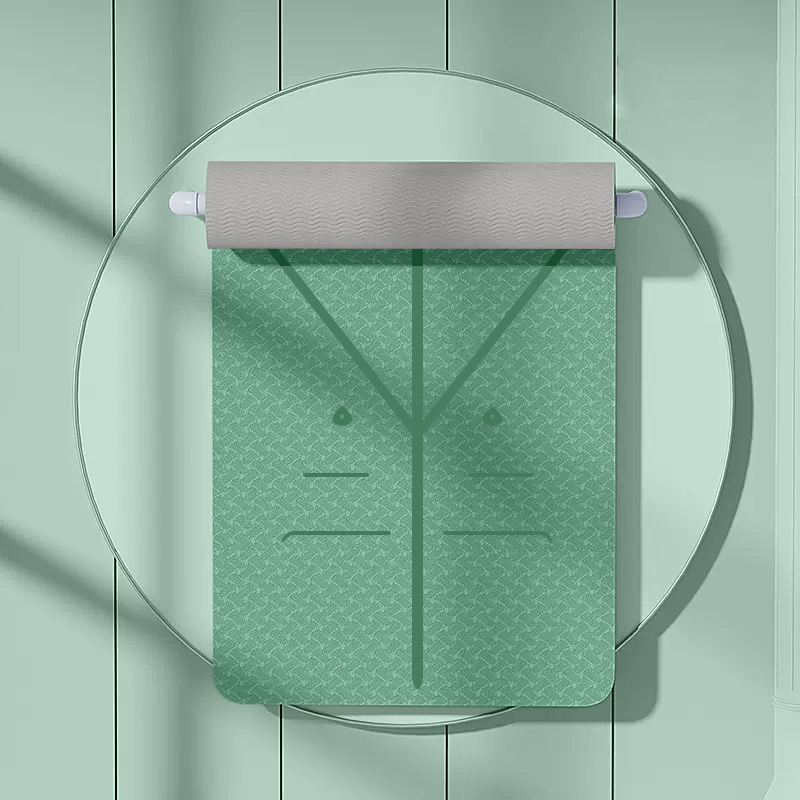
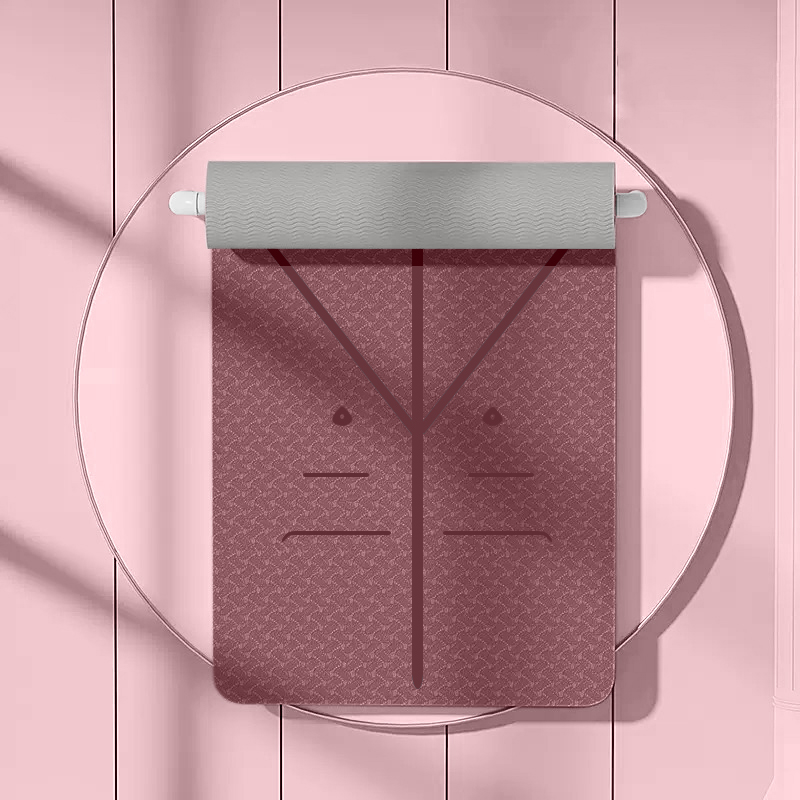
If the mats stay at fixed stations and the work is dynamic (core circuits, floor strength, fast transitions), specify the PVC deck at 183*61*0.8cm. At 3.3 kg it is the dense option: the same footprint and the same height as the TPE deck, at more than three times the weight. That mass is what keeps it planted. It comes in Black, Purple and Wine red with laser printed alignment lines, which give members a visual reference for hand and foot placement.
If you want one mat that is both the lightest to carry and the most planted on the floor, do not specify either build as your only SKU. Those two goals pull in opposite directions, and a compromise mat tends to disappoint both the front desk and the coach. And if you are buying for sweaty yoga flows rather than general fitness, none of these three is the right first choice: look at a PU + rubber yoga deck at 185*68*0.45cm, listed at 2.9 kg, where surface grip rather than cushion is the point.
Exercise mats compared by weight
| Build | Size | Listed weight | Stock colours | Handles best | Not for |
|---|---|---|---|---|---|
| TPE double color | 183*61*0.8cm | 0.95 kg | Five two-tone colourways | Group classes, carry-and-return use, mixed floor work | Stations where the mat must not shift during fast work |
| TPE single color | 183*61*0.6cm | 0.7 kg | Knight Black, Light Purple, Matcha Green, Pure Blue, Soft Pink | Stretching, mobility, events, wellness kits | Long kneeling sets on a hard floor |
| PVC single color | 183*61*0.8cm | 3.3 kg | Black, Purple, Wine red | Fixed stations, dynamic core and strength work | Mats that members carry between rooms or take home |
| PU + rubber yoga deck (for reference) | 185*68*0.45cm | 2.9 kg | Black, Lake Blue, Green and more | Yoga flows that need surface grip | General hand-out use in a gym |
What weight changes after the purchase order
Delivery. Freight depends on what a shipment weighs and how much space it takes. At the same piece count, a PVC order weighs more than three times what the 8mm TPE order does, so ask for the delivery quote on both builds before you decide. The unit price is only part of the landed cost.
Storage and staff time. Light mats hang on wall racks and come down without effort; dense mats are better stacked or left rolled at each station. Check the capacity of your racks against the weight of a full set, not a single mat.
Staying put. A light deck on a polished floor can slide during explosive moves. We recommend trying a sample on your real floor during a real class before you commit, because the floor finish changes the result more than any product page can tell you.
Branding. All three builds are custom products: we can print your logo or create full designs for a private-label line, and alignment lines can be made part of the artwork. Share the details of how the mats will be used, and our team will help you match the build to the job before sampling. As a manufacturing partner offering OEM/ODM services, we would rather ensure the first sample is right than correct a bulk run.
How to judge a sample in ten minutes
- Weigh it. Compare the figure with the spec sheet; a high-quality deck should match what was quoted.
- Carry it. Ask the smallest person on your team to take it off the rack, carry it across the room and hang it back.
- Load it. Hold a plank, then move through mountain climbers. Watch whether the mat creeps or the edges lift.
- Unroll it. See whether it lies flat straight away or the ends curl.
- Wipe it. Clean it the way your staff will between classes and check the surface afterwards.
A mat that passes all five checks on your own floor is a good exercise mat for your program, whatever a generic ranking says. These checks make better buying standards than any thickness figure.

FAQ
What is the best fitness mat for a gym?
The one that fits how your gym handles mats. For classes where members collect and return them, a light TPE deck such as our 183*61*0.8cm build at 0.95 kg. For fixed stations with dynamic floor work, a dense PVC deck of the same size at 3.3 kg.
What makes a good exercise mat?
Enough cushion for kneeling, a surface you can wipe clean, and a weight that matches the job. Thickness alone does not tell you much: two decks with the same 8mm height can differ by more than three times in weight, and they behave very differently on the floor.
Is a heavier exercise mat better?
Heavier helps when the mat must stay flat and planted during fast movement. Lighter wins when people carry, hang and store it many times a day. Neither is right in general, which is why we suggest deciding how the mat will be handled before comparing anything else.
Is a fitness mat the same as a yoga mat?
Not quite. A fitness mat is designed around cushioning and easy handling for general floor exercise. A yoga mat is built around grip and stability for standing poses, which is why our PU + rubber deck is thinner at 0.45cm yet heavier than the TPE builds. Many gyms stock both.
Do gyms have yoga mats?
Usually, yes: most gyms that run group classes keep shared ones on a rack for members. They are often general fitness decks picked for easy handling rather than grip, so many regular practitioners still bring their own. For a gym, the common approach is light shared decks for classes, with the comparison table above showing which build suits each job.
Can you put our gym logo on these mats?
Yes. Printing Yoga is a factory-direct OEM/ODM maker, so logo printing, custom artwork and alignment lines are part of the normal order process. Send your artwork and we will confirm placement on a sample before production.
Can we order a small quantity first?
Yes. Both TPE builds are listed with a minimum order of 1, so you can buy a single piece and run the five checks above on your own floor. For the PVC deck, ask us for a sample with your enquiry.