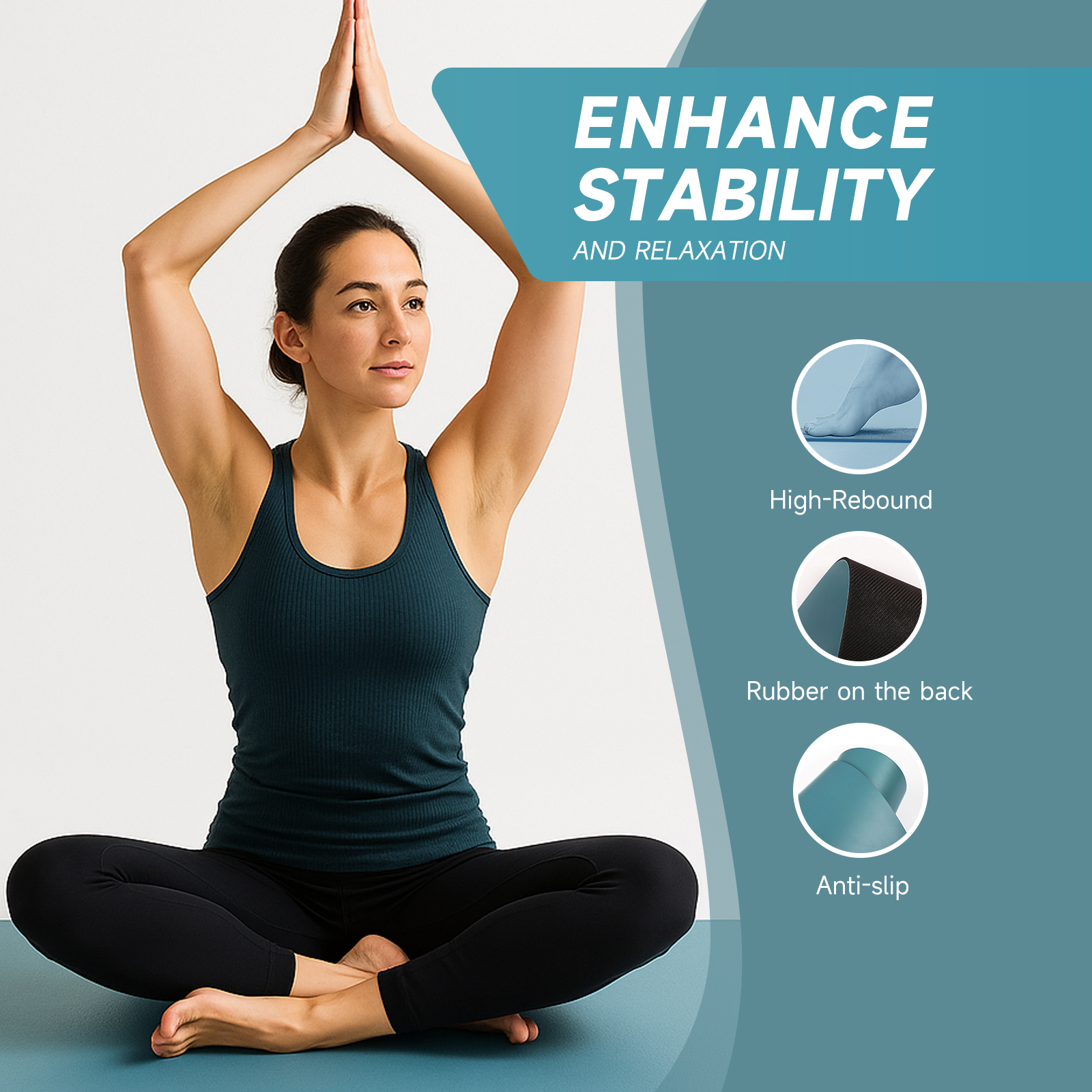
A hot yoga mat should be about 4 to 6 mm thick: enough to pad knees and wrists for a full class, thin enough that you still feel the floor once your hands and feet are wet. In our range that means the 4.5 mm natural rubber mat or the 6 mm TPE mat; a 2 mm foldable rubber mat works as a thin layer under a towel for people who carry their mat to class, and the 8 mm PVC mat is the one build we would not send into a heated room.
Why heat pushes you toward a thinner mat
Thickness is a trade between cushion and stability, and a heated room moves that balance. You start sweating within minutes, palms begin to slide, and every standing balance asks your feet to read the floor through the mat. A thick, soft deck swallows that feedback, so the pose wobbles before the surface even gets slippery. A thinner deck keeps you grounded and lets the surface material do the gripping. Thickness also decides two practical things you notice during a hot class and on the way home: how heavy the mat is to carry together with a towel, and how long it takes to dry. A thinner mat dries faster and rolls smaller.
None of this means thinner is always better. Knees, wrists and the tailbone still land on the mat, and a class with long floor sequences on a bare 2 mm layer is a different experience from a class spent standing. The right answer depends on the style of heated class you practise and on who the mat is for.
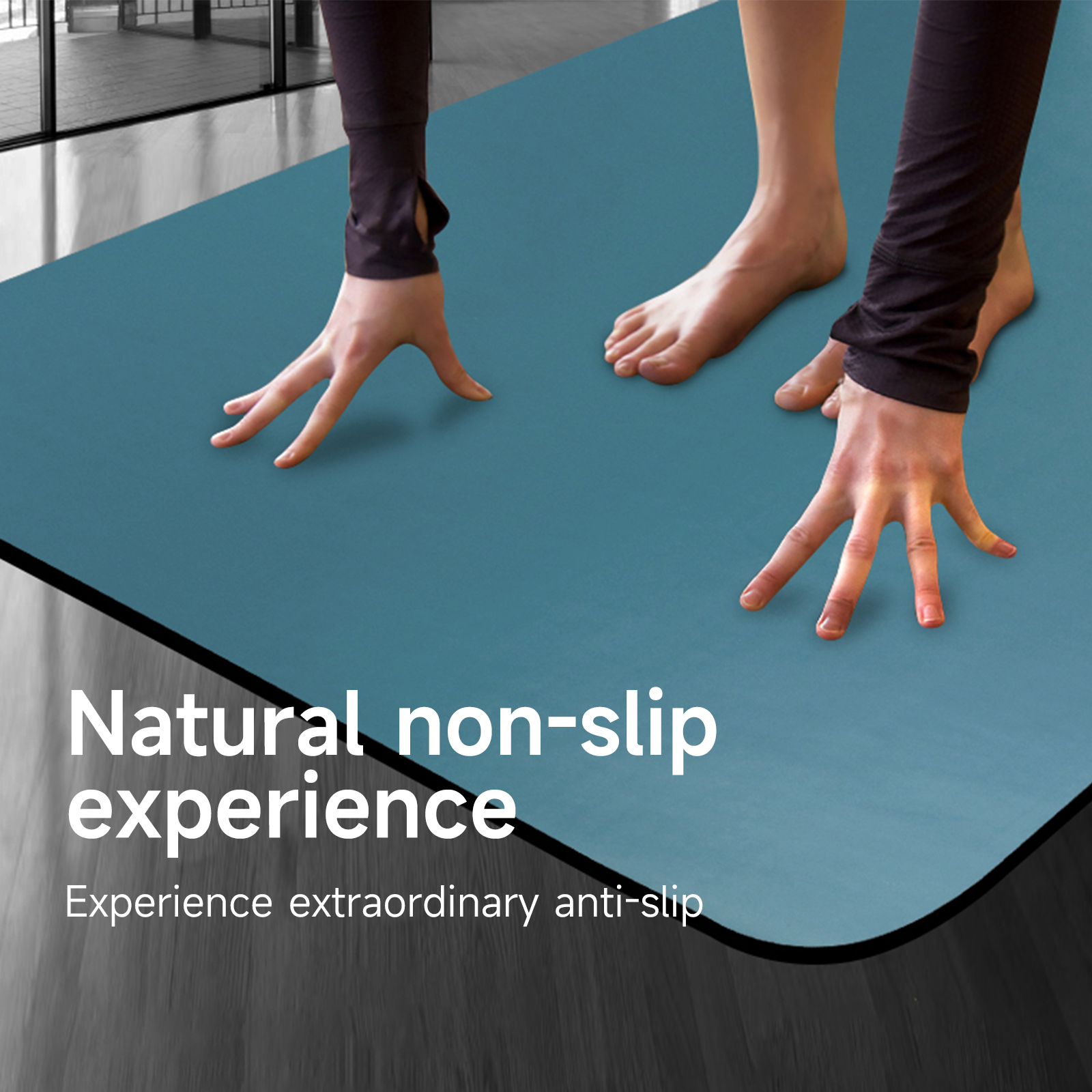
The thickness points in our range, read straight from the product name
Every mat Printing Yoga makes carries its size in the name as length*width*thickness in centimetres, so 185*68*0.45cm means a mat 185 cm long, 68 cm wide and 4.5 mm thick. That makes the thickness easy to check before you order, whether you are buying one mat or a class set. The table below lists the four builds that matter for a hot yoga decision.
| Build | Thickness | Material | Hot yoga fit |
|---|---|---|---|
| Foldable natural rubber 183*61*0.2cm | 2 mm | Rubber | Thin travel layer; pair it with a towel for floor work |
| Natural rubber 185*68*0.45cm with laser printed alignment lines | 4.5 mm | PU + Rubber | Our standard answer for heated classes: firm, grounded, dense |
| TPE 183*61*0.6cm single color | 6 mm | TPE | Softer deck for gentler heated classes and newer students; available from a single piece |
| PVC 183*61*0.8cm with alignment lines | 8 mm | PVC | Not for hot yoga: too thick to feel the floor and the face is not built for a wet room |
The same millimetre reads differently by material. Natural rubber is dense, so 4.5 mm of it feels firm and planted; TPE is a lighter foam, so 6 mm of it feels soft and forgiving. If you have ever wondered why two mats with similar thickness numbers feel nothing alike, that is the reason. Our note on how thick a regular yoga mat is covers the everyday range; this page is only about what changes when the room is hot.
Which thickness fits your heated class
If you practise Bikram or a power style with long standing sequences, choose the 4.5 mm natural rubber mat. You spend most of the class on your feet, you sweat heavily, and the firm, dense deck keeps balances steady while the rubber and PU face handles the moisture. Which surfaces keep working when wet is a separate question, and we answer it in our bikram yoga mat sourcing guide.
If you are new to heated classes, or your knees and wrists complain on a firm mat, the 6 mm TPE mat is the better starting point. You give up a little ground feel in standing poses and gain cushion for the floor work that fills a beginner-friendly heated class. Many students move to a thinner mat later; starting soft is not a mistake.
If you already practise on a towel and carry your kit to class, the 2 mm foldable rubber mat is the thin option. It folds flat, dries quickly and gives the towel a grippy base. Treat it as a layer rather than a full mat: on its own it offers very little cushion for kneeling sequences.
If the mat is for hot yoga, do not choose the 8 mm PVC build. The extra millimetres float you off the floor in balances, and PVC is the surface we would specify for a dry studio, not a heated one. It is a good mat for a different job.
If you run a studio or a brand and are choosing for other people, the 4.5 mm natural rubber mat is the safe default for a heated class set, with a few 6 mm TPE mats on the shelf as loaners for beginners who need the cushion.
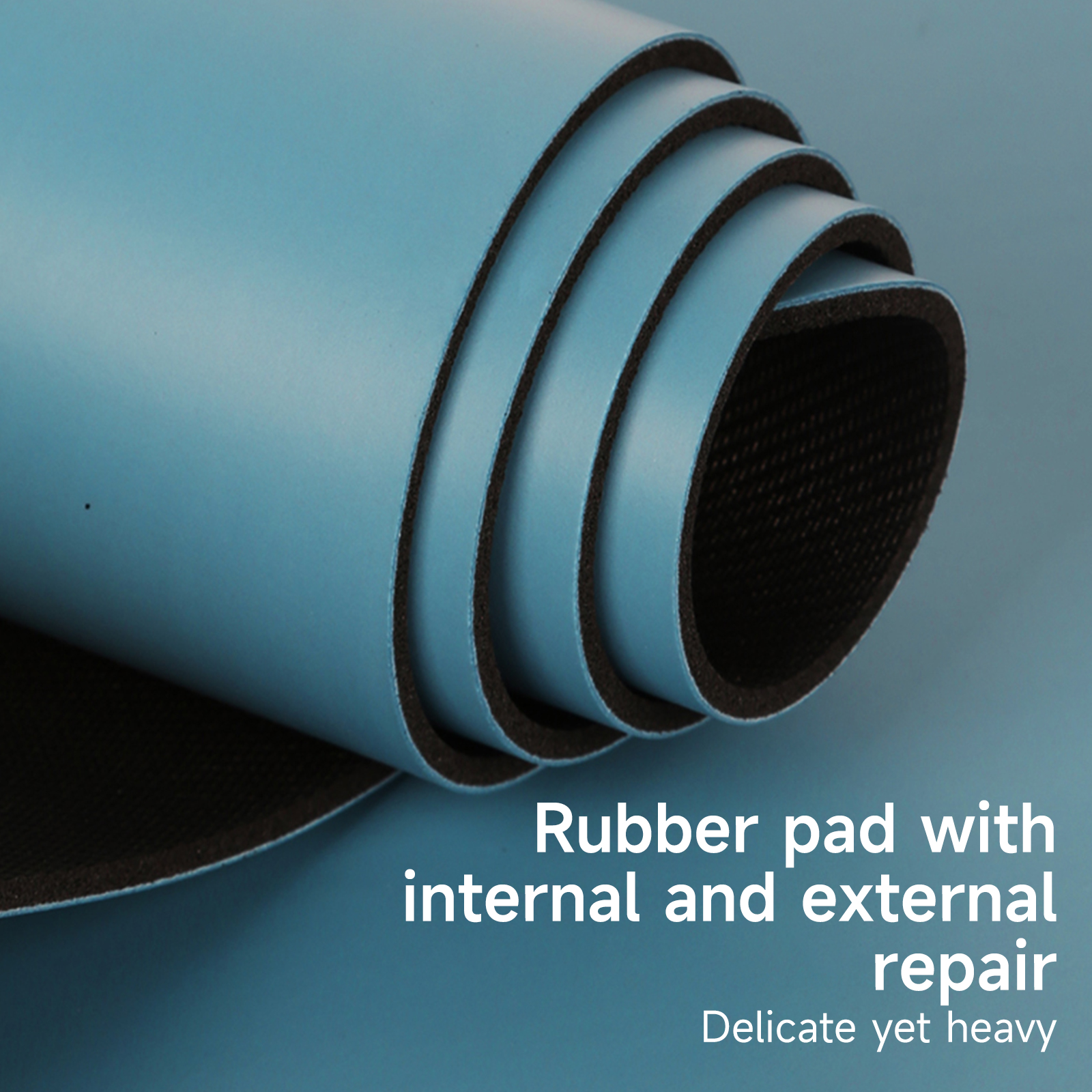
For studios and brands: putting thickness into a hot yoga mat order
Thickness is the first line of a mat specification, but on its own it does not make a hot yoga mat. Write the full size as length*width*thickness, name the material, and say that the mat is for heated classes so the surface is chosen to match. Ask for a sample and test it during a real class rather than on a showroom floor: a mat that feels fine dry can behave very differently after the first sweaty sequence. Rubber and TPE builds in our range can be branded with a laser printed or latex printed logo and alignment lines, so a studio can create its own designs on the same deck that works for its classes.
Weight, delivery time and packing details vary by product and quantity, so we do not quote single figures here; the product pages and your sample request carry the specifics. Our manufacturing covers the four builds above as standard products and as custom orders, and the capacity to make a class set to the same high-quality standards as a single mat is the point of working with a factory directly. The goal is to ensure every mat in the room meets the same spec, because a class set with mixed thicknesses is something students notice in the first balance.
Frequently asked questions
Is a 6 mm mat too thick for hot yoga?
Not for most people. A 6 mm TPE mat is softer than a 4.5 mm rubber mat and gives up some ground feel in standing balances, but it is a sensible choice for gentler heated classes and for students who want cushion for knees and wrists. If your practice is mostly standing and you sweat heavily, the firmer 4.5 mm rubber deck is the better match.
Can I use a 2 mm mat for hot yoga?
Yes, as a layer under a towel. A 2 mm foldable rubber mat gives the towel a grippy, stable base and dries quickly, which is why travelling students like it. Used alone it offers very little padding for kneeling and lying sequences, so it suits classes that keep you on your feet.
Does a thicker hot yoga mat take longer to dry?
In general, yes. A thicker, softer deck holds more moisture in its surface and takes longer to air out, and it is heavier to carry home wet. A thinner, denser mat dries faster. This is one of the practical reasons heated classes tend to favour the thinner end of the range.
Should a hot yoga mat be thicker than a regular yoga mat?
No. A regular mat sits around 4 to 6 mm, and a mat for heated classes sits in the same band or slightly thinner. The heat changes what matters: stability when wet and quick drying move up the list, cushion moves down. If anything, people who practise in hot rooms regularly drift toward the thinner end over time.
What thickness should a studio buy for its hot yoga class set?
The 4.5 mm natural rubber mat is the usual choice for a heated class set, because it stays planted when wet and reads as one consistent surface across the room. Keep a few 6 mm TPE mats as loaners for beginners and anyone who needs more cushion. Both builds take a studio logo, so the set can match your branding.