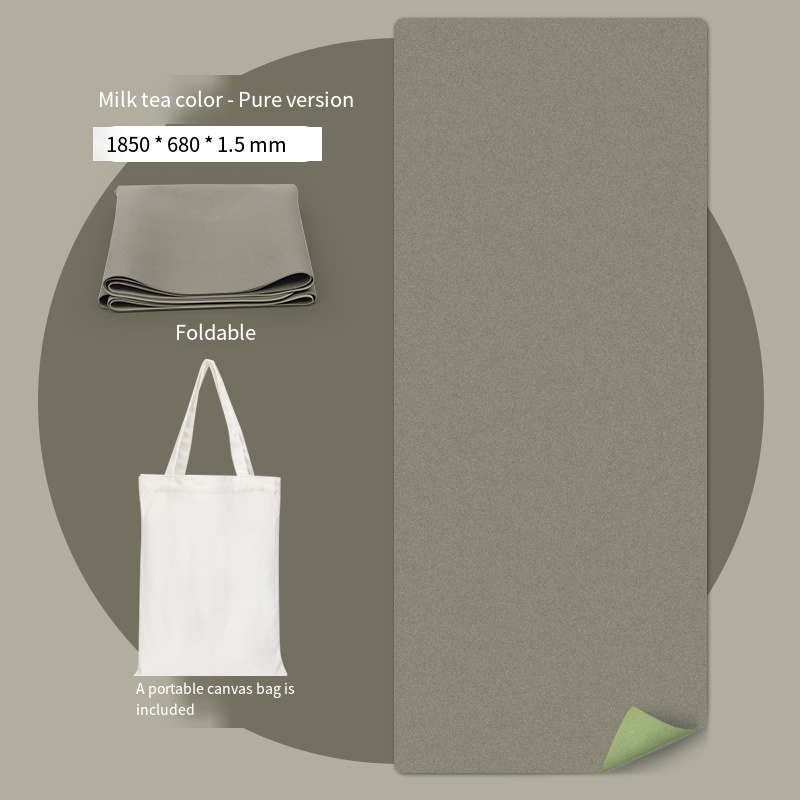
You can fold a yoga mat only if it was built to fold: thin mats such as a 185*68*0.15cm natural rubber sheet or a 183*61*0.4cm TPE folding mat are designed to be folded flat, while a standard rolled mat of 0.45cm or thicker should be rolled, because folding it presses a ridge into the body that does not come back out.
The question usually comes up for one of two reasons. Either you own an ordinary mat and want to squeeze it into a bag, or you have just bought a mat sold as foldable and want to know how to fold it without leaving marks. This guide answers both, using the folding and rolled mats Printing Yoga makes so the thicknesses and weights are real production figures rather than guesses.
Which yoga mats fold, and which only roll
Whether a mat can be folded is decided by two things: how thick it is and what the body is made of. A thin sheet bends around a tight radius the way fabric does, so it can be folded in half and in half again and still lie flat afterwards. A thick deck does not really fold at all. It hinges, and the inside of that hinge is crushed while the outside is stretched. On a foam core the crushed side stays crushed; on a dense rubber core the mat fights back and the fold springs open in the bag.
Material sets how forgiving the fold is. Natural rubber under a frosted PU face relaxes its fold marks once the mat has been unfolded and warmed by a short practice, which is why our thinnest folding mats are rubber. TPE folding mats are made with the fold in mind: the foam is thin enough to crease cleanly along the same lines every time and light enough that the folded pack is easy to carry. A rolled rubber deck at 185*68*0.45cm weighs 2.9 kg and is far too dense to fold without damage, so it is rolled and stored in a rack or a mat bag instead.
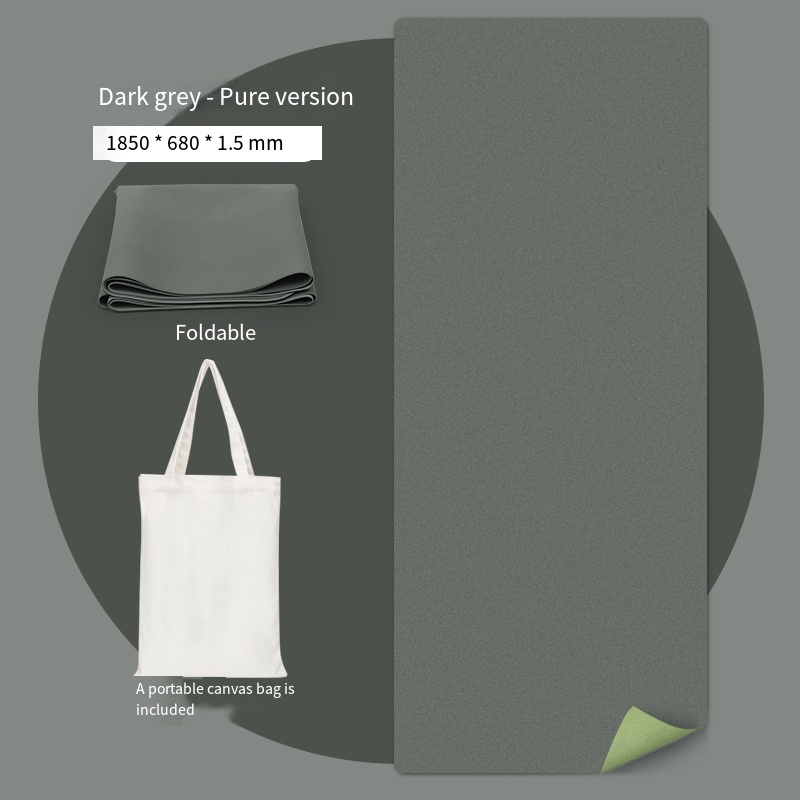
Folding and rolled mats from our range compared
| Mat | Material | Size | Listed weight | Fold or roll? | What to know |
|---|---|---|---|---|---|
| Foldable matte natural rubber mat | Frosted PU + Rubber | 185*68*0.15cm | 1.25 kg | Folds | Full practice length; laser printed alignment lines sit in the surface, so repeated folding does not lift them |
| Foldable natural rubber mat | Rubber | 183*61*0.2cm | Varies by colour | Folds | Plain rubber sheet in Dark Green, Diamond Black, Purple and Rose Red; the simplest fold-and-go build |
| Single colour TPE folding mat | TPE | 183*61*0.4cm | 0.94 kg | Folds | Light foam built to crease along the same lines every time; suits class sets and schools |
| Double colour TPE folding mat | TPE | 183*61*0.6cm | 0.7 kg | Folds | The thickest folding build we make; folds into a compact stack with a two-tone face |
| Matte natural rubber mat | Frosted PU + Rubber | 185*68*0.45cm | 2.9 kg | Roll only | Dense studio deck; folding it leaves a permanent ridge, so roll it and store it flat or in a rack |
Read the last column as the whole answer. Every mat in the top four rows was made to be folded; the one in the bottom row was made to be rolled, and no technique changes that.
How to fold a yoga mat that is made to fold
Folding a folding mat well is mostly about protecting the practice surface and keeping the fold lines where the maker put them.
- Lay it flat and wipe it first. Grit folded into the mat is pressed into the face for as long as it stays packed.
- Fold the practice surface inward. Face to face means the grip layer rubs against itself rather than against zips, keys and the inside of a bag.
- Fold in halves, lengthways first. Bring the two long edges together, then fold the long strip in half, and again, until the pack is the size you need. Keep the corners square; a skewed fold puts a crease across the mat instead of along it.
- Follow the lines the mat already has. A TPE folding mat creases most cleanly along the lines it was folded on at the factory. Changing the fold pattern each time adds new lines without removing the old ones.
- Do not press the creases flat. Let the fold sit at its natural radius. Pressing it sharp, or kneeling on the folded pack, is what turns a soft fold into a hard line.
- Store it flat, with nothing on top. A folded mat stacks like a towel, but heavy cartons or luggage stacked on it will set the fold lines permanently.
When you unfold the mat, lay it out a few minutes before class. Rubber relaxes its lines with warmth and body weight; TPE flattens as the foam recovers. If a line is still visible, unroll the mat the other way up for a session and it usually settles.
What happens if you fold a mat that should be rolled
A thick rolled deck folded in half takes a set along the fold. On a rubber body you get a ridge that stays proud of the surface and a pale line in the face where the top layer was stretched. On a thick TPE or PVC deck the core is compressed on the inside of the fold, and over repeated folding that compressed line can crack. Printed artwork that crosses the fold shows the line forever, because the print film is bent further than the body under it. None of this is dangerous, but it is irreversible, and it is why the honest answer to “can I fold my normal mat for the flight” is: roll it tightly, strap it to the bag, or buy a second mat that folds. Our guide to storing yoga mats without ruining them covers racks and straps for the rolled decks in more detail.
If you are deciding how to pack or store a mat
If the mat has to go inside a suitcase or a cabin bag, choose a mat that folds and fold it face to face. The 185*68*0.15cm foldable matte natural rubber mat keeps full practice length and folds into a flat pack at 1.25 kg, which is the format that reliably fits inside luggage rather than strapped to it.
If you want a folding mat you can also kneel on at home, take the thickest folding build rather than the thinnest: the 183*61*0.6cm double colour TPE folding mat gives more under the knees than a rubber sheet and still folds into a stack. It is listed with a minimum order of 1, so a single piece is easy to try before a brand or studio commits to a set.
If you are outfitting a class set that many different hands will fold, the 183*61*0.4cm single colour TPE folding mat is the practical choice. It is light at 0.94 kg, it creases along the same lines each time, and when a crease does set it is a cheap mat to replace.
If your mat is a 0.45cm rubber deck or anything thicker, do not fold it. This is the exclusion. A 2.9 kg matte natural rubber mat is built to be rolled, and folding it to save space will cost you the flat, even surface you paid for. Roll it with the practice side out so the edges lie down, and store it horizontally.
If you are a brand putting artwork on a folding mat, decide the fold pattern before you approve the design. Keep logos and fine linework away from the fold lines, and prefer laser printed marks, which sit in the surface, over a heavy print film that has to bend with the mat.
FAQ
Can you fold a regular yoga mat?
Not without marking it. A regular rolled mat, such as a 185*68*0.45cm natural rubber deck, is too thick and too dense to bend in half cleanly; the crease leaves a ridge and a pale line that do not relax out. Roll it instead. If you need a mat that packs flat, use one that was built for it, such as a 185*68*0.15cm rubber sheet or a 183*61*0.4cm TPE mat.
How do you fold a yoga mat for travel?
Wipe it, lay it flat, fold the practice surface inward, then bring the long edges together and halve the strip again until it is the size of your bag. Keep the corners square, do not press the creases sharp, and pack it where nothing heavy sits on top of it. On arrival, open it out a few minutes before practice so the lines settle.
Will folding a yoga mat damage it?
Not if the mat was made for it; the crease lines are expected and fade with use. A thick rolled deck is a different story: the inside of the bend is crushed, the face is stretched, and printed designs crack along the line. The deciding factor is thickness and material, not how carefully you pack it.
How do you get fold lines out of a yoga mat?
Open the mat out and leave it flat, practice side up, in a warm room; a short practice on it speeds things up because body weight and warmth relax the body. For a stubborn line on a rubber mat, lay it the other way up for a session. If the mat is a thick rolled deck that was bent in half, a set ridge usually cannot be removed, only hidden by rolling the mat tightly the opposite way for a while.
Should a yoga mat be rolled or folded for storage?
Match the method to the mat. Packable mats store flat in their folded stack, like towels, with nothing heavy on top. Rolled mats store rolled, ideally horizontally in a rack; standing a rubber roll on its end for weeks lets the bottom edge take a set under its own weight.
Can a folding yoga mat be custom printed for a brand?
Yes. Printing Yoga makes the packable mats above as OEM and ODM products in your colours and with your marks, and we flag crease lines on the artwork proof before sampling so a logo does not land on one. If you are weighing whether a packable format belongs in your range at all, read whether foldable yoga mats are good and which mat survives travel before you spec one.
The short version: fold the mats that were built to fold, roll the ones that were not, and let the thickness tell you which is which. Printing Yoga manufactures both formats in-house, which is why we can publish the exact sizes and weights above instead of ranges, and why we would rather tell you a 0.45cm deck should not be folded than sell you a bag it will never fit.