
You do not have to bring your own yoga mat to the gym, because most gyms keep a stack of shared mats in the stretching area or studio, but many members still bring one for hygiene, for a grip they trust, or for more cushion than a thin shared mat gives.
Whether it is worth carrying your own comes down to three things: how clean and how worn the gym's mats are, what you actually do on the mat, and how you get to the gym. Below we walk through each, compare the three common setups, and explain what we see from the factory side when gyms and brands order mats from Printing Yoga.
What the gym usually gives you
A typical gym mat is a shared, heavy-use deck. It gets wiped between classes (if you are lucky), stacked or hung on a rack, and used by dozens of people a week. That is fine for a quick stretch after a run, and it is exactly why many people start bringing their own. Shared mats tend to wear in the same places, lose grip where hands land in downward dog, and pick up the smell of whatever cleaner the gym uses.
If your gym runs dedicated yoga or Pilates classes, the class mats are often in better shape than the ones by the free weights. Ask at the front desk before you buy anything: some gyms sell or rent mats, and some ask members to bring their own for specific classes.
Bring your own or use the gym's mat: three setups compared
| Setup | Example deck | What you gain | What you give up | Best for |
|---|---|---|---|---|
| Use the gym's shared mat | Whatever the gym stocks | Nothing to carry, nothing to clean | Hygiene and grip depend on the gym | Short stretches and occasional floor work |
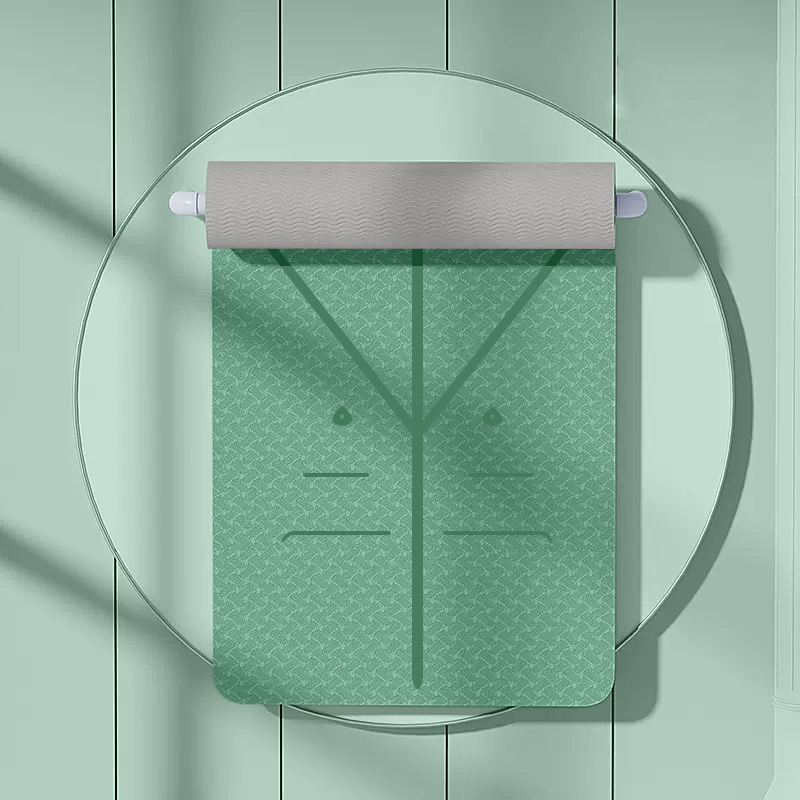
| Bring a light everyday mat | TPE double color mat, 183*61*0.6cm | Your own surface, easy to roll and carry | One more thing in your bag | Regular yoga or mobility sessions |
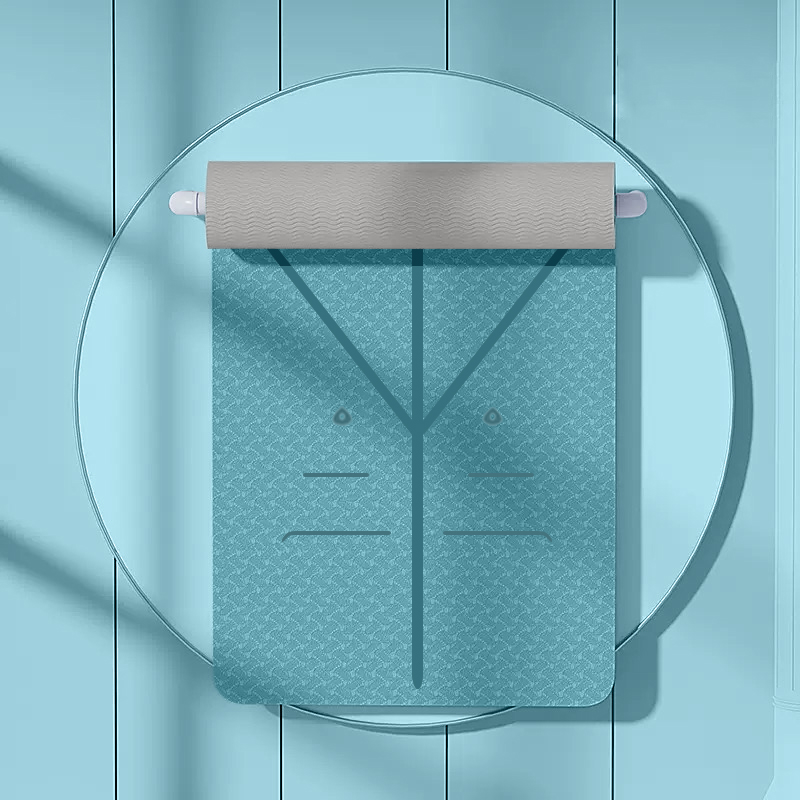
| Bring a cushioned mat | TPE double color mat, 183*61*0.8cm | More padding for knees, hips and core work | Bulkier roll, less stable for standing balances | Pilates, ab work and kneeling exercises |
| Bring a folding mat | Foldable matte natural rubber, 185*68*0.15cm | Folds into a gym bag; also works as a clean layer over a shared mat | Very little cushion on its own | People who walk, cycle or commute to the gym |
If you are deciding: conditional verdicts
If you only stretch for a few minutes after cardio or weights, the gym's mat is usually enough. Wipe it before and after, and you have no reason to carry anything.
If you train on a mat two or more times a week, bringing your own pays off quickly. You get the same grip and the same thickness every session, and you know exactly who has used it.
If you do a lot of kneeling, planks or core work, a cushioned deck such as the 183*61*0.8cm TPE build is more comfortable than a thin shared mat. Our guide on whether thick or thin yoga mats are better explains the trade-off with balance.
If you get to the gym on foot, by bike or by public transport, a folding mat is easier than a full roll. Lay it over the gym's mat if you want both a clean surface and some padding underneath.
If you are thinking of bringing a mat mainly to avoid germs on a mat you only touch with your shoes — an exclusion, a dedicated mat is not the right fix. Standing work on the gym floor does not need a mat at all; a towel for your hands and face is the simpler answer.
Gym etiquette when you bring your own mat
Roll it out where it does not block a walkway or a machine, and keep it out of the free-weight area where dropped plates can damage it. Wipe it after you sweat on it, let it air-dry at home rather than leaving it rolled up in a closed bag, and do not leave it on the gym rack, where it will quickly become another shared mat.
For gyms and brands: what this means when you order mats
From the factory side, the question splits in two. A gym stocking shared mats needs a deck that survives constant handling and cleaning; our article on what makes a good exercise mat for gyms covers why weight matters there. A brand or gym selling mats to members wants the opposite: something light enough to carry in and out every day, ideally with the gym's own logo on it. Printing Yoga makes both kinds of deck to order, and the exact size, material and finish always follow the product you choose, so check the product page or ask us before you plan a run.
FAQ
Do gyms provide yoga mats?
Most gyms do, usually in the stretching area or the group-class studio. Quality and cleanliness vary a lot between gyms, so it is worth looking at them before your first session.
Is it rude to bring your own yoga mat to the gym?
No. Bringing your own mat is common and usually welcome, as long as you put it down where it does not get in anyone's way and take it home afterwards.
Is it unhygienic to use a gym yoga mat?
A shared mat is only as clean as the last wipe-down. If the gym provides spray and paper towels, clean it before and after use; if you use mats often, your own mat removes the guesswork.
Should I put my own mat on top of the gym's mat?
You can. A thin folding mat over a thicker shared mat gives you a clean surface plus extra cushion, which many people find useful for floor work.
What kind of yoga mat is easiest to carry to the gym?
A light, thinner roll or a folding mat is easiest. Cushioned decks are more comfortable on the floor but make a bigger roll, so pick based on how you travel to the gym.
Can a gym order branded yoga mats for its members?
Yes. Printing Yoga makes yoga mats with a gym or studio's own design or logo; tell us the deck you want and how you plan to sell or use the mats, and we will confirm what is possible for that product.