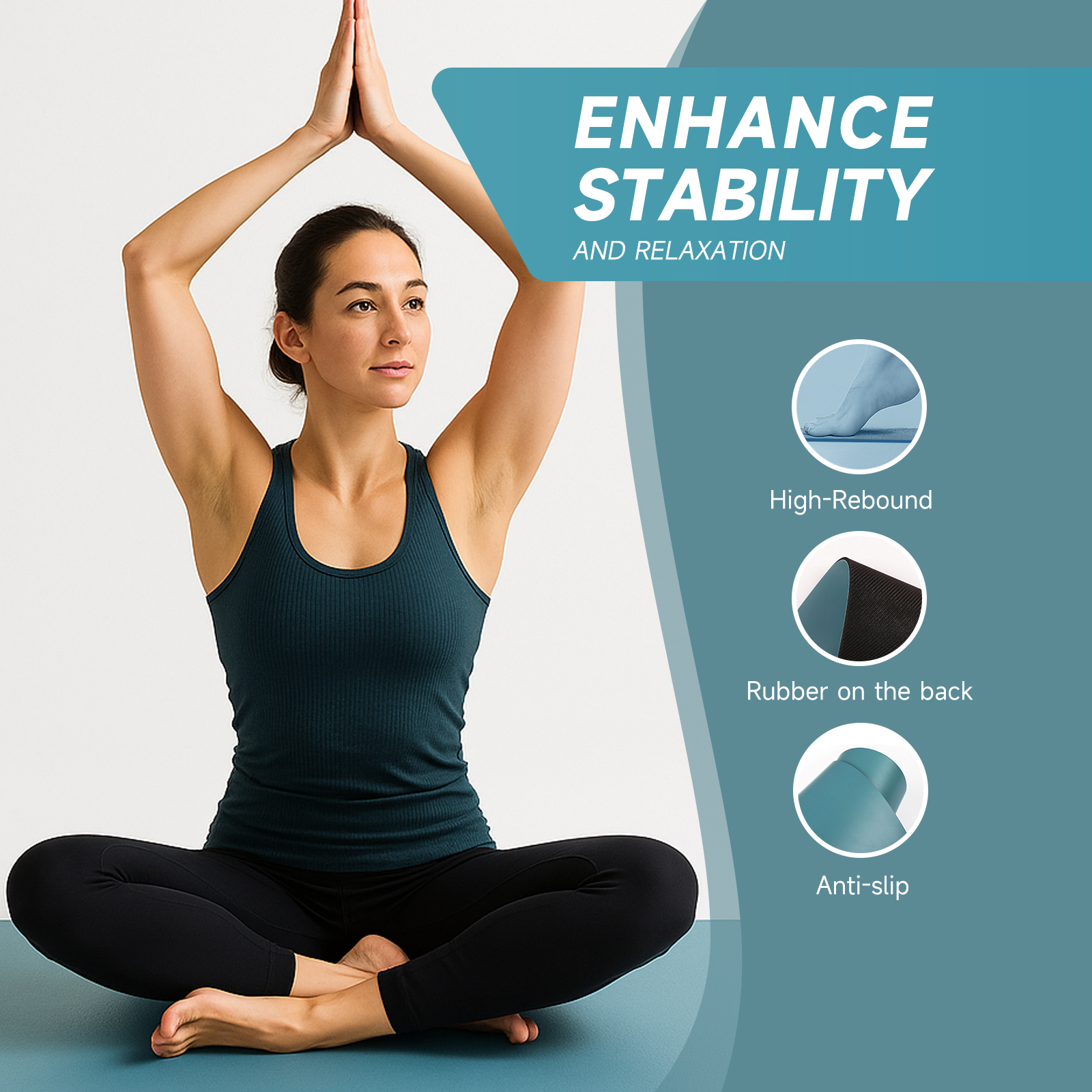
The simplest way to carry a yoga mat on a backpack is to roll it tightly, slide the roll under the two compression straps across the bottom of the pack or down one side, and pull both straps tight until the mat can neither slip nor swing; if the pack has no spare straps, a mat carry strap looped through the top grab handle holds the roll just as well.
That answer covers most people, but how the mat actually rides depends on three things: how thick it is, how much it weighs, and whether it rolls or folds. Printing Yoga makes mats across that whole range in our own factory, so this guide walks through the attachment methods, shows which of our builds suit each one using their listed weights, and ends with what a brand should specify when its customers carry the mat to class on their backs.
Four ways to carry a yoga mat on a backpack
Under the bottom straps, horizontal. Most daypacks and hiking packs have a pair of straps across the base, originally meant for a sleeping pad. A rolled mat sits there crosswise, with the straps around it and the buckles pulled tight. This keeps the weight low and centred, which is the most comfortable place for a heavy mat, and the roll does not catch on door frames the way a tall vertical roll does. The limit is width: a 68 cm wide mat becomes a 68 cm long cylinder that sticks out on both sides of a narrow commuter pack.
Down one side, vertical. Side compression straps are designed to squeeze the pack flat, but they close around a rolled mat just as happily. The roll stands upright beside the pack like a tripod or a water bottle. This suits a narrower 61 cm mat and keeps nothing sticking out sideways, but the top of the roll rides above your shoulder and clips things behind you when you turn, so tighten the upper strap first and the lower strap second.
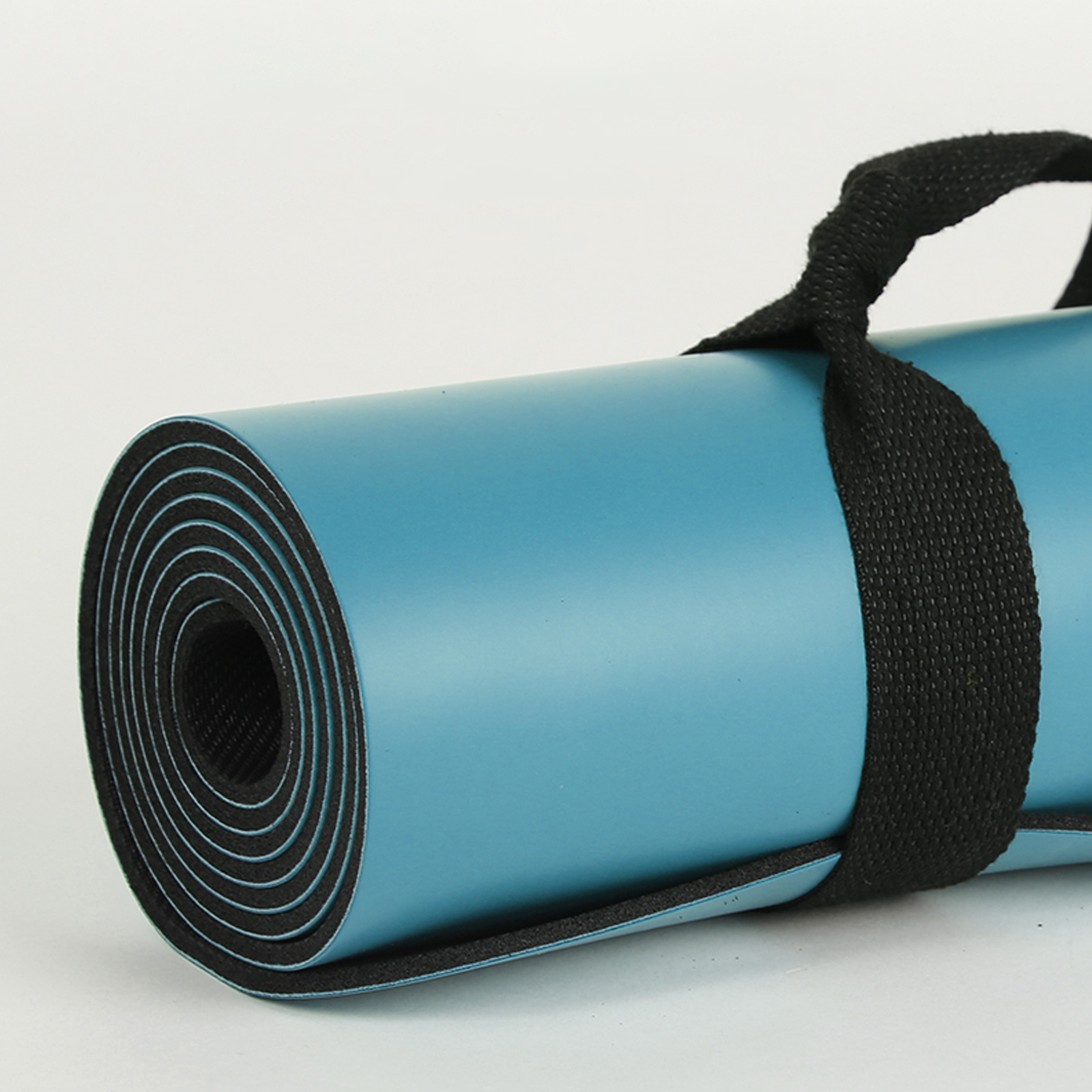
Slung with a carry strap. A mat carry strap is two loops of webbing joined by a shoulder length. Put the loops around each end of the roll, then clip or tie the shoulder length through the grab handle at the top of the pack. The roll hangs diagonally against the back panel and moves with you. This works with any pack, including ones with no external straps at all. Our guide to yoga mat and strap sets explains how a carry strap is sourced alongside the mat.
Inside the pack, folded. This option only exists for mats built to fold. A 183*61*0.4cm TPE folding mat or the 185*68*0.15cm foldable matte natural rubber mat goes flat inside the pack against the back panel, like a laptop, and needs no strap at all. Read can you fold a yoga mat before trying this with a standard rolled mat: a 0.45cm rubber mat folded under pack pressure takes a ridge that does not come out.
Which mats carry easily: listed weights from our range
| Mat | Size | Listed weight | Rolls or folds | Best way on a backpack |
|---|---|---|---|---|
| Nature Rubber Professional Yoga Mat with Laser Printed Alignment Lines (PU + rubber) | 185*68*0.45cm | 2.9 kg | Rolls | Bottom straps, horizontal; carry strap for long walks |
| TPE Single Color Foldable Yoga Mat | 183*61*0.4cm | 0.94 kg | Rolls or folds | Folded flat inside the pack, or vertical on a side strap |
| Foldable Matte Nature Rubber Yoga Mat with Laser Printed Alignment Lines (frosted PU + rubber) | 185*68*0.15cm | 1.25 kg | Folds flat | Inside the pack against the back panel |
| TPE Double Color Foldable Yoga Mat | 183*61*0.6cm | 0.7 kg | Folds in panels | Inside the pack, or under the bottom straps |
Two things stand out in that table. Weight runs from well under a kilogram for TPE to 2.9 kg for a full natural rubber mat, and that gap is the difference between forgetting the mat is there and feeling it in your shoulders by the end of a walk. Thickness decides the roll: a 0.45cm rubber mat rolls into a cylinder that a side strap only just closes around, while a 0.15cm sheet does not need to roll at all. Width matters third: a 68 cm mat is the one that overhangs a narrow pack when carried horizontally, so it is the one to carry vertically or slung.
If you carry a mat to class: conditional verdicts
- If you walk or take transit to a studio most days, carry a light TPE mat such as the 183*61*0.4cm folding mat under the bottom straps. At 0.94 kg it does not change how the pack sits, and it wipes dry if it rains on the way.
- If you cycle to class, never strap the mat horizontally: a roll sticking out sideways is wider than the bike and catches on everything you pass. Carry it vertically down one side or slung diagonally with a carry strap, cinched so it cannot swing into the rear wheel, or choose a folding mat and put it inside.
- If you travel with the mat in a backpack for days at a time, pick one that folds. The 185*68*0.15cm foldable matte natural rubber mat keeps full practice length and lies flat in the pack. Our guide to travelling with a yoga mat covers what else a travel mat has to survive.
- If you teach and carry a full-weight studio mat, such as the 2.9 kg 185*68*0.45cm natural rubber mat, use a carry strap or a proper sleeve rather than the pack's own straps. The roll is heavy enough to pull the pack off balance when it sits on one side. See our note on yoga mat bag fit for which sleeve width takes a 68 cm mat.
- If you want a thick cushioned mat for knee work, a backpack is the wrong carrier. Decks in the 0.6cm band and above roll into a cylinder too fat for most side straps and too wide for the base. Use a dedicated mat bag for that mat and keep the backpack for everything else.
Small habits that stop the mat slipping
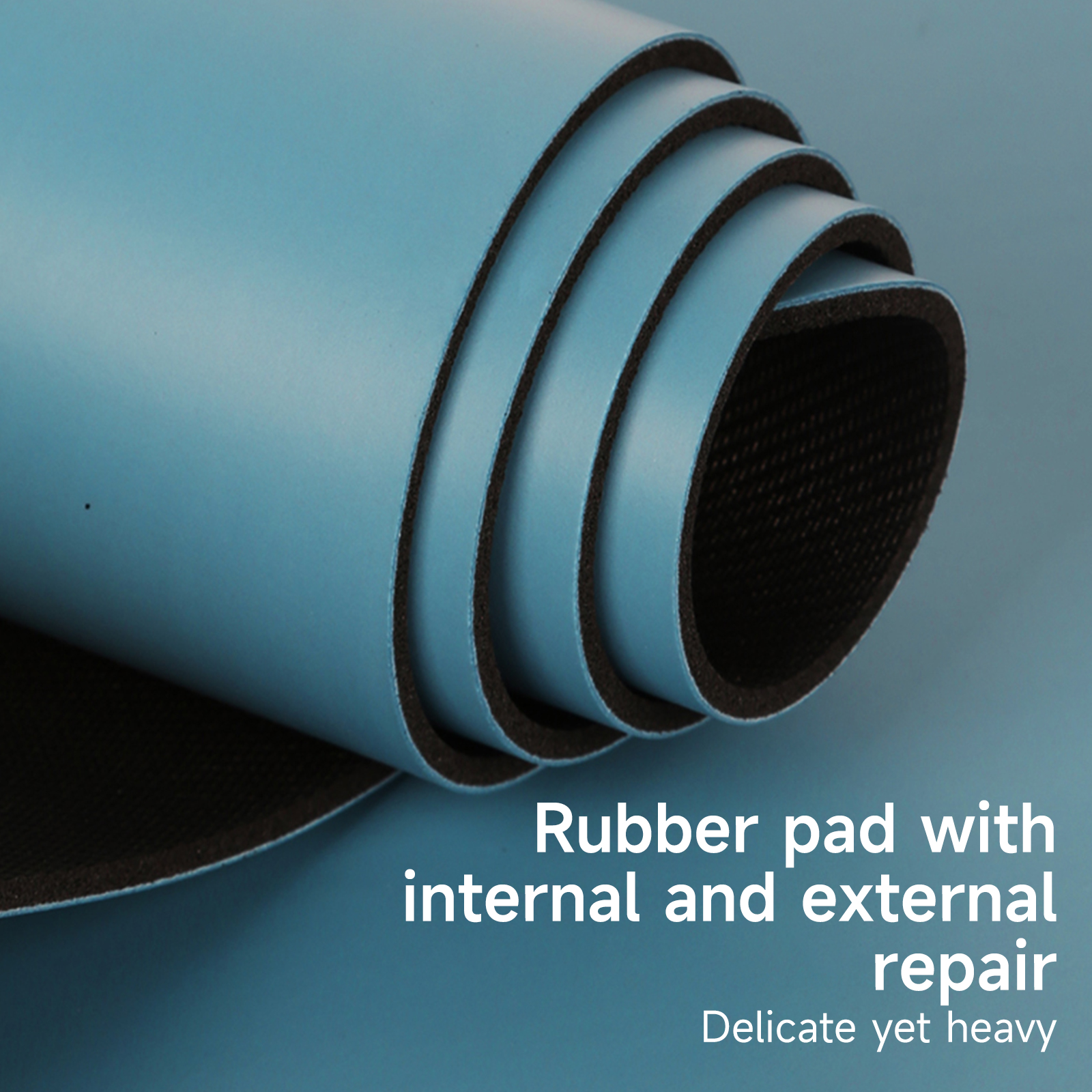
Roll from the top edge with the practice face inward, so the surface you stand on stays clean against the pack and the base of the mat takes the scuffs. Roll tight: a loose roll is a fat roll, and a fat roll is what works free of the straps. Tighten both straps every time, not just the one you can reach. Keep the roll centred on the pack so the weight does not pull to one side. When it rains, a mat on the outside is the first thing that gets wet; a frosted PU face or a TPE surface dries quickly, but if the mat folds, put it inside and the question goes away.
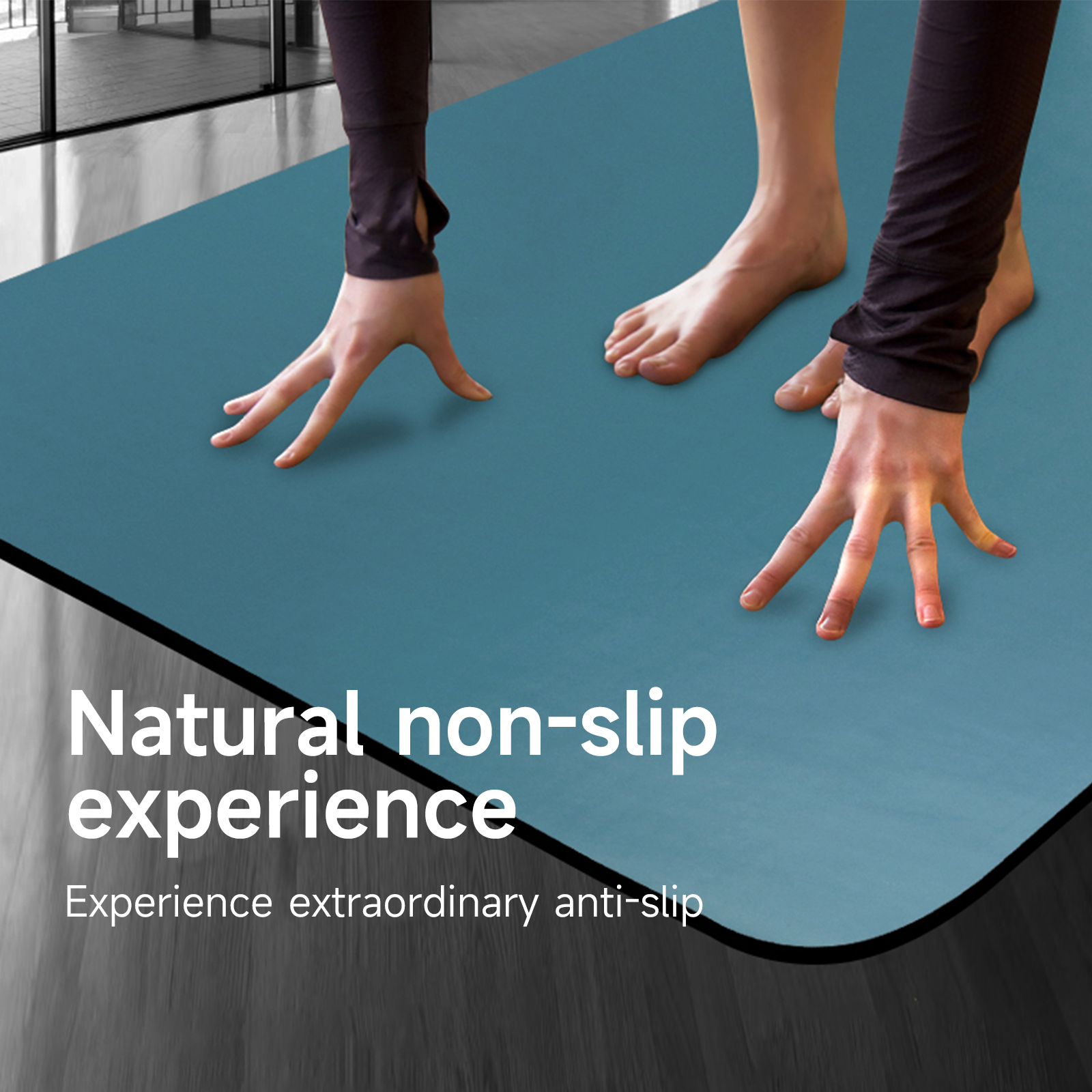
One detail buyers rarely think about: all four mats in the table carry laser printed or latex printed alignment lines that sit in the surface rather than on it, so a mat that rides against buckles and zips every day does not lose its lines to scuffing. That is worth checking on any mat you expect to carry on the outside of a bag.
What a brand should specify if customers carry the mat on a backpack
If you sell mats to commuters, students or travellers, three spec lines matter more than the colour card. First, ask for the listed weight per piece, not just the thickness; two mats of the same height can weigh very different amounts depending on whether the core is TPE or natural rubber. Second, decide whether the mat has to fold, because that decision picks the material and the thickness for you. Third, decide whether a carry strap ships in the same carton as the mat, so the customer opens one box and can carry the mat on their pack the same day. Printing Yoga produces the mat half in natural rubber, PU on rubber and TPE, prints your artwork and alignment layout on it, and can quote a matching carry strap alongside so both arrive in one shipment. Send us the pack type your customers use and the thickness band you have in mind, and we will tell you which of our builds carries best on it.
FAQ
Should the mat go inside or outside the backpack?
Outside if it rolls, inside if it folds. A rolled mat takes up the whole main compartment of a daypack, so it belongs under the bottom straps or on a side strap. A folding mat lies flat against the back panel and leaves the compartment free.
Which way should the roll face on the straps?
Horizontal under the base when the mat is heavy and the pack is wide enough to hide the roll; vertical on a side strap when the mat is narrow or you move through crowds and doorways. Either way, roll with the practice face inward so the clean side stays clean.
Does strapping a mat to a backpack damage the surface?
Not the body of the mat. The only wear is scuffing on whatever side faces the buckles, which is why you roll face-in. Laser printed alignment lines are set into the surface and do not rub off; a cheap surface print can.
Can I carry a yoga mat on a bike the same way?
Yes, with one change: never horizontal. A sideways roll is wider than the handlebars and snags on traffic. Strap it vertically down one side of the pack or sling it diagonally with a carry strap, cinched so it cannot swing, or use a folding mat inside the pack, which is the cleanest option on a bike.
Do I need a mat bag if I already have a backpack?
Only when the mat is too thick or too wide for the pack's straps. A full 185*68*0.45cm rubber mat is the usual case; lighter and thinner mats ride on the pack without a bag.
Can a mat that is carried on a pack every day still show a printed design?
Yes. The design is printed onto the practice face, which rolls inward, so it is the plain base that meets the straps. Printing Yoga prints artwork and alignment layouts on rubber, PU and TPE mats, and the same design can be run on a folding mat for customers who carry it inside the pack.