
The easiest way to carry a yoga mat is to roll it tightly with the top side facing in, hold the roll closed with a carry strap looped around both ends, and wear the strap across your body so the mat sits diagonally on your back and leaves both hands free.
That works for most people walking to a class. The rest of this guide covers what to do when you have no strap, how teachers and studio staff move several mats at once, and which mats from the Printing Yoga range are easiest to carry, using the listed weight of each product. If your question is specifically about strapping a mat onto a rucksack, our guide on how to carry a yoga mat on a backpack goes into that in detail, so this article stays with carrying the mat on its own.
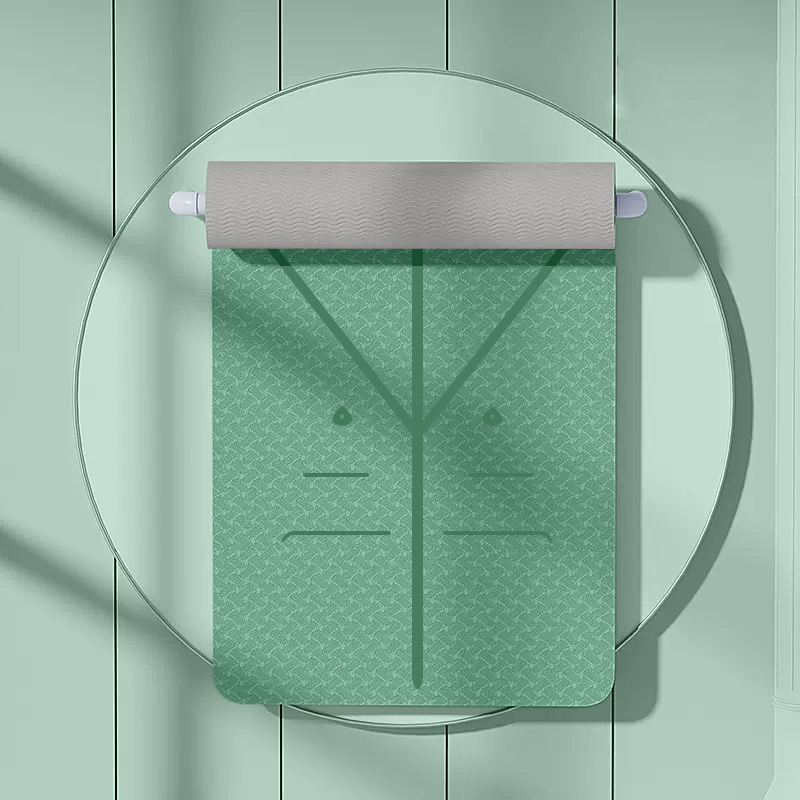
Carrying a yoga mat with a strap
A carry strap is a length of webbing with a loop or cinch at each end. Roll the mat, slide one loop over each end of the roll about a hand's width in from the edge, pull both loops tight, and put the long part of the strap over your head so it crosses your chest. A roll held at both ends cannot unroll, and worn across the body it does not slide off your shoulder the way a single-shoulder bag does.
Two details make a strap carry noticeably better. First, roll the mat with the practice surface on the inside, so the side you put your hands on does not rub against your coat or the street. Second, roll it tight before you cinch: a loose roll telescopes out of the loops after a few minutes of walking. Brands that sell a strap with the mat can read our guide to yoga mat and strap sets for how the two products are specified together.
How to carry a yoga mat without a strap
No strap is not a problem for a short walk. These methods use things most people already have:
- Under the arm. Roll the mat and hold it horizontally under one arm, like a newspaper. This is fine from the car to the studio door, and tiring over longer distances with a heavy mat.
- Two hair ties or rubber bands. Put one around each end of the roll. They will not let you sling the mat, but they stop it unrolling in your hand and in the boot of a car.
- A belt or a long scarf. Tie each end around the roll and you have an improvised shoulder strap. A belt with a buckle holds better than a scarf knot.
- A tote or a duffel bag. A roll stood upright in a large tote travels well, with the top of the roll sticking out. Check the roll fits the bag before relying on it; our yoga mat bag fit guide explains how width and thickness change the roll size.
- Fold it instead of rolling it. Only for mats built to fold. A folding mat packs flat into an ordinary bag, which removes the carrying question entirely; read can you fold a yoga mat before trying this with a standard roll.
Which mats are easiest to carry: listed weights from our range
How a mat carries comes down to weight and whether it rolls or folds. These are listed figures for products we make in our own factory.
| Mat | Size | Material | Listed weight | Easiest way to carry |
|---|---|---|---|---|
| Nature Rubber Professional Yoga Mat with Laser Printed Alignment Lines | 185*68*0.45cm | PU + Rubber | 2.9 kg | Cross-body strap; a dedicated mat bag for long walks |
| TPE Single Color Foldable Yoga Mat | 183*61*0.4cm | TPE | 0.94 kg | Folded flat in a tote, or rolled under the arm |
| TPE Double Color Premium Yoga Mat | 183*61*0.6cm | TPE | 0.7 kg | Rolled with a strap or two elastic bands |
The gap between the rows is large. The rubber mat weighs roughly three times as much as either TPE mat and is also wider, at 68 cm against 61 cm, so it makes a longer and heavier roll. It is the better surface for many practitioners, but it is the one that really wants a proper strap. The TPE mats are light enough to carry by hand all day.
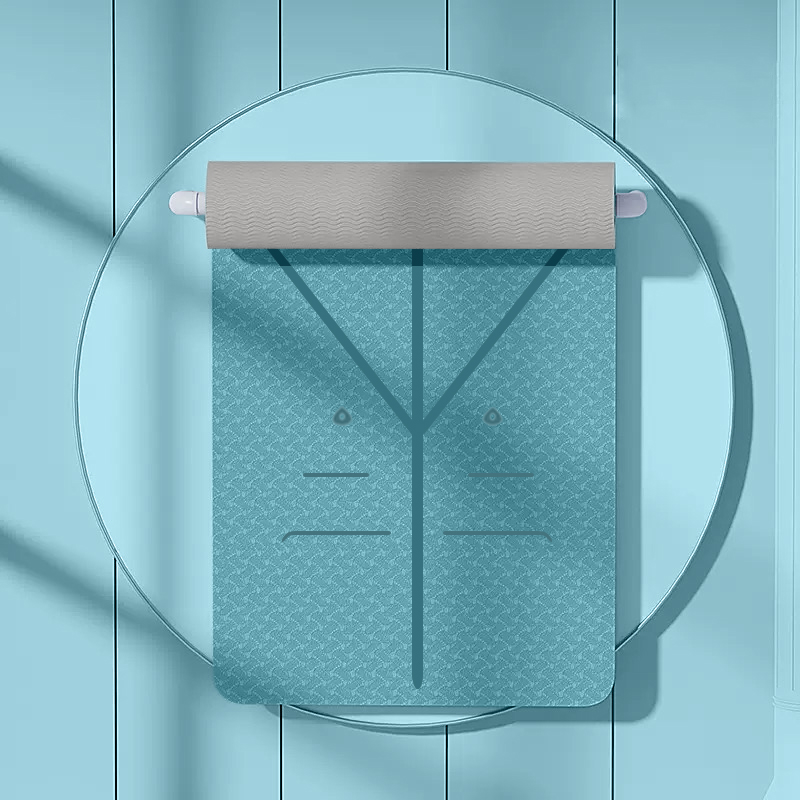
How to carry multiple yoga mats
Teachers running outdoor classes, studio staff and event organisers often have to move several mats at once. The same principles apply, scaled up:
- Roll each mat separately, then bundle. Rolling several mats together into one fat cylinder sounds efficient but the inner mats crease and the bundle is hard to grip. Roll each one tight, stand them side by side, and hold the group together with two straps, one near each end.
- Use a large duffel or a dedicated multi-mat bag. A long duffel that takes the rolls lying down spreads the weight across both shoulders and protects the surfaces.
- Use wheels for a class set. For a full class, a trolley or a wheeled crate is kinder to your back than any strap.
- Choose lighter mats for portable programmes. If mats leave the studio every week, the listed weights above matter more than any other spec: a set of the 0.7 kg TPE mats is far easier to move than the same number of 2.9 kg rubber mats.
If you are choosing a mat with carrying in mind
- If you walk or cycle to class, a lighter TPE mat such as the 183*61*0.6cm double color mat plus a cross-body strap is the easiest combination to live with.
- If you want the firmer grip of rubber, accept the extra weight of the 185*68*0.45cm mat and budget for a good strap or bag, because it is not a mat you will enjoy carrying loose under your arm.
- If you travel or commute by public transport, the 183*61*0.4cm foldable TPE mat folds into an ordinary bag, so there is nothing long to carry at all.
- If you need a thick cushioned deck for floor work, carrying is not the right priority: a thick mat that mostly stays at home or in the studio is better chosen for comfort, and this guide is not the right basis for that choice.
What brands should specify for a mat that gets carried
For brands and studios ordering custom mats, how the customer carries the product is part of the design. If your line is sold to commuters, consider bundling a strap or elastic bands with the mat, list the weight on the product page so buyers can compare, and make sure printed designs and alignment lines face inward when the mat is rolled for packing. Printing Yoga makes the mats above as factory-direct OEM products with custom printing, and the details of each product are listed on its page.
FAQ
Should I roll my yoga mat with the top side in or out?
Roll it with the top, practice side facing in. The surface you put your hands on stays protected from dirt while you carry it, and the mat lies flatter when you unroll it because the ends curl down towards the floor rather than up.
How do I keep a yoga mat from unrolling while I carry it?
Hold the roll at both ends. A carry strap with a loop at each end does this, and so do two hair ties or rubber bands if you have no strap. A single tie in the middle lets the ends spread out.
Is it bad to carry a yoga mat folded?
It depends on the mat. Mats built to fold, such as the 183*61*0.4cm foldable TPE mat, are designed for it. A standard rolled rubber mat can take a crease if it is folded and squeezed in a bag, so roll that kind instead.
Can I take a yoga mat on a plane?
Often, yes, but the rules belong to the airline. Our article on bringing a yoga mat as a carry on explains what to check before you fly.
What is the lightest mat to carry?
In the comparison above, the 183*61*0.6cm double color TPE mat has the lowest listed weight at 0.7 kg. Weight varies by product, so check the figure on each product page before choosing.